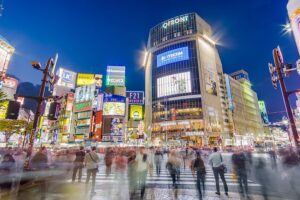
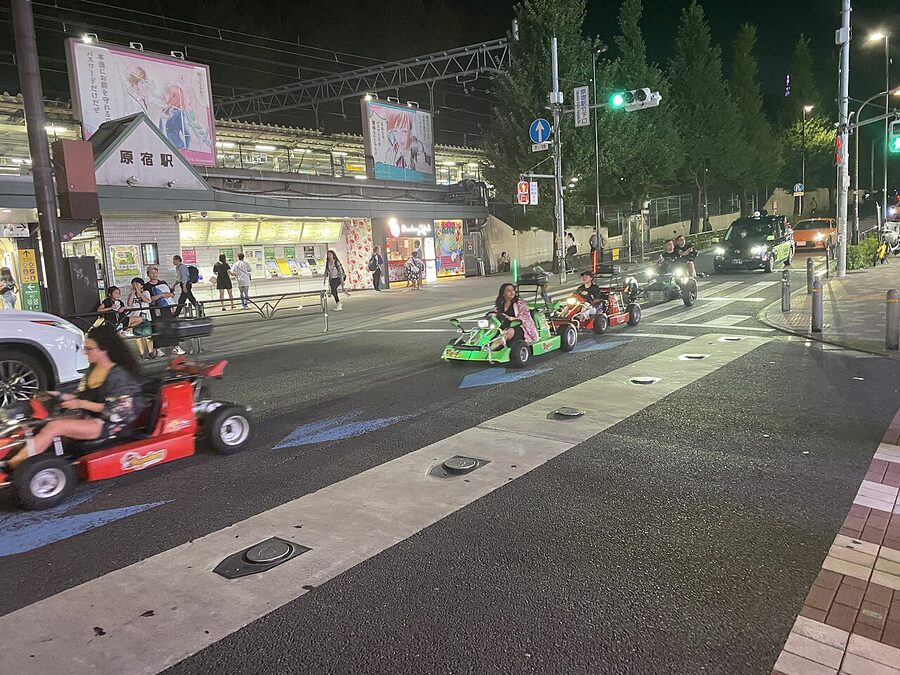
You’ve seen the photos: a convoy of go-karts, driven by adults in Mario, Luigi, and Yoshi costumes, crossing the Shibuya Scramble at 50 km/h. It’s one of Tokyo’s most recognisable tourist experiences — and the one with the most legal drama behind it. The short version: these are legitimate road-legal go-karts (not actual Mario Karts), run by independent operators (Nintendo has sued, unsuccessfully for the most part, to get the Mario branding removed). You drive real streets in real Tokyo traffic. You need an international driving permit. And yes, it’s as good as it looks.
This is the practical guide to what a Tokyo go-kart tour actually is, how much it costs, the licence requirements, which operator to pick, and whether it’s worth the time on a Tokyo trip. Pair with our citywide things-to-do list if you haven’t filled your trip yet.
In This Article
- What it actually is
- The licence requirement (read this first)
- Operators — who to book
- Street Kart (formerly MariCar)
- Akiba Kart / Japan Kart
- Other operators
- Which route — the decision
- Booking and logistics
- Safety reality check
- Costume options
- Cost breakdown
- Is it worth it?
- Mistakes to avoid
- What happens on the day — step by step
- FAQ
- Do I need a driving licence?
- Is there an age limit?
- Can I take photos while driving?
- Is it safe?
- What if I’ve never driven in Japan before?
- Is the Shibuya Crossing crossing actually good?
- Short version
What it actually is
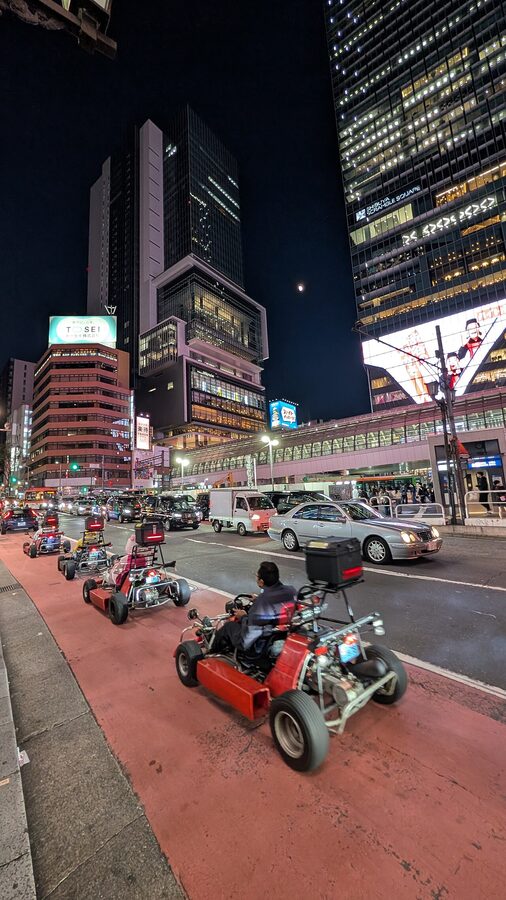
Tokyo’s go-kart tours are guided convoys of single-seat, open-top, road-legal go-karts that drive on public streets — the same streets as regular Tokyo cars. Top speed around 50-60 km/h. Route options include Shibuya Crossing, Rainbow Bridge, Tokyo Tower loop, Akihabara, Roppongi. Tours run 1-2 hours, with a lead guide on their own kart in front and a sweeper behind.
Legal status: these are tiny-cars registered as road vehicles (kei-class or micro-class). Drivers are treated as regular car drivers — must have a valid licence, must follow traffic rules, must wear a seatbelt. The tour companies have operated legally for over a decade despite the Nintendo lawsuit.
Not actual Mario Kart: the game’s Mario Kart involves weapons, turbo boosts, and ridiculous physics. Real Tokyo go-karts are… real driving. You’re operating a go-kart in traffic. There are no shells, no mushrooms, no coins.
The licence requirement (read this first)
This is where most would-be riders get caught out. To drive a road-legal vehicle in Japan as a foreign visitor, you need one of:
International Driving Permit (IDP) — issued by your home country’s automobile association (AAA in the US, AA in the UK, etc.) under the 1949 Geneva Convention. Get this before you leave home. It’s usually issued same-day for around $20-30. Japanese tour operators will not accept IDPs issued under the newer 1968 Convention, which some countries issue (including, notably, some EU countries — check carefully).
Official translation of your home country licence — required for drivers from Switzerland, Germany, France, Belgium, Monaco, Slovenia, and Taiwan, since those countries don’t issue 1949-Convention IDPs. You need a JAF (Japan Automobile Federation) translation of your home licence — order from outside Japan in advance, or arrange at a JAF office after arrival (2-3 day lead time).
Japanese driving licence — if you have one, obviously. Foreign residents in Japan with a gaikokujin menkyo (Japanese-issued foreign driver’s licence) are fine.
Do not forget this. Operators turn away dozens of tourists a week who show up with only their home-country licence. No IDP = no ride. No refund, in most cases.
Operators — who to book
Two main English-friendly operators dominate. Both are legitimate, licensed, and have similar pricing. Differences in route details, booking flexibility, and specific experience.
Street Kart (formerly MariCar)
The larger operator, with locations across Tokyo. Original company that Nintendo sued and rebranded. Multiple start points: Shibuya, Shinjuku, Akihabara, Odaiba, Asakusa. Prices: ¥9,000 for a 1-hour tour, ¥13,000 for 2 hours. Character costume included. Helmet and waterproof gear provided.
Book at: streetkart.com. Klook and GetYourGuide resell the same tours often at similar prices.
Akiba Kart / Japan Kart
Smaller operator, often slightly cheaper, Akihabara-based start point with routes going to Tokyo Tower and around the Imperial Palace. Prices: ¥8,000-11,000 depending on duration. Similar costume + equipment package.
Book at: japankart.com.
Other operators
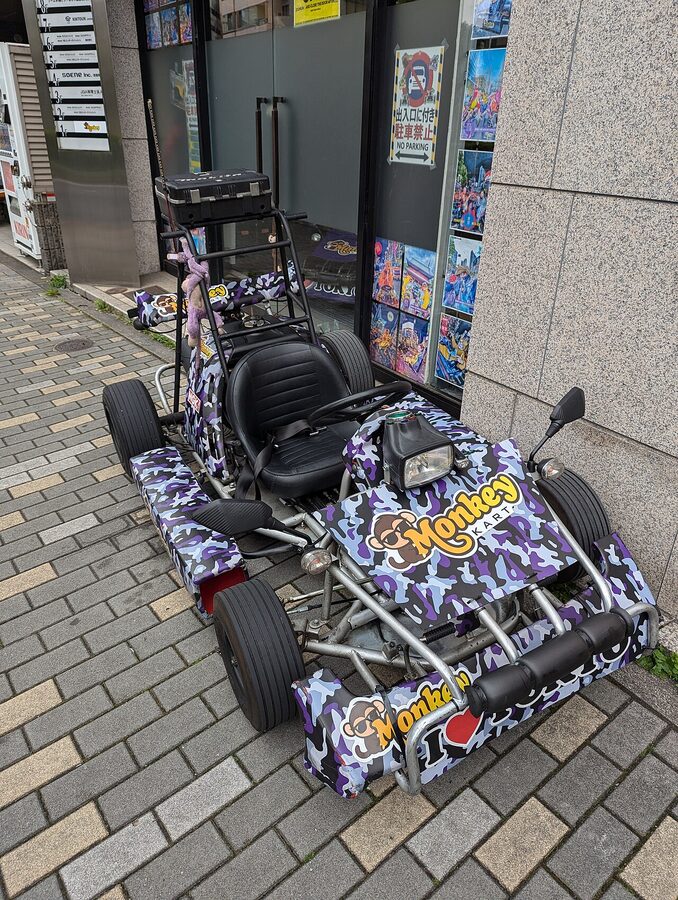
Monkey Kart, Kart Fun Japan, and various smaller outfits exist. All operate to the same basic model. Our rule: stick with Street Kart or Akiba Kart unless you’ve read recent reviews of a specific smaller operator. The established ones have consistent guide quality and safety records.
Which route — the decision
Most operators offer 3-5 route options. Pick by:
Shibuya + Roppongi + Tokyo Tower — the postcard tour. Crosses Shibuya Scramble (huge moment), passes Tokyo Tower, loops through central-south Tokyo. The one most first-timers want. 1-2 hours. Best for: photographs, the neon-night version especially.
Asakusa + Skytree + Imperial Palace — a longer, east-side route. Crosses the Sumida River, past Senso-ji, around Tokyo Station. More varied scenery, less neon. Best for: daytime tours, second-trip visitors who’ve already done the Shibuya route.
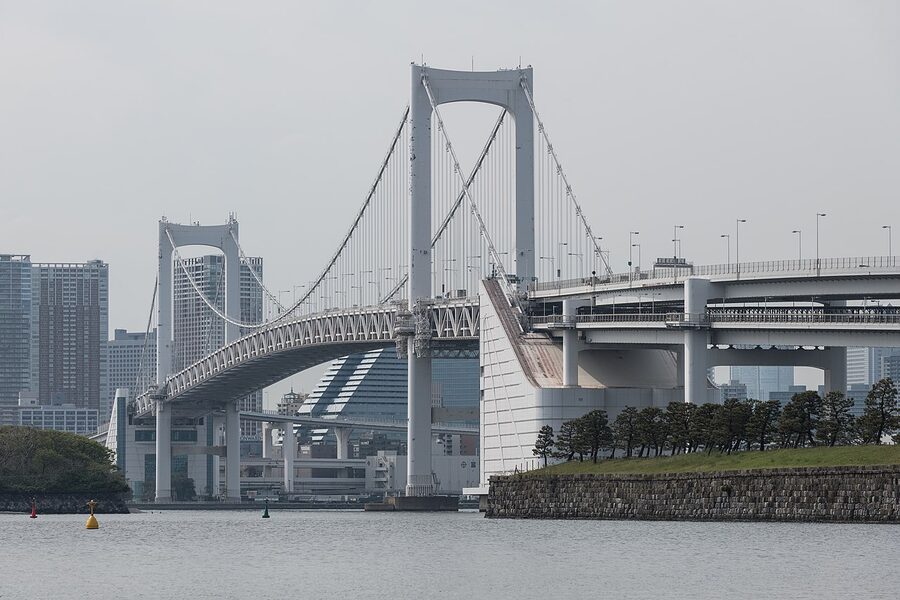
Odaiba + Rainbow Bridge — crosses the actual Rainbow Bridge (the upper deck is car-only, so you’re on the bridge alongside regular traffic). Dramatic sunset runs are the highlight. Best for: golden-hour photographers.
Akihabara + Tokyo Tower — starts in otaku territory, winds through Kanda to Tokyo Tower. Good if you’re staying north-central (Ueno, Akihabara) and want to minimise pickup commute time.
Our pick for first-timers: a Shibuya-start evening tour that hits Shibuya Crossing, Roppongi, Tokyo Tower, and does the final stretch at blue hour. Maximum photo density, maximum neon.
Booking and logistics
Book 3-7 days in advance for evening slots; weekend evenings especially. Same-day bookings sometimes available for daytime weekday slots. Meet 15 minutes early at the designated start garage — you’ll need to show licence + IDP, sign waivers, choose a costume, receive a safety briefing.
Group size: typically 3-8 riders plus a guide. Solo riders fine; couples and friend groups of 2-4 are ideal. Groups larger than 6 sometimes get split across two departures with two guides.
Weather: tours run in light rain with waterproof gear provided. Cancelled in heavy rain or storms. Hot summer tours (August 1-3pm) can be brutal with no aircon.
Photos: the guide usually takes group photos and shares them after via a dedicated site or email. Don’t try to photograph while driving — one hand on the wheel rule is enforced strictly.
Safety reality check
Tokyo traffic is moderate-density at best times, chaotic at rush hour. Go-kart tours actively avoid the worst windows (11am-12pm, 6-7pm). Tours stick to specific pre-approved routes with lower speed limits. Guides communicate via radio with each kart to flag traffic changes.
That said: you’re in open-top tiny vehicles at road level, adjacent to buses and taxis. This is real traffic. Not amusement park racing. The safety record is actually decent — operators have been running these tours for over a decade — but it’s not zero-risk.
Who should skip: very nervous drivers, pregnant travellers, anyone under 150cm tall (reach issues with pedals), people with back or neck injuries (the karts bounce).
Sober only: the alcohol-for-drivers limit in Japan is effectively 0.0%. Tour operators breath-test before departure. Don’t drink before.
Costume options
You’ll choose your costume from the operator’s rental rack. Typical options:
Mario, Luigi, Princess Peach, Princess Daisy, Yoshi, Toad, Donkey Kong, Wario, Waluigi — the most requested. Availability rotates; the classic characters go first, so book early and arrive on time.
Superman, Spider-Man, Minions, generic superhero — the non-Nintendo alternatives added after the Mario lawsuit.
Dinosaur / panda / animal onesie — for guests who want to feel the spirit without committing to a specific IP.
The costume is genuinely part of the experience — the photos are half the reason to go. Commit fully.
Cost breakdown
1-hour tour: ¥8,000-9,000. Includes costume, gear, guide. Excludes photos (¥500-2,000 add-on), fuel (usually included but sometimes extra), parking.
2-hour tour: ¥12,000-14,000. The full Shibuya+Roppongi+Tokyo Tower experience. More stops for photos.
3+ hour tour: ¥18,000-22,000. Custom/private routes. For groups or special requests.
Tips you’ll see hidden: deposit for the kart (¥10,000 held on card), IDP validity check mandatory at pickup, IDP-translation fee if using a JAF translation (¥4,000).
Fair value assessment: ¥9,000-13,000 is legitimately mid-range Tokyo tourist pricing. Comparable to a Shibuya Sky ticket + dinner. The experience is unique to Tokyo; you can’t replicate it anywhere else on earth. Worth it for first-time visitors who meet the licence requirement.
Is it worth it?
Yes, if: you have a valid IDP, you’re a confident-enough driver to handle Tokyo traffic at go-kart speed, you’re 20-40 years old or in that physical range, you want the unique-to-Tokyo photo moment. First-time Tokyo visitors with friends/partner: this is a top-10 experience.
Skip if: you don’t have an IDP (you won’t get in), you’re travelling solo and feel self-conscious about the costume, you’re nervous about driving in unfamiliar cities, it’s your only chance to do something in Tokyo and you’d rather do something contemplative (Meiji Jingu, a museum, sushi).
Our view: it’s worth the ¥9,000 for the memory. Is it the most important Tokyo experience? No. Top 10? Arguably yes for the right travellers.
Mistakes to avoid
Arriving without an IDP. Single biggest issue. Pre-trip prep. No exceptions.
Picking a peak traffic slot. Book for off-peak windows: 10am-11am, 1-4pm, or 7-9pm. Avoid morning/evening rush.
Drinking beforehand. Breath-test at check-in. No alcohol within 8-12 hours of your ride.
Over-dressing. Wear flexible, casual clothes under your costume. Skirts/dresses are awkward in go-karts.
Trying to do this in rain. Operator will provide waterproofs, but the experience is worse in wet weather. If the forecast looks bad, reschedule.
Not tipping the guide. Not culturally expected in Japan, but guides do go above and beyond for these tours. ¥500-1,000 at the end is a polite gesture if you had a great time.
What happens on the day — step by step
15 min before start: arrive at the operator’s garage. Present IDP + home licence. Sign waiver. Secure a locker for your belongings.
Safety briefing: 15-minute demo of controls (accelerator, brake, steering, seatbelt). Demo of radio. Demo of the hand signals the guide uses to indicate turns and stops.
Costume selection: choose from the rack. First come, first served on the popular outfits.
Practice lap: 2-3 laps around the garage lot to get a feel for the kart before going to the streets.
Convoy departure: guide leads, you follow. Radio check. Photo stops at designated spots (usually 2-4 during a 1-hour tour, 4-6 during a 2-hour tour).
Return: back to the garage, return the kart and costume, collect your photos (sent digitally a few hours later), depart.
FAQ
Do I need a driving licence?
Yes. A valid home-country licence PLUS a 1949-Geneva-Convention International Driving Permit (or a JAF translation of your licence if your country issues only 1968-Convention IDPs). Without this, the operator will turn you away with no refund.
Is there an age limit?
Minimum 18-20 depending on operator. Maximum officially none but physical fitness matters — the karts are low, unsprung, and bouncy. Over-70 not recommended without specific experience.
Can I take photos while driving?
No. Strictly enforced. Hands on the wheel. Photo opportunities happen at designated stops. The guide takes convoy photos and shares them after.
Is it safe?
Moderately. You’re in open-top road-legal vehicles in live Tokyo traffic. Operators have solid safety records after a decade-plus of operation, but it’s not zero-risk. Helmets provided. Confident drivers only.
What if I’ve never driven in Japan before?
You’ll be driving on the left (Japan drives left-handed). If you’re from a right-hand-drive country like the US, this takes adjustment. The practice laps before the street departure help. Guides are patient. But it’s not the experience to learn left-hand driving on.
Is the Shibuya Crossing crossing actually good?
It’s the central moment of most tours. Genuinely memorable. Your 15-30 seconds on the Crossing in the middle of a convoy, in costume, surrounded by people photographing you — that’s the shot. Worth the ¥9,000 for that moment alone.
Short version
Tokyo go-kart tours are real street driving in costumed go-karts, ¥9,000-14,000, 1-2 hours, bookable at Street Kart or Akiba Kart. Requires valid International Driving Permit obtained before your trip. Worth it for confident drivers who want the unique-to-Tokyo photo experience. Shibuya + Rainbow Bridge + Tokyo Tower route is the first-timer pick.
More: citywide things to do, Shibuya guide, first-time Tokyo guide.