
Odaiba is Tokyo’s purpose-built Tokyo-Bay playground — a man-made island of shopping malls, giant Gundams, teamLab art experiences, a surprise Statue of Liberty, and some of the city’s best panoramic views back across the water. It’s unashamedly touristy. It’s also the only Tokyo neighbourhood where you get a beach, a Ferris wheel, a science museum, and a mecha robot all within a 20-minute walk. Come here on day two or three, with kids, after dark, or on a rainy day — it’s ideal for all four.
Below is our run of 25 things to do in Odaiba. Yen prices, station tips (Odaiba is a pain to navigate without one), and real takes on which teamLab you should book and which mall rooftop has the better view. Pair with our first-timer’s guide and our citywide list.
Access: The Yurikamome elevated driverless train is the famous way in. Runs from Shimbashi Station (JR Yamanote) across Rainbow Bridge with panoramic windows. ¥330 one-way to Odaiba-kaihinkoen. Alternate: Rinkai Line from Shinjuku/Shibuya to Tokyo Teleport Station (¥380). Faster, less view. Boat from Asakusa is also available (see below).
In This Article
- 1. Walk Rainbow Bridge
- 2. Time your visit for sunset at Rainbow Bridge
- 3. Lose yourself at teamLab Planets
- 4. Visit teamLab Borderless (in Azabudai Hills)
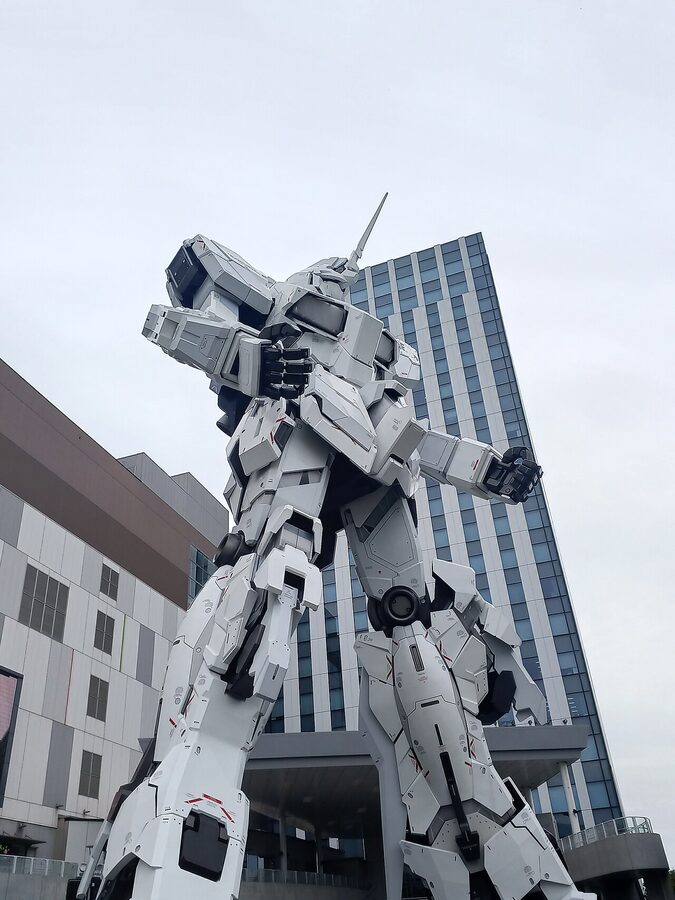
- 5. Stand under the Unicorn Gundam
- 6. Shop (and rooftop) at DiverCity Tokyo Plaza
- 7. See the Statue of Liberty
- 8. Visit the Miraikan science museum
- 9. Ride the Daikanransha Ferris wheel
- 10. Ride the Yurikamome (and enjoy the view)
- 11. Photograph Fuji TV
- 12. Walk Aqua City
- 13. Beach day at Odaiba Seaside Park
- 14. Shop (or skip) DECKS Tokyo Beach
- 15. Check out Palette Town (what’s left)
- 16. Soak at Tokyo Onsen (Oedo Onsen alternative)
- 17. Visit Tokyo Big Sight
- 18. Walk Shiokaze Park
- 19. Photograph Odaiba at night
- 20. Eat in the malls (it’s not as bad as it sounds)
- 21. Take a water bus back to Asakusa
- 22. Catch cherry blossoms on Odaiba
- 23. Walk Symbol Promenade Park
- 24. Use Daiba Station as a orientation point
- 25. End with a Tokyo Bay sunset
- Getting to Odaiba
- Where to stay in Odaiba
- Odaiba FAQ
- Is Odaiba worth visiting?
- How do I get from Odaiba to central Tokyo?
- Is Odaiba good for kids?
- What’s the best way to see Rainbow Bridge?
- Is there anything to do on rainy days?
- The short version
1. Walk Rainbow Bridge
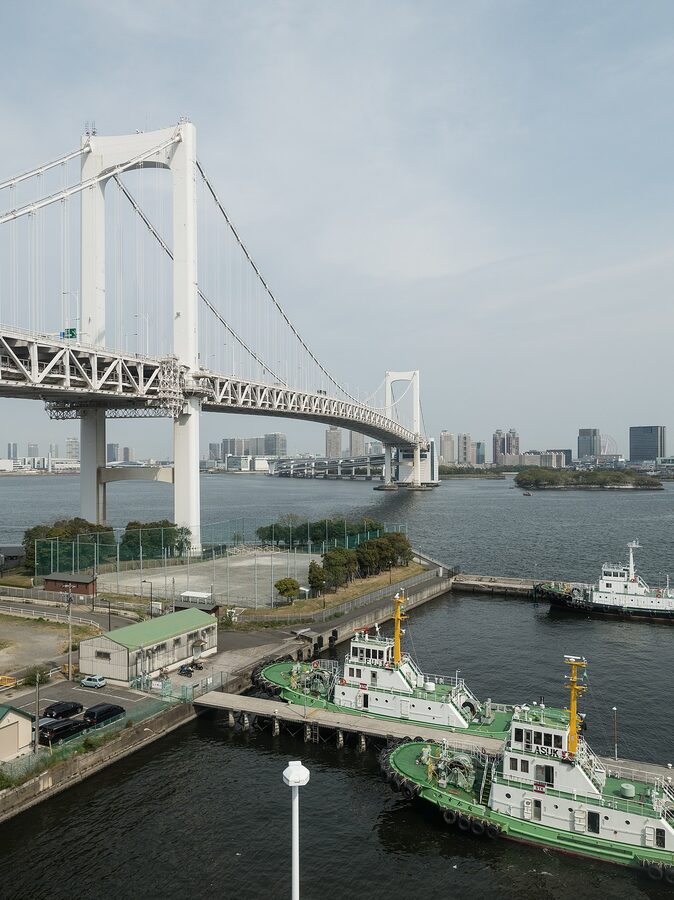
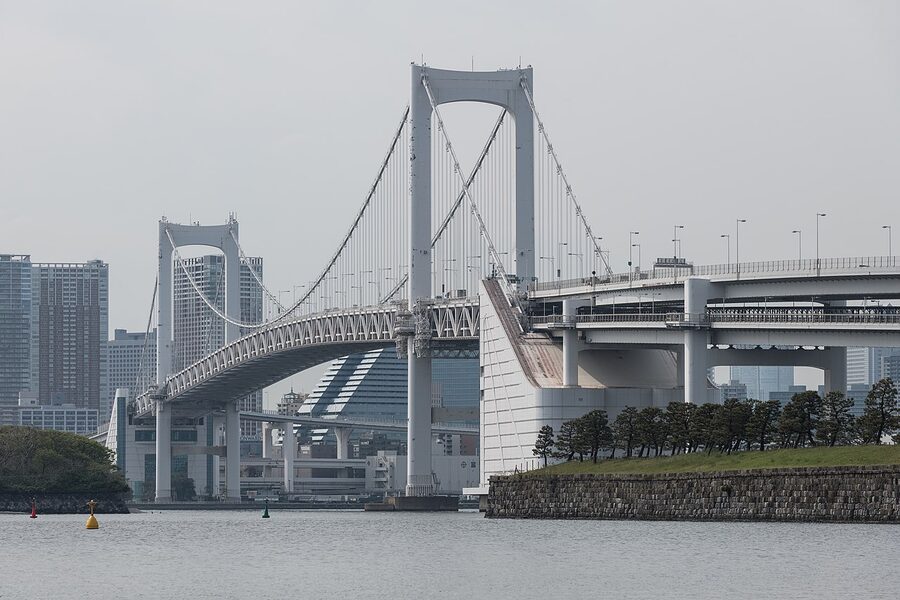
Rainbow Bridge (レインボーブリッジ) is the 798-metre double-deck suspension bridge connecting Odaiba to mainland Tokyo. The upper deck carries cars and the Yurikamome train; the lower deck has pedestrian walkways (north side, with Tokyo views, and south side, with Pacific Ocean views). You can walk across — 30-35 minutes end-to-end, free, with genuine panoramic Tokyo Bay views the whole way.
Hours for pedestrian walkways: 9am–9pm (summer), 10am–6pm (winter). Closed third Monday of every month. Take the Yurikamome to Odaiba-kaihinkoen, walk north toward the bridge entrance. The walk back to the Shibaura side takes you to Hamamatsuchō.
2. Time your visit for sunset at Rainbow Bridge
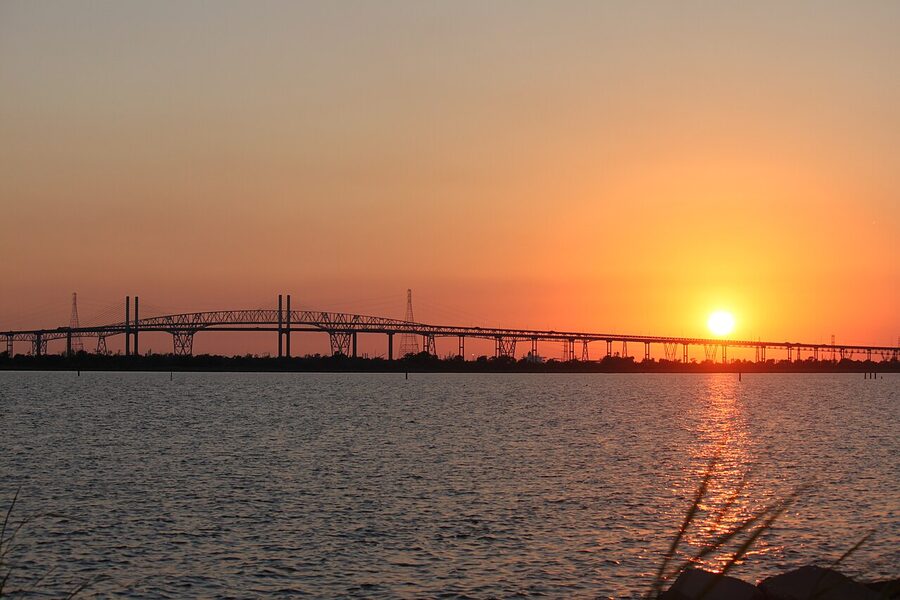
The Rainbow Bridge at sunset — seen from Odaiba’s beach or the DiverCity rooftop — is the single photograph everyone takes from the island. Golden hour over Tokyo Bay with the bridge silhouetted. In winter especially, Mt Fuji sometimes appears on the horizon behind. Free. Always there. Go at the right time.
Best viewpoints: Odaiba Seaside Park beach (ground-level), Aqua City rooftop, DiverCity Tokyo Plaza Sky Terrace. Arrive 30-40 minutes before sunset; stay 60 minutes for the blue-hour transition.
3. Lose yourself at teamLab Planets
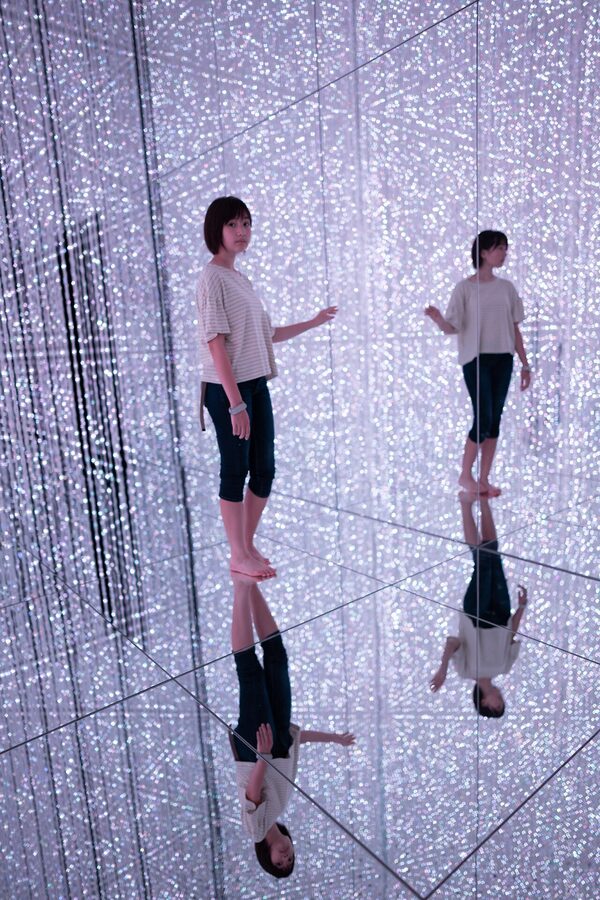
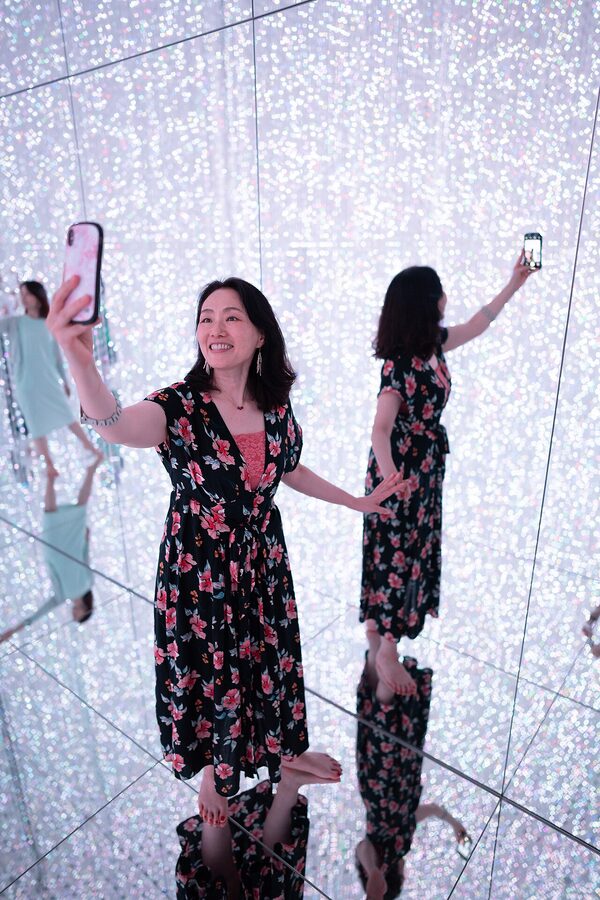
teamLab Planets is Odaiba’s immersive-art destination — a 10-room experience where you walk barefoot through installations of projected light, infinity mirror rooms, 200,000 hanging orchids, and a shallow koi-pond you wade through with virtual fish swimming around your feet. It’s been Tokyo’s single most-photographed art experience since it opened in 2018. It was supposed to close in 2023, got extended, and is now due to close sometime late in the decade — check current status.
Tickets: ¥3,800 adults, timed-entry only, book 1-2 weeks ahead (they sell out fast). Duration: ~75 minutes. Wear shorts or roll up trousers (you’ll be wading through water in one room). Official site.
4. Visit teamLab Borderless (in Azabudai Hills)
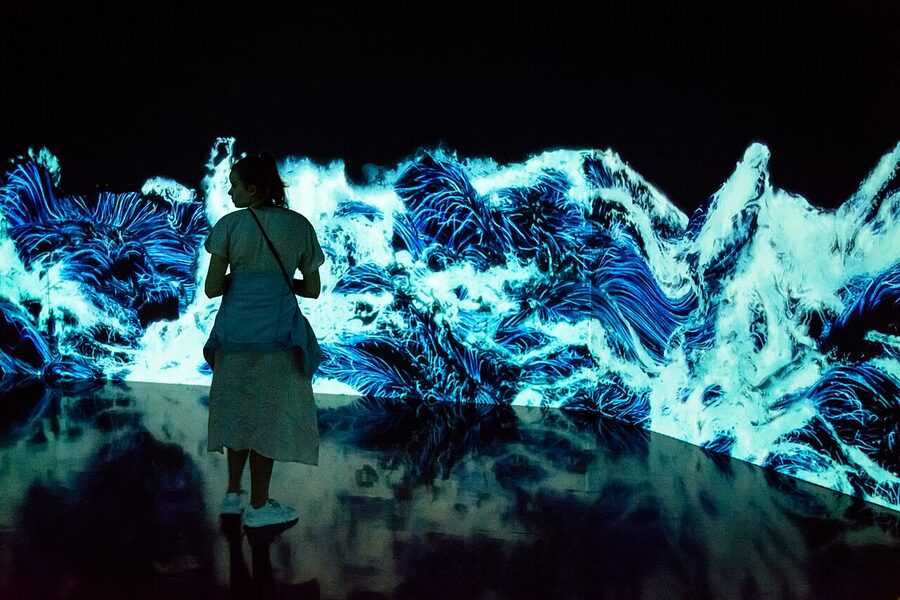
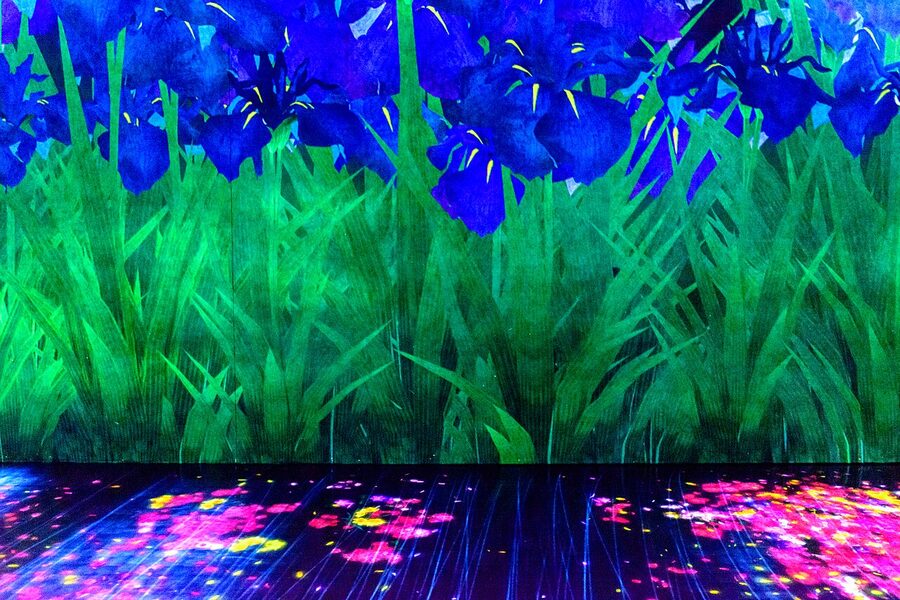
teamLab Borderless — the older, bigger sister of Planets — technically moved from Odaiba to Azabudai Hills in 2024. But the old venue stays in guidebooks and listings, so here’s the update: the new Borderless is at Azabudai Hills (not Odaiba). If you want to do both teamLabs in one Tokyo trip, plan for Planets in Odaiba + Borderless in Azabudai. Different experiences, both worth it.
Azabudai Hills Borderless: ¥3,800-4,300, timed-entry, book ahead. Easy trip from Odaiba by Yurikamome or Oedo Line.
5. Stand under the Unicorn Gundam
Outside DiverCity Tokyo Plaza stands a life-sized RX-0 Unicorn Gundam statue — 19.7 metres tall, installed 2017 (replacing the earlier RX-78-2 statue). It lights up, transforms between its "Unicorn" and "Destroy" forms, and performs mini-shows on a schedule (roughly every 30-60 minutes during daytime, different sequences at night with projection mapping). Free. Always there.
Best viewing: directly in front from the DiverCity plaza (~100 metres away, full view). After dark for the light shows. The schedule is posted on DiverCity’s site and typically has 4-5 shows between 11am and 9pm.
6. Shop (and rooftop) at DiverCity Tokyo Plaza
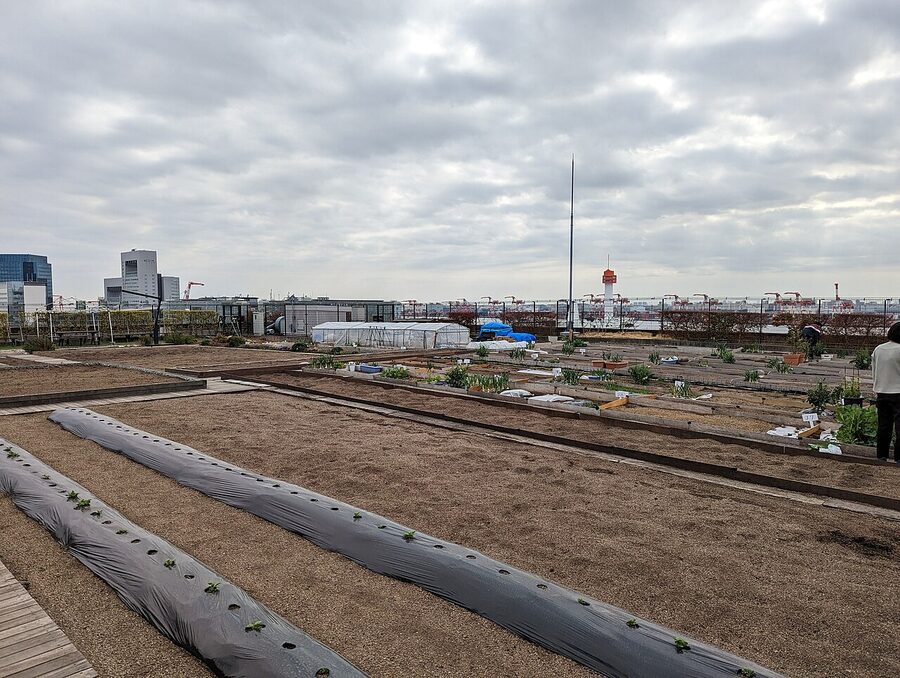
DiverCity Tokyo Plaza is the 7-storey mall with the Gundam outside — shops, food court, and a free-access rooftop Sky Terrace with 180-degree views of Tokyo Bay, the bridge, and mainland Tokyo. Shops are mid-range (Uniqlo, GU, plus specialty Gundam stores). Food court on the 2nd floor is reliable and cheap (¥800-1,500 per meal).
Hours: 10am–8pm shops, 11am–9pm restaurants. Rooftop is free and open until building closes.
7. See the Statue of Liberty
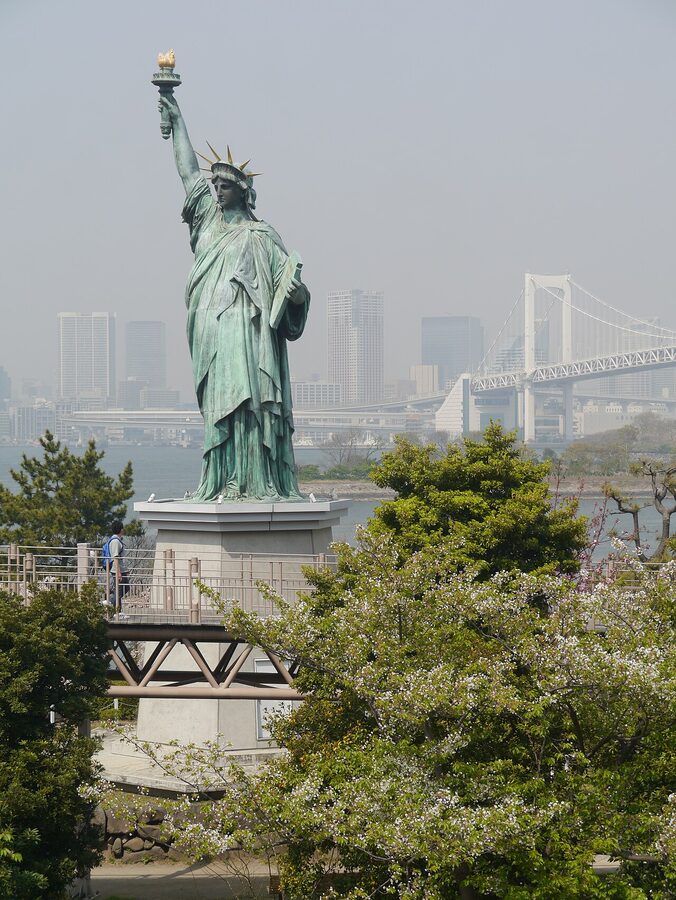
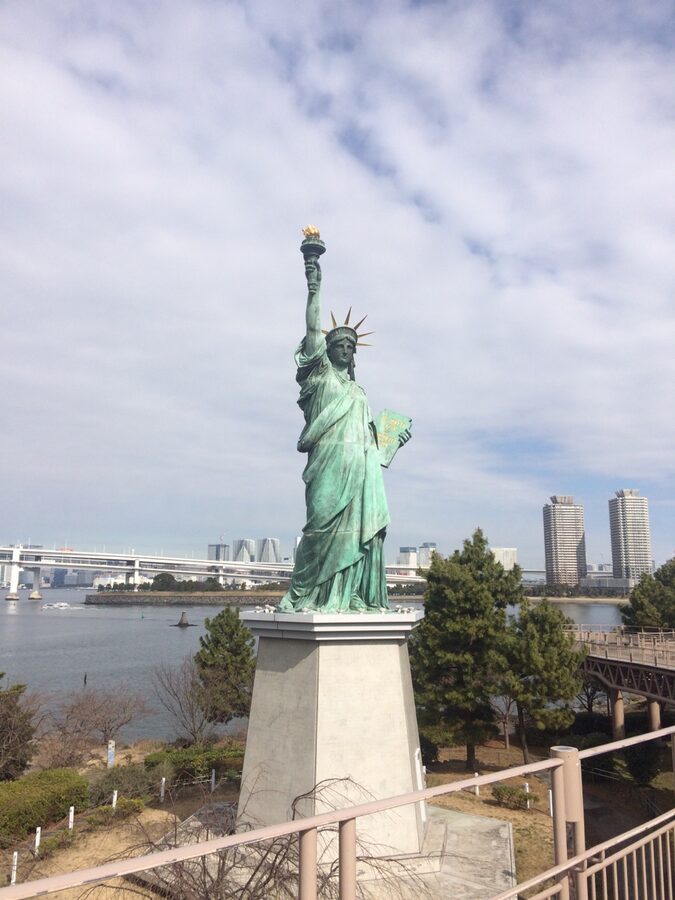
Yes, there’s a Statue of Liberty in Odaiba. It’s a 12-metre replica of the original Parisian version (which was the model for New York’s) — gifted by France to Japan in 2000 to commemorate the France-Japan relationship. It’s right on the beach, faces the Rainbow Bridge, and has become one of Odaiba’s defining photo subjects.
Free, always there. Best combined with the sunset Rainbow Bridge shot (item 2) for maximum Tokyo-Bay cinema.
8. Visit the Miraikan science museum
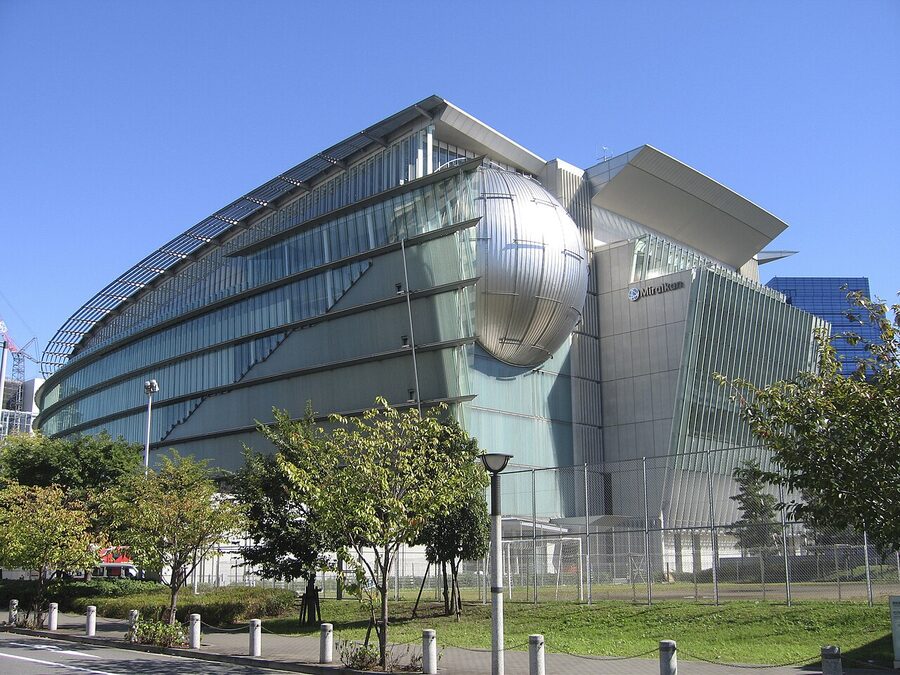
Miraikan (日本科学未来館) — the National Museum of Emerging Science and Innovation — is Japan’s best modern science museum. Permanent exhibits on space exploration (including a full-scale International Space Station Kibo module facsimile), robotics (ASIMO demonstrations, multiple times daily), internet/digital society, and earth systems. Rotating special exhibitions are usually international touring shows. Run by the Japanese government, so it’s genuinely academic-standard content.
Entry: ¥630 adults, free under-18s. Hours: 10am–5pm, closed Tuesdays (except holidays). A 10-minute walk from Daiba Station. Official site.
9. Ride the Daikanransha Ferris wheel
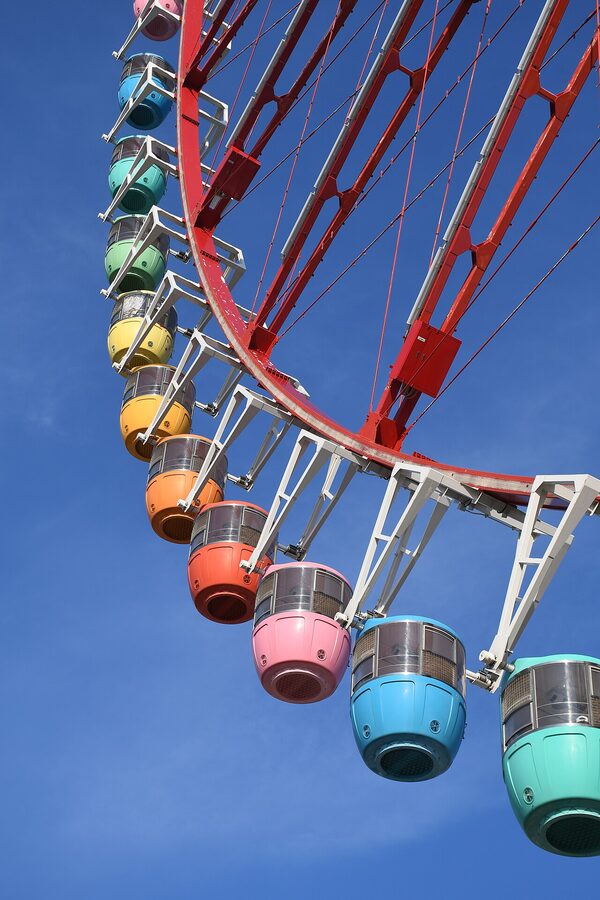
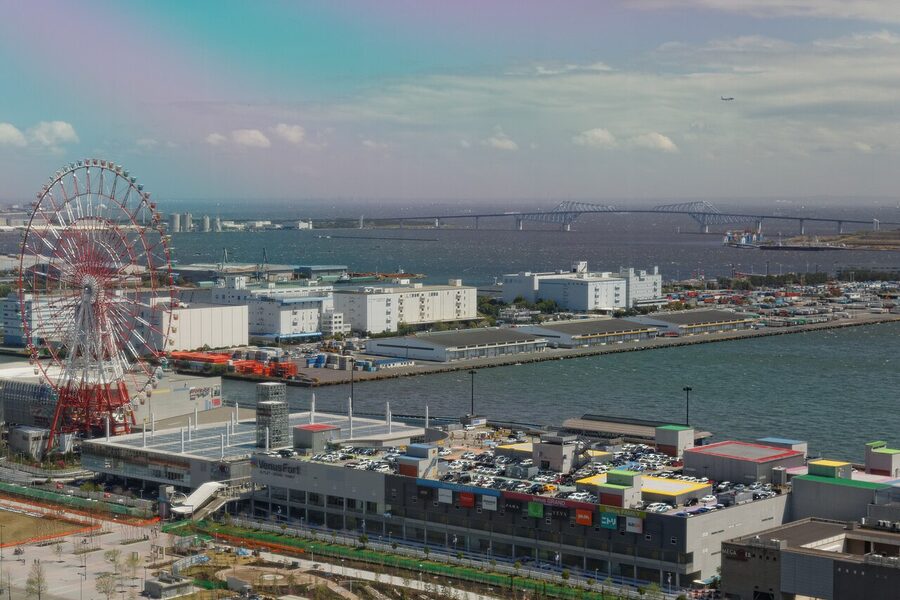
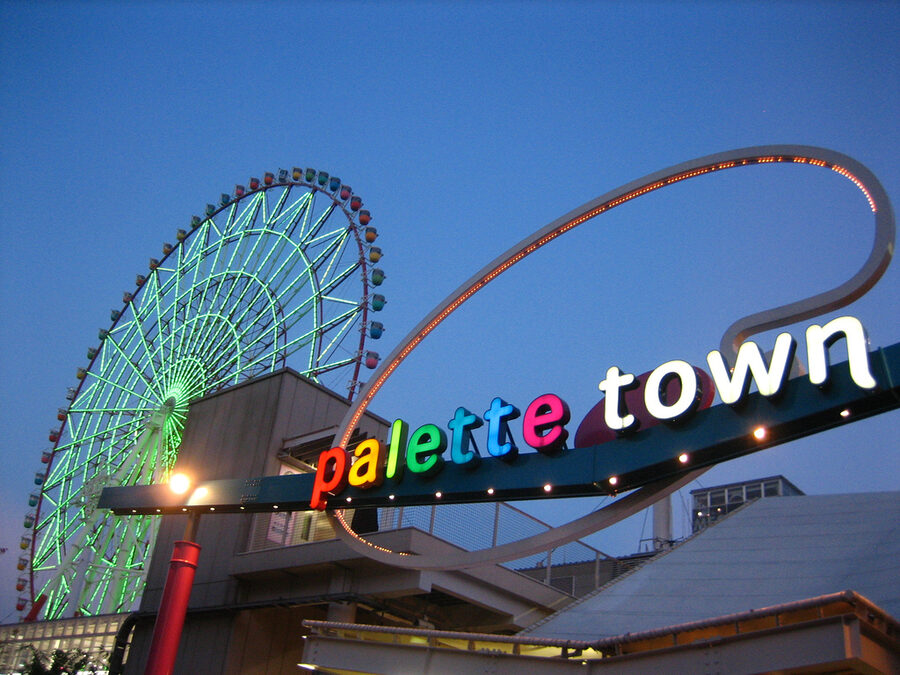
The Daikanransha (大観覧車) — literally Big Viewing Wheel — at Palette Town is a 115-metre Ferris wheel with the third-highest passenger view in Japan. ¥1,000 for a 16-minute ride that gives you 360-degree Tokyo Bay views. Two of the 64 gondolas are clear-sided (you can see straight through the floor), which costs ¥2,000 and is genuinely more nerve-rattling than it sounds.
Best time: sunset or just after (you’ll see the Tokyo skyline lighting up during the ride). Queue is usually 5-10 minutes on weekdays, 20-30 on busy weekends. Hours: 10am-10pm.
10. Ride the Yurikamome (and enjoy the view)
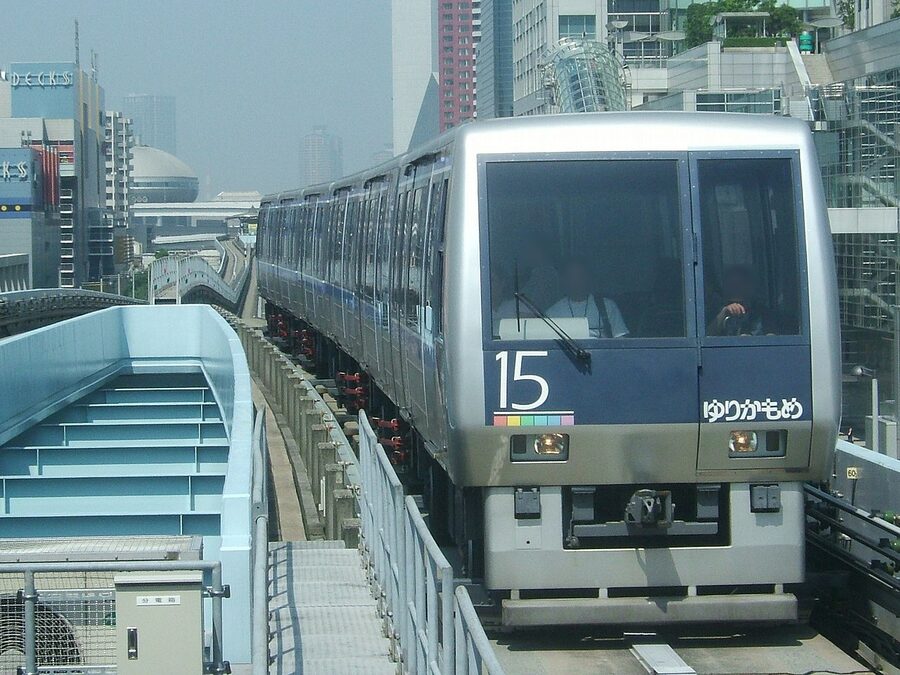
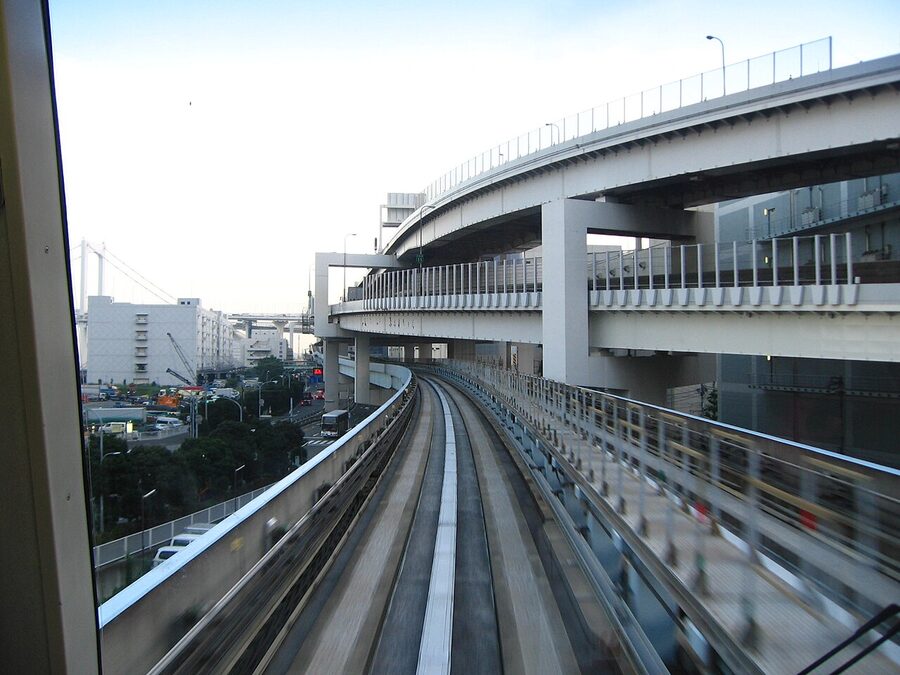
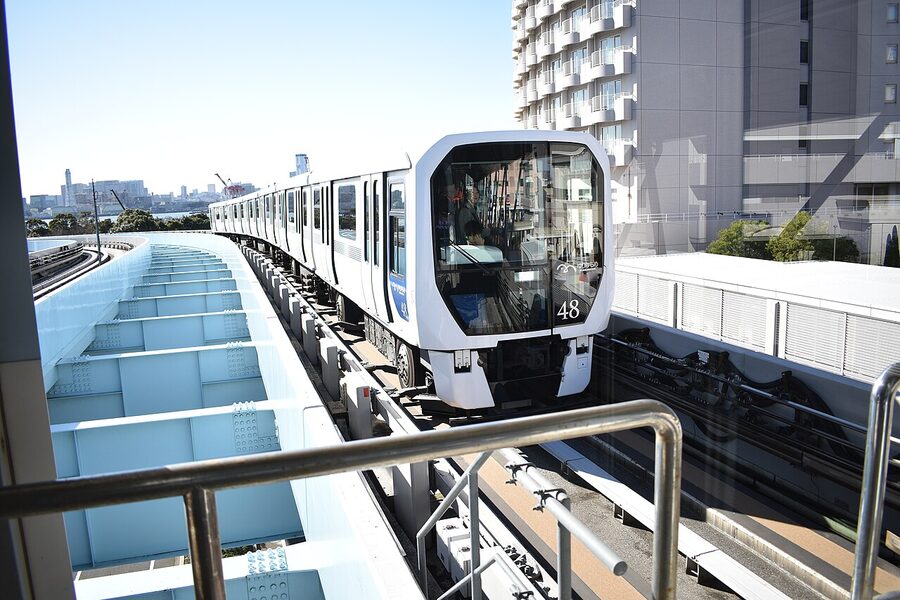
The Yurikamome (ゆりかもめ) driverless elevated train from Shimbashi to Odaiba is the attraction before you even arrive. The train climbs onto the Rainbow Bridge’s upper deck, gives you full panoramic windows of Tokyo Bay, passes through the Odaiba island network, and continues to Toyosu. Front-car seats (facing forward — no driver) are the best in Tokyo urban transit. ¥330 one-way, 25-30 min end-to-end.
Tickets: standard IC card accepted. For the experience, buy a one-day pass (¥820) and hop on-off at multiple stops.
11. Photograph Fuji TV
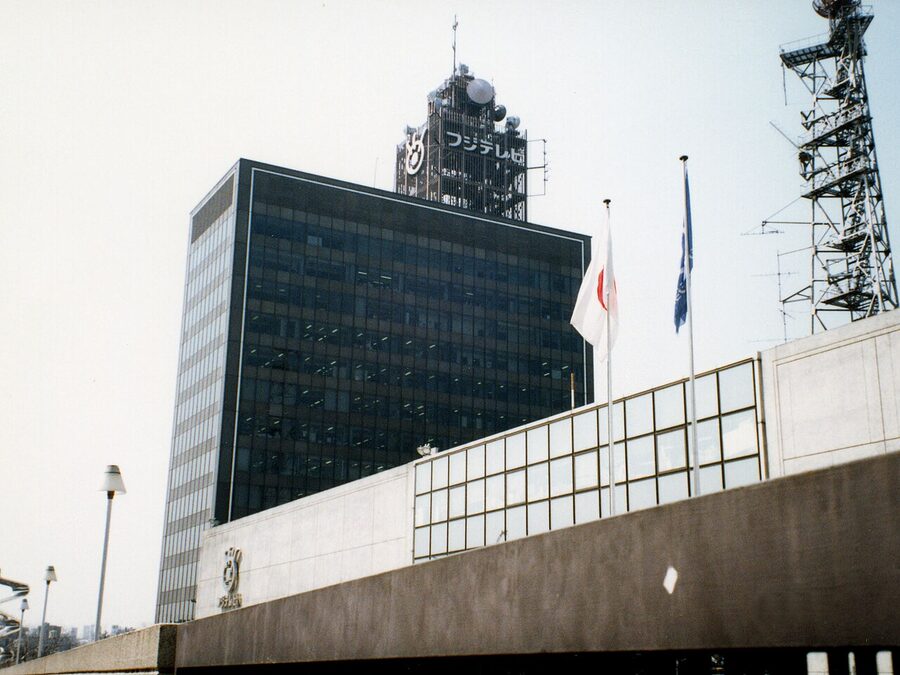
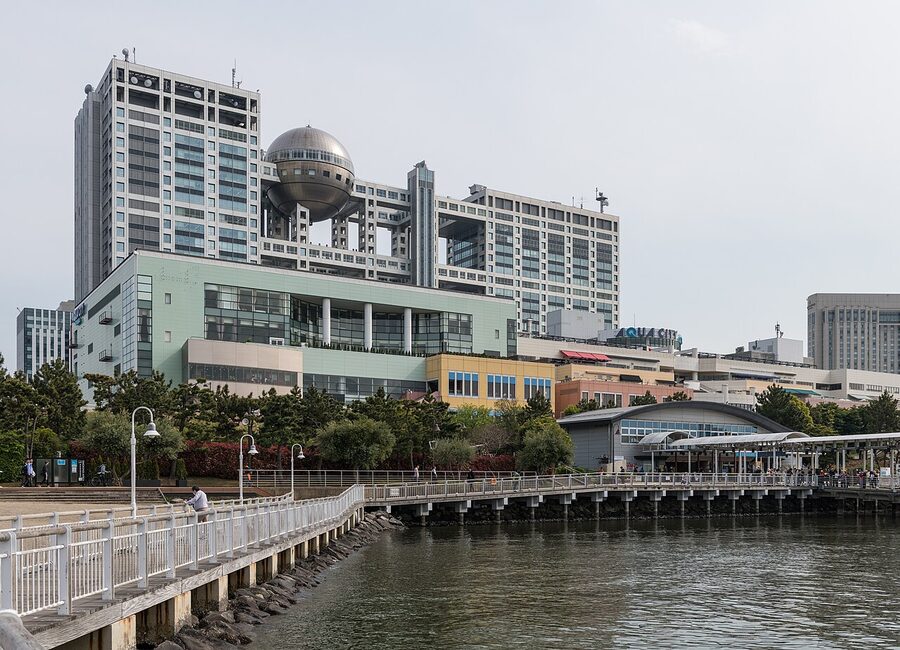
The Former Fuji Television headquarters is Odaiba’s most photographed building — a 1996 Kenzo Tange design with a 32-metre titanium-clad sphere suspended between two towers. Fuji TV (one of Japan’s main commercial broadcasters) moved most operations to a new facility in 2024, but the building is preserved as architectural landmark and still houses some TV production.
You can enter the ground floor lobby (free) and ride to the 25th-floor spherical observation room (¥550) with a panoramic Tokyo view. Closed some weekends. Hours: 10am–6pm.
12. Walk Aqua City
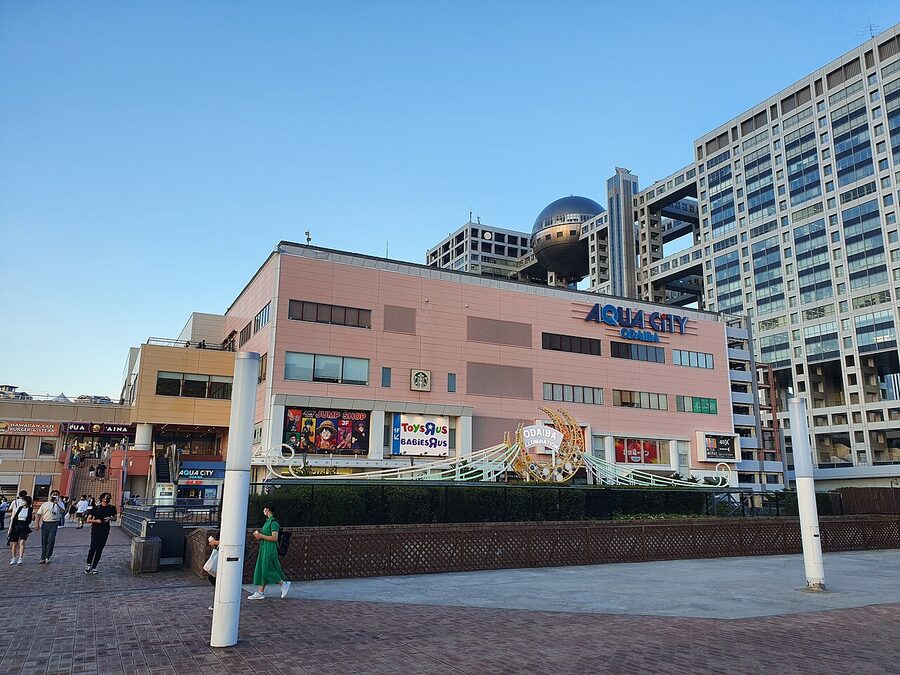
Aqua City Odaiba is the 6-floor mall directly north of the Statue of Liberty. Shops (mid-range, similar to DiverCity), a Toho Cinemas multiplex, multiple restaurants. The 6th floor has the Aqua City Roof (a free open-air terrace with Rainbow Bridge views). Nothing here is destination-quality, but it’s a useful weather escape and has decent sit-down dining.
Hours: 11am–9pm. Connected by pedestrian walkway to DiverCity and directly accessible from Daiba Station.
13. Beach day at Odaiba Seaside Park
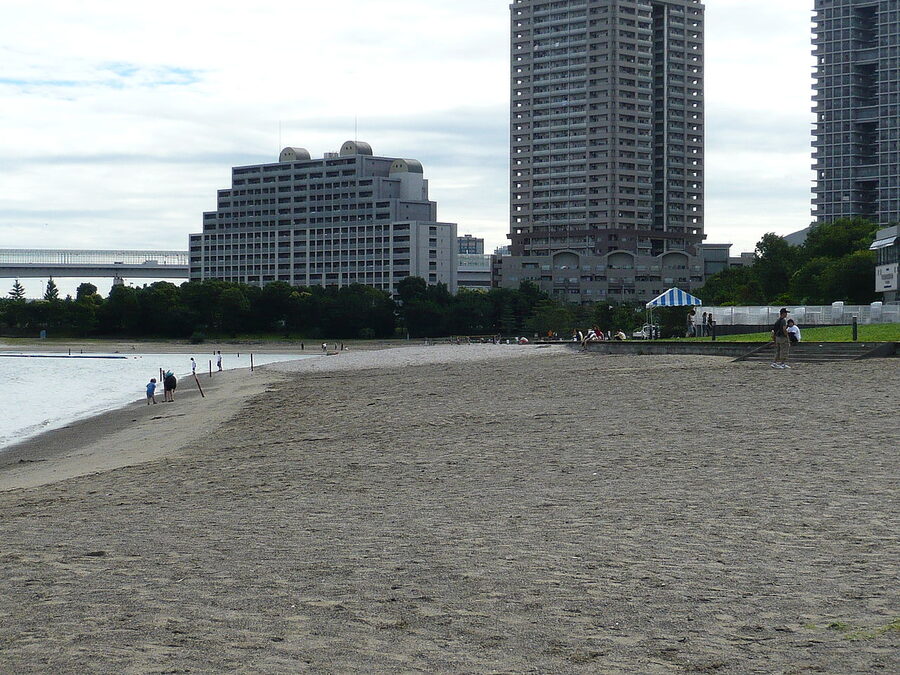
Odaiba Kaihin Koen (お台場海浜公園) / Seaside Park is Tokyo’s only urban beach — 800 metres of man-made sandy coastline on Tokyo Bay. The water is not for swimming (it’s a port, not a swimming beach). But: walking, picnic, sunset viewing, outdoor concerts, and beach volleyball are all part of the scene. Free, always open.
Best time: sunset, weekends (people-watching), or early morning (runners and dog walkers). The Liberty statue, Rainbow Bridge, and mainland Tokyo all centre on this park’s views.
14. Shop (or skip) DECKS Tokyo Beach
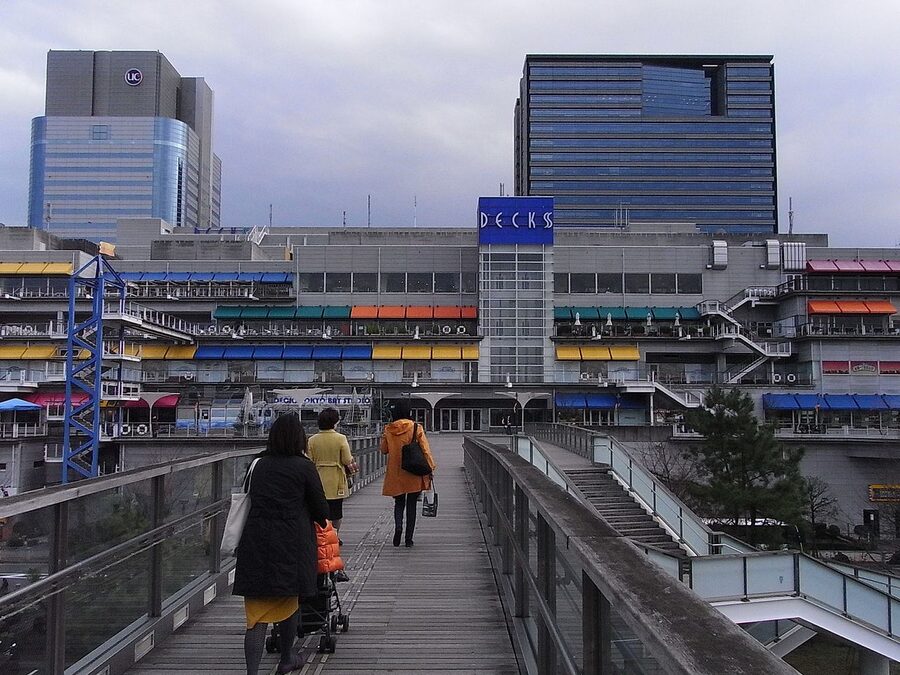
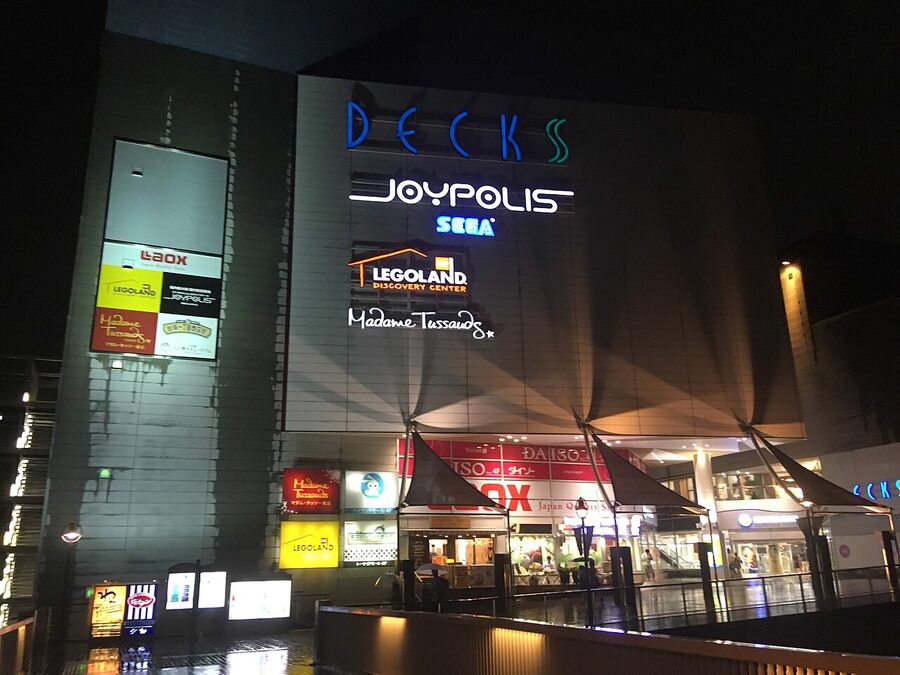
DECKS Tokyo Beach (デックス東京ビーチ) is a 7-floor shopping/entertainment complex adjacent to Aqua City. It houses Legoland Discovery Tokyo, Madame Tussauds Tokyo, Takoyaki Museum, Daiba 1-chome Shotengai (a replicated Showa-era shopping street), and various mid-range restaurants. It’s aggressively tourist-oriented and — in our view — the most skippable of the Odaiba malls unless you specifically want Legoland or Tussauds.
The Takoyaki Museum (2F) is the exception — 5 stalls run by different Osaka takoyaki specialists, ¥600-800/order, a legitimate mini-tour of the regional dish.
15. Check out Palette Town (what’s left)
Palette Town was the original Odaiba entertainment megacomplex — housed teamLab Borderless, Venus Fort shopping mall, the Daikanransha Ferris wheel, Megaweb Toyota car showroom, and more. Most of it was demolished in 2022-2023 for a new Toyota-led redevelopment. The Daikanransha (item 9) is the last element still standing. By 2026 a new mixed-use development replaces the site.
Check current status before planning. The redevelopment keeps the Ferris wheel but otherwise is new construction. The replacement is scheduled to include a large commercial complex and more green space.
16. Soak at Tokyo Onsen (Oedo Onsen alternative)
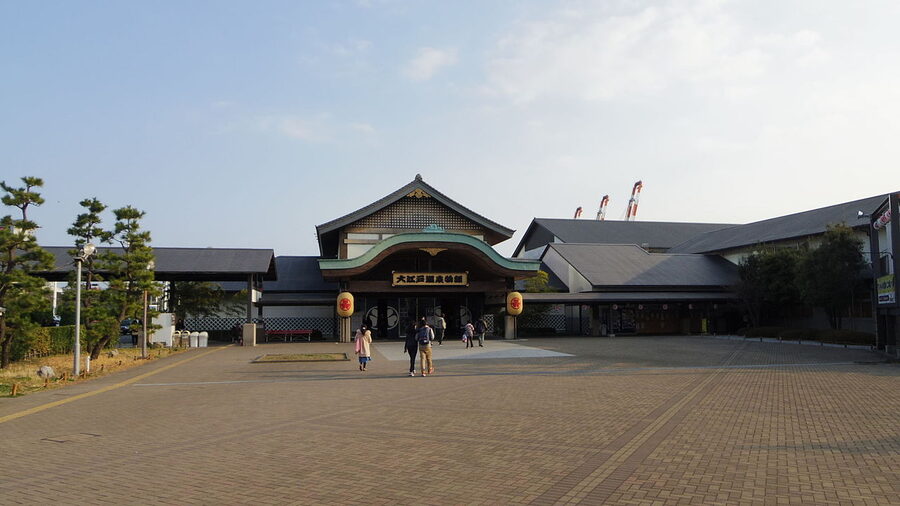
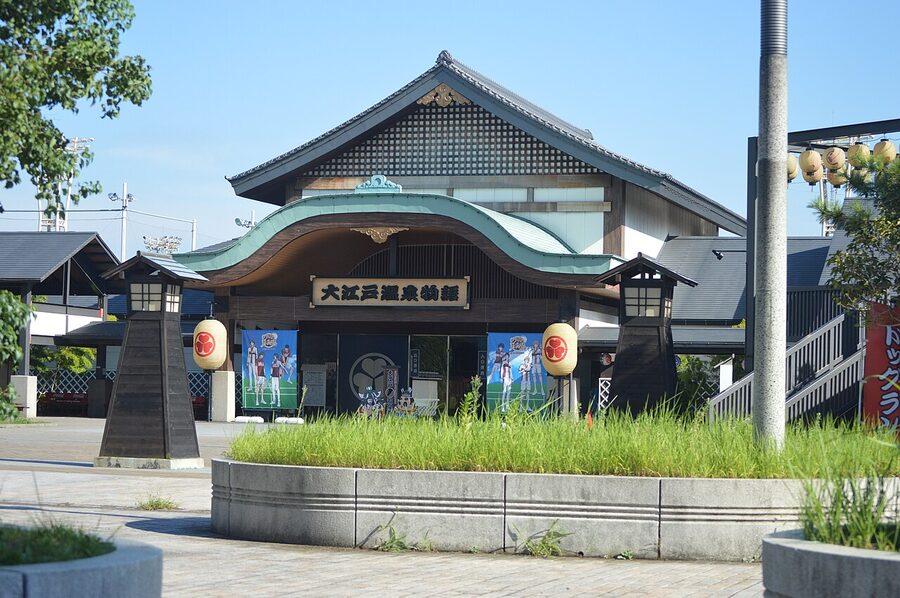
The famous Oedo Onsen Monogatari closed in September 2021 — it was Odaiba’s Edo-themed indoor hot-springs complex that ran for 18 years. The replacement concept, Tokyo Hot Spring Museum, hasn’t materialised. For now, the closest alternative is the Spa LaQua at Tokyo Dome City (not Odaiba but accessible). If your timing lucks out, check if a new Odaiba onsen has opened — the space is still designated for hot-springs use.
17. Visit Tokyo Big Sight
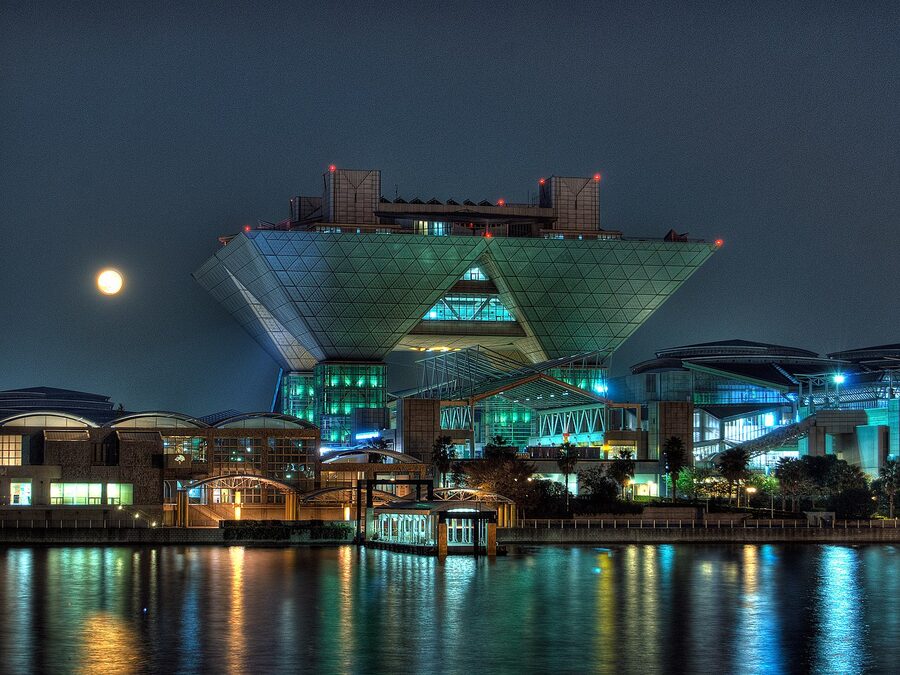
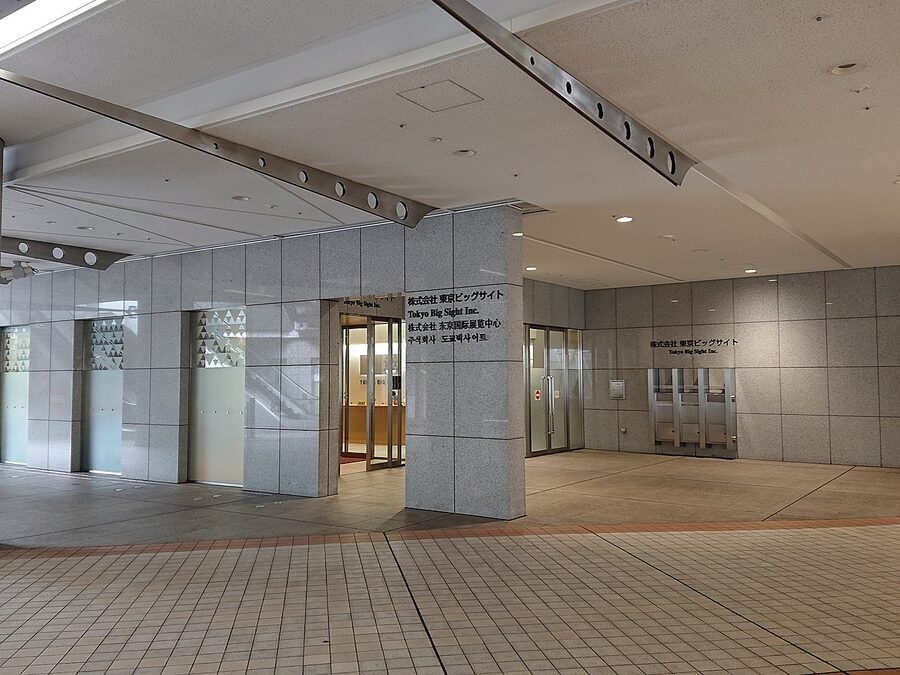
Tokyo Big Sight (東京ビッグサイト) — officially Tokyo International Exhibition Center — is Japan’s biggest convention centre and the trade-show venue for events including Comiket (the twice-yearly doujinshi comic fair), Tokyo Motor Show, and countless industry fairs. The main hall’s four inverted-pyramid structures are a 1996 architectural landmark.
If a trade show is happening (check Comiket dates — mid-August and late December — especially), budget ¥1,500-3,000 for entry and expect mass crowds. On non-event days the exterior is free to photograph and the building is accessible for quick walk-throughs.
18. Walk Shiokaze Park
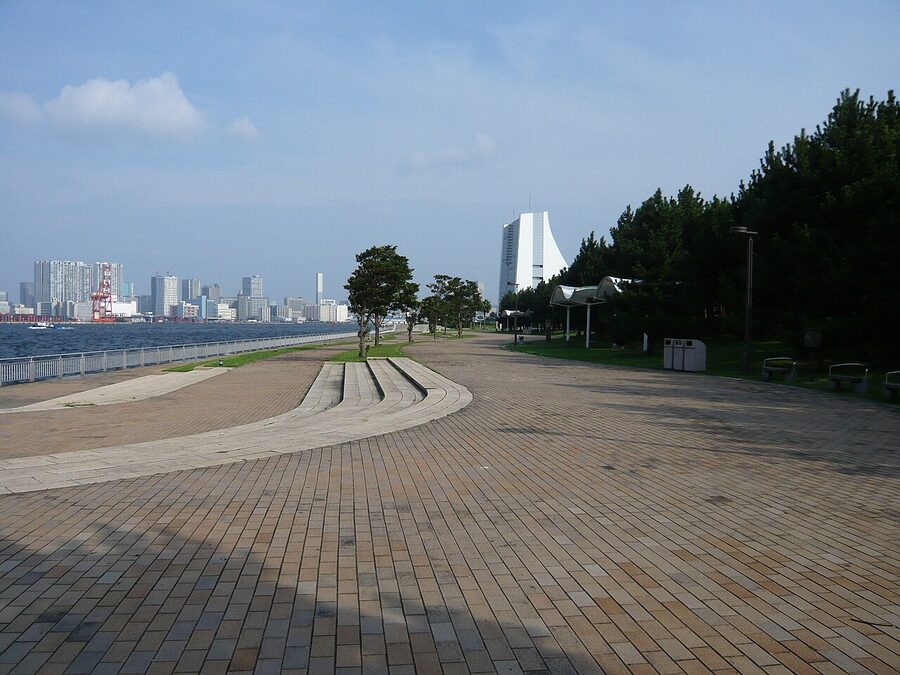
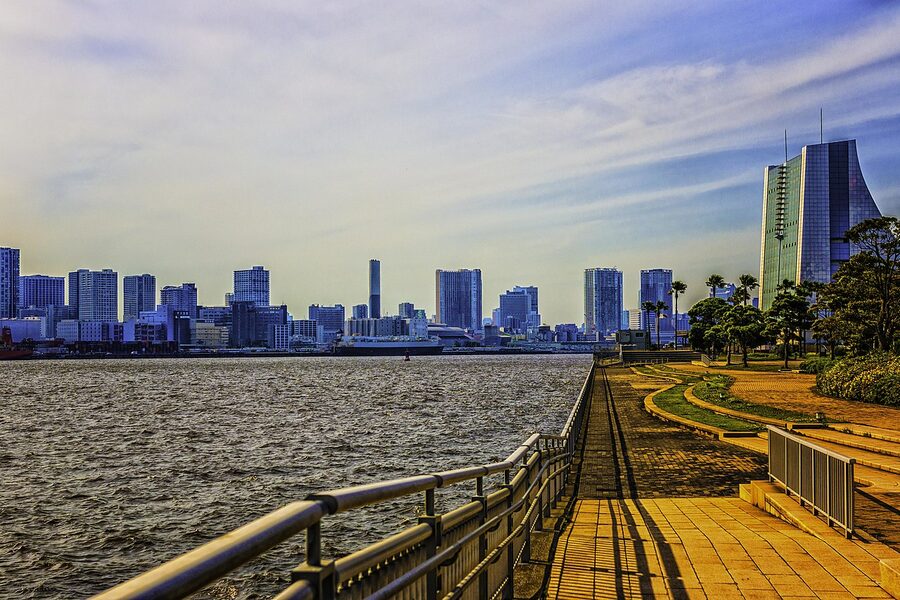
Shiokaze Park (潮風公園) is the underappreciated park on the eastern edge of Odaiba — 15 hectares of grass, trees, playgrounds, and walking paths with Tokyo Bay views. Quieter than the Seaside Park, free, always open. Cherry blossoms (late March) are the quiet seasonal high.
Good for picnics, frisbee, or just escaping the mall circuit. The 2020 Olympic beach volleyball venue was here — some of the infrastructure remains.
19. Photograph Odaiba at night
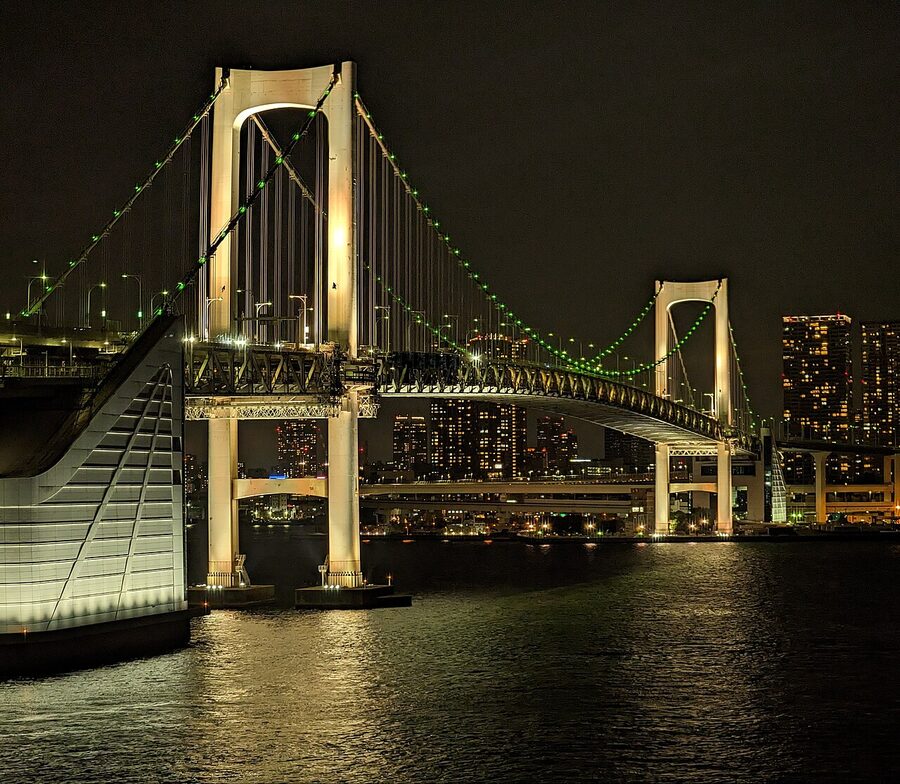
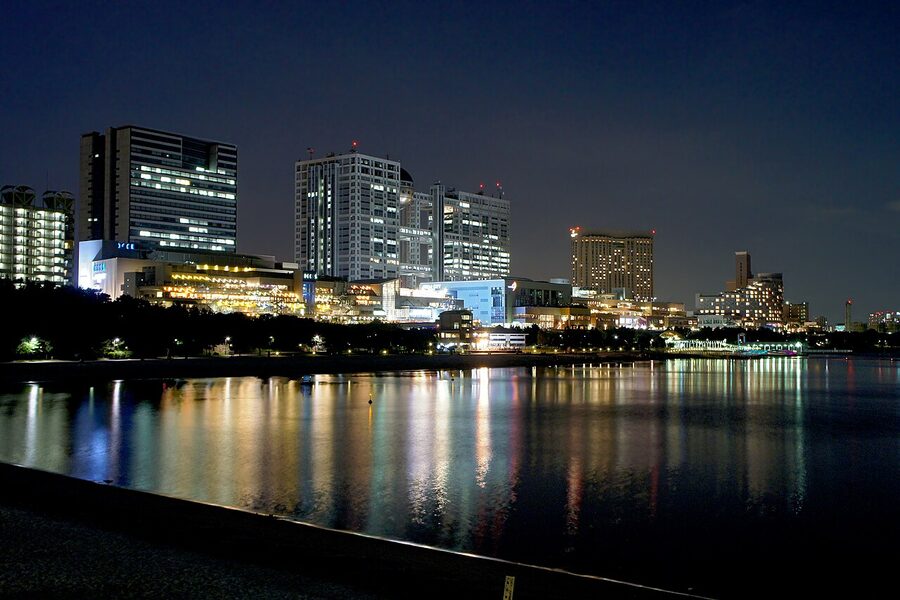
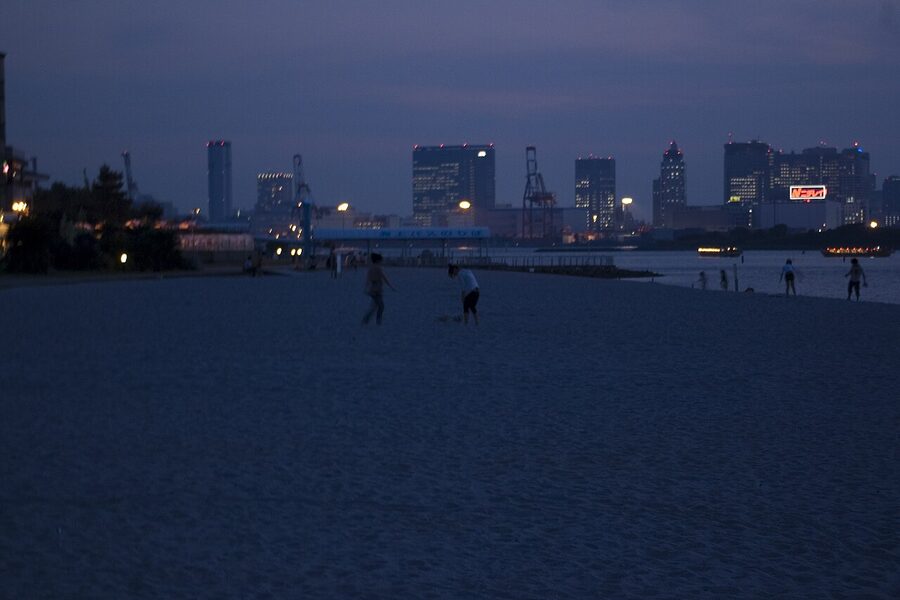
Odaiba after dark is one of Tokyo’s best night-photography districts — the Rainbow Bridge lit in cycling colours, DiverCity’s Gundam doing projection-mapped shows, the Fuji TV sphere illuminated, the Daikanransha cycling through LED sequences, Tokyo Tower and Skytree both visible from the same viewpoint. Budget an evening here after 6pm, especially in winter when the air is clearest.
Our sunset-to-night route: Seaside Park for sunset → Aqua City rooftop for blue hour → DiverCity for the Gundam show → Daikanransha for the night ride → Yurikamome back to Shimbashi with the bridge view from the train.
20. Eat in the malls (it’s not as bad as it sounds)
Odaiba’s restaurant scene is mall-dominated, which sounds negative but isn’t necessarily. The top-floor restaurant floors of Aqua City, DiverCity, Venus Fort (being rebuilt), and Hilton Tokyo Odaiba all have legitimate mid-tier Japanese options — tempura counters, tonkatsu, proper ramen, sit-down sushi. Budget ¥1,500-3,500 per person for a mall-floor dinner with views.
Outside of malls: the Kaiyo Cafe on the Seaside Park pier does a sunset beer+meal combo if weather cooperates. Chain izakaya branches exist across the island. Takoyaki at DECKS Museum is the single most Osakan thing in Odaiba.
21. Take a water bus back to Asakusa
For a different way home: the Tokyo Cruise water bus runs from Odaiba’s Hinode Pier to Asakusa, going under Rainbow Bridge and up the Sumida. ¥1,560 one-way, 50-60 minutes, scenic-as-hell. Covered in our Asakusa guide from the other direction. Departs Odaiba Seaside terminal roughly every 30-60 minutes.
Tokyo Cruise official. The Leiji Matsumoto-designed Himiko boats are the ones to look for.
22. Catch cherry blossoms on Odaiba
Odaiba isn’t a primary cherry blossom destination — it’s no Ueno — but Shiokaze Park and Symbol Promenade Park (item 23) both have modest cherry tree clusters that bloom in late March-early April with sea views in the background. It’s an underrated low-crowds hanami experience, particularly if you prefer contemplation over parties.
23. Walk Symbol Promenade Park
Symbol Promenade Park (シンボルプロムナード公園) is the central linear park that runs the spine of Odaiba — connecting Daiba Station area to Tokyo Big Sight. A mix of green space, outdoor art installations, playgrounds, and benches. Best used as a walking connection between Odaiba attractions rather than a destination. Roughly 2km end-to-end.
Free, always open. Illuminated at night with cycling LED art installations — different from the surrounding mall neon.
24. Use Daiba Station as a orientation point
Daiba Station (台場駅) on the Yurikamome line is the heart of Odaiba — central to DiverCity, Aqua City, Fuji TV, and the beach area. Takes 20 minutes on the Yurikamome from Shimbashi. The station itself has information desks with English-language Odaiba maps and event listings (worth grabbing on arrival).
Alternative stop: Tokyo Teleport Station (Rinkai line) is a 5-minute walk from DiverCity and the Gundam, and is the faster option from Shibuya/Shinjuku.
25. End with a Tokyo Bay sunset
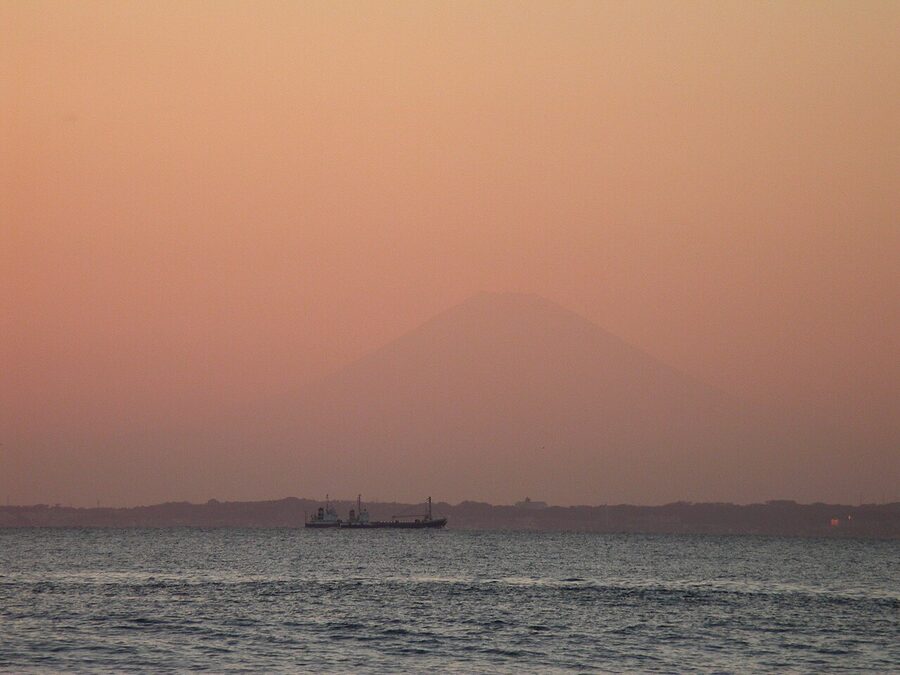
The single most Odaiba experience is simply watching a Tokyo Bay sunset from the Seaside Park or one of the mall rooftops. In winter (clearest air), Mt Fuji appears on the horizon. Year-round, the Rainbow Bridge silhouettes against the sun. The Liberty statue, the Gundam, and the Ferris wheel are all lit up by the time the sun goes fully down. It’s the most cinematic 45 minutes Tokyo offers.
Best spots: the beach at Odaiba Seaside Park (ground-level), Aqua City rooftop (free), DiverCity Sky Terrace (free). Arrive 30-45 minutes before sunset; stay 60-90 minutes through blue hour.
Getting to Odaiba
From Shimbashi: Yurikamome to Daiba (16 min, ¥330). The bridge-crossing view is the best part of the journey.
From Shinjuku/Shibuya: Rinkai Line to Tokyo Teleport (22 min from Shibuya, ¥380). Faster than Yurikamome but without the bridge views.
From Asakusa: Tokyo Cruise water bus from Hinode to Odaiba (50 min, ¥1,560). Slowest but most scenic.
Where to stay in Odaiba
Odaiba has ~10 hotels — mostly business-chains (Hilton Tokyo Odaiba, Tokyo Bay Ariake, Grand Nikko Tokyo Daiba). All run ¥15,000-35,000/night. Pros: Bay views, easy access to teamLab Planets and the malls, quiet at night. Cons: not centrally located for the rest of Tokyo — you’ll spend 30+ minutes each way on the Yurikamome. We’d stay in central Tokyo for a week-long trip and spend one day here. Search Odaiba on Booking.com.
Odaiba FAQ
Is Odaiba worth visiting?
Yes for one day — especially with kids, on a rainy day, or on a second-week Tokyo trip. It’s not essential on a 3-day first trip. Budget half a day minimum, a full day if you include teamLab Planets.
How do I get from Odaiba to central Tokyo?
Yurikamome to Shimbashi (20 min, connects to JR Yamanote). Rinkai Line to Shibuya/Shinjuku direct (~20-25 min). Both are clean, English-signposted, and straightforward.
Is Odaiba good for kids?
Ideal. Beach, Ferris wheel, Gundam, Miraikan, Legoland, teamLab Planets, safe mall spaces, and English-language signage everywhere. It’s Tokyo’s most family-friendly district by a margin.
What’s the best way to see Rainbow Bridge?
Three options: Yurikamome (passing over), walking across (30-35 min pedestrian walkway), or from Odaiba Beach looking back (panoramic view with sunset). Our preference: walk one way, Yurikamome back. You get both perspectives.
Is there anything to do on rainy days?
Odaiba is essentially weatherproof — almost everything is indoors (malls, teamLab Planets, Miraikan, DECKS, DiverCity). The covered walkways between malls mean you can spend a full day without going outside. Rainy days are actually ideal for Odaiba.
The short version
Odaiba is man-made island + teamLab + Gundam + malls + Rainbow Bridge + sunset on Tokyo Bay. It’s unashamed tourist infrastructure done well. Budget half a day for highlights, a full day with teamLab, a rainy day for weatherproof entertainment. Pair with a water-bus return to Asakusa for maximum scenic value.
Next up: our citywide things-to-do, Shibuya for a neon contrast, or Ueno for the museum-heavy counterpart.