Tokyo is too big to list. That’s the first thing to say. We’ve lived here, visited dozens of times, and still walk out our door each trip with a fresh set of "oh — we never did that" items on the list. What follows is our best attempt at a comprehensive tour of the city — 32 things that give you the fullest picture of what makes Tokyo, Tokyo. Some are touristy. Some are quiet. All are worth the afternoon.
Below is our practical master list of 32 things to do in Tokyo, organised by district but not by priority — every one of these could be someone’s highlight. For deeper dives on specific neighbourhoods we’ve written out full guides: Shibuya, Shinjuku, Asakusa, Ueno, Akihabara, Harajuku, Ginza, Odaiba. Pair this with our first-timer’s guide for timing, budget, and logistical planning.
A Tokyo orientation. The JR Yamanote line is the 35-kilometre loop connecting everything you’re likely to visit. Almost every neighbourhood below is on or one stop from a Yamanote station. Budget a minimum of 5 days for a proper first Tokyo visit; 7-10 if you want to include day trips. The city is safe, clean, punctual, and the single best mass-transit system on earth.
In This Article
- 1. Cross the Shibuya Scramble
- 2. Go up Tokyo Skytree
- 3. Visit Senso-ji in Asakusa
- 4. Walk to Meiji Jingu
- 5. Relax at Shinjuku Gyoen
- 6. Walk around the Imperial Palace
- 7. Breakfast at Tsukiji Outer Market
- 8. Walk Ginza’s Chuo-dori
- 9. Ueno Park and its museums
- 10. Takeshita Street in Harajuku
- 11. Electric Town in Akihabara
- 12. teamLab Planets in Odaiba
- 13. Tokyo Tower
- 14. Walk or photograph Rainbow Bridge
- 15. Tokyo Station Marunouchi side
- 16. Roppongi Hills
- 17. Ameyoko market (Ueno)
- 18. Yanaka Ginza
- 19. Drink in Golden Gai (Shinjuku)
- 20. Eat monja in Tsukishima
- 21. See a kabuki show (or just the theatre)
- 22. See Mt Fuji (from Tokyo)
- 23. The architecture walk
- 24. Shibuya Sky at sunset
- 25. Yoyogi Park on a weekend
- 26. Eat a bowl of Tokyo ramen
- 27. Visit an Asakusa lantern-lit street
- 28. Walk Nakamise-dori
- 29. The big-shrine morning (Meiji + Harajuku)
- 30. The sundown train loop (Yamanote at dusk)
- 31. Hachiko meeting point
- 32. Cherry blossom season (late March – early April)
- 33. See the Shinjuku 3D cat
- 34. Tokyo Bay sunset from Odaiba
- 35. Omoide Yokocho at dusk
- 36. Shinjuku at full volume
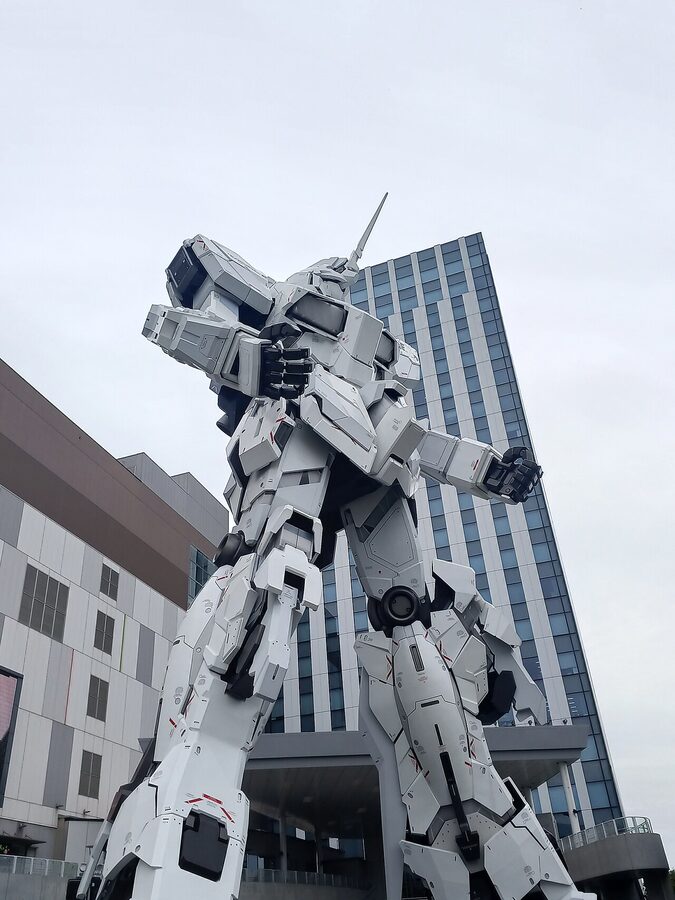
- 37. See the DiverCity Gundam
- Getting around Tokyo
- Where to stay in Tokyo
- When to visit Tokyo
- Tokyo FAQ
- How many days do I need in Tokyo?
- Is Tokyo expensive?
- Can I get by without speaking Japanese?
- What’s the one thing I shouldn’t miss?
- Is it safe to walk around Tokyo at night?
- The short version
1. Cross the Shibuya Scramble
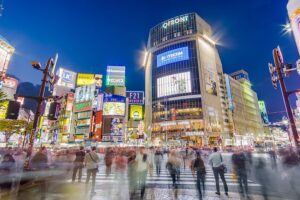
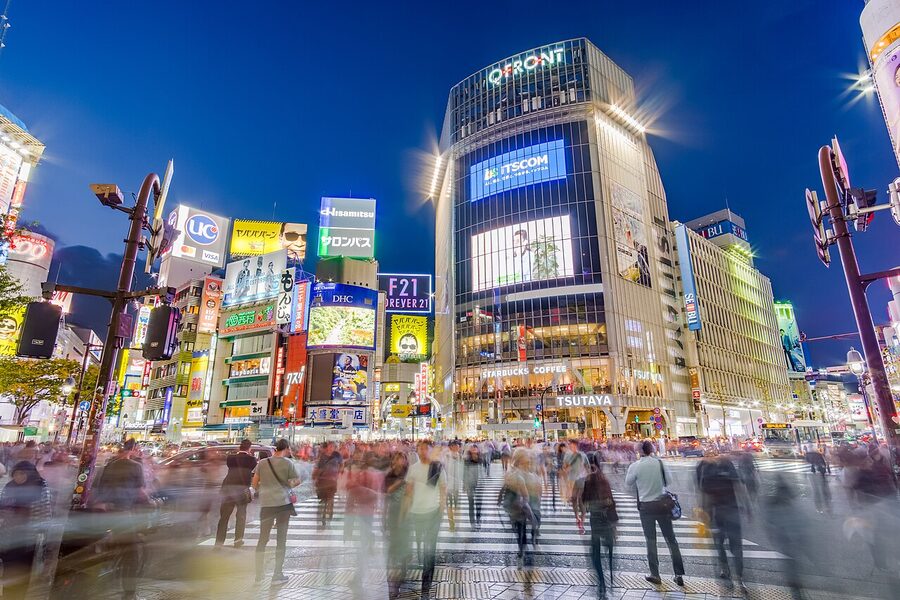
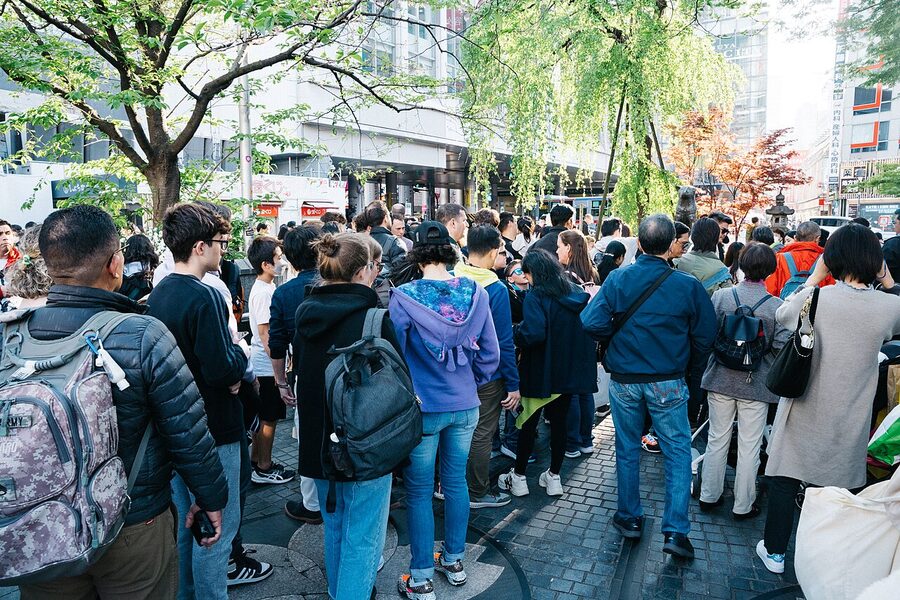
The Shibuya Scramble Crossing is the five-way pedestrian intersection that’s become the image of modern Tokyo. Around 2,500 people cross in each 40-second light cycle. It’s the single most "Tokyo" experience of your first trip. Free, always active, best at dusk or in rain. More: our Shibuya guide.
2. Go up Tokyo Skytree
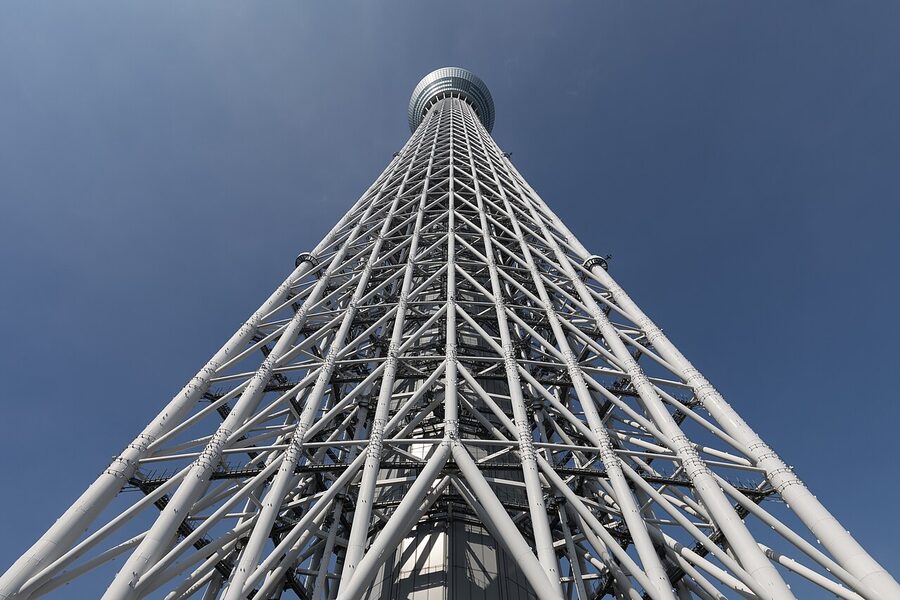
The Tokyo Skytree at 634m is the country’s tallest structure and the best observation-deck experience in east Tokyo. Two decks: Tembo (350m, ¥2,100) and Galleria (450m, ¥3,100). Book online; weekend walk-up waits reach 90+ minutes. Clear-day Fuji viewing from December-February. In our Asakusa guide we cover it in context with the Sumida.
3. Visit Senso-ji in Asakusa
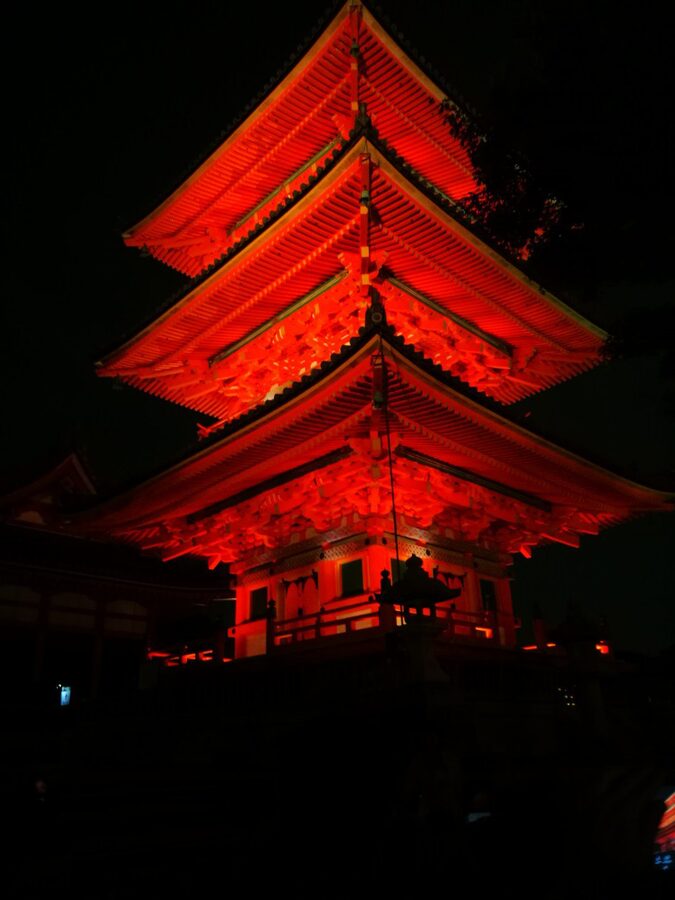
Senso-ji is Tokyo’s oldest temple (645 CE) and the spiritual heart of the Asakusa old town. Walk the 250m Nakamise-dori shopping approach from Kaminarimon to the main hall. Free, open 24/7 (main hall 6am-5pm). Best at dawn for empty-precinct photos. Full coverage: our Asakusa guide.
4. Walk to Meiji Jingu
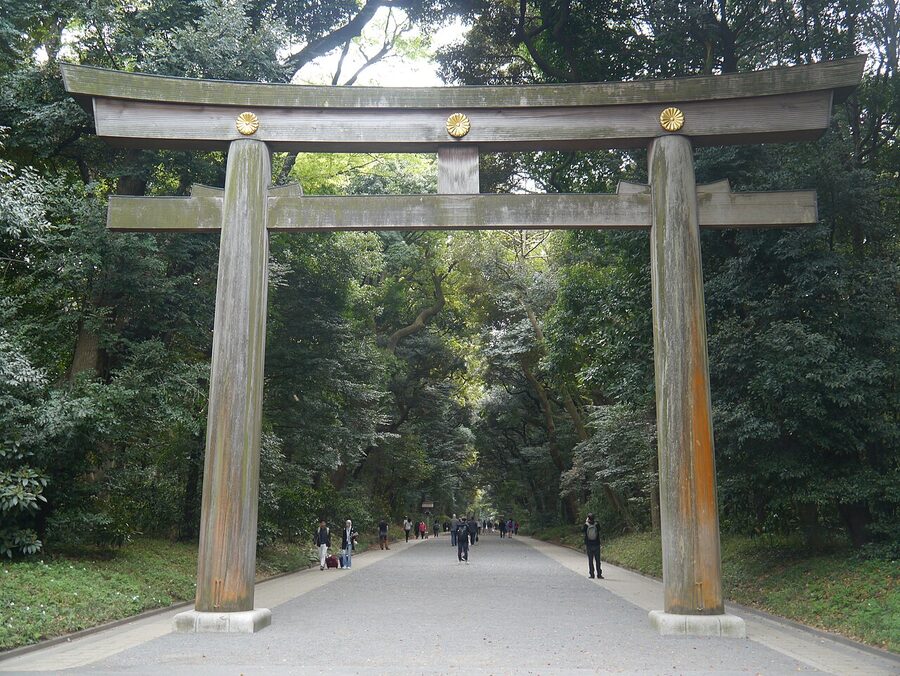
Meiji Jingū is Tokyo’s most important Shinto shrine — a 170-acre planted forest hosting Emperor Meiji’s spirit in the middle of Shibuya/Harajuku. Walk the 10-minute gravel approach to the main hall. Free, sunrise to sunset. Best morning or late afternoon for the light filtering through the trees. More: our Harajuku guide.
5. Relax at Shinjuku Gyoen
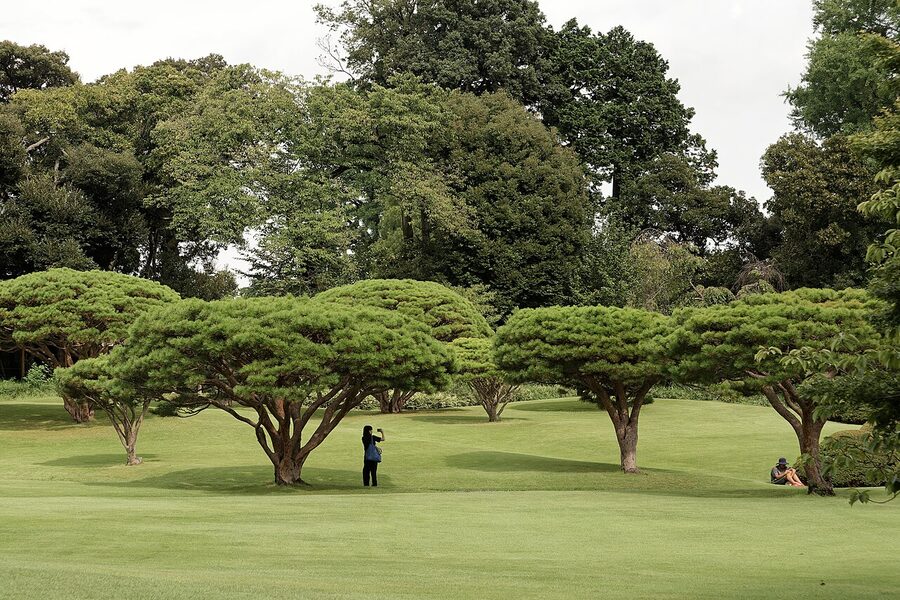
Shinjuku Gyoen is Tokyo’s best formal garden — 144 acres of Japanese, French, and English-style landscapes, ¥500 entry, open 9am-6pm (closed Mondays). Cherry blossoms (late March-early April) and autumn leaves (late November) are peak seasons but it’s beautiful year-round. In-depth: our Shinjuku guide.
6. Walk around the Imperial Palace
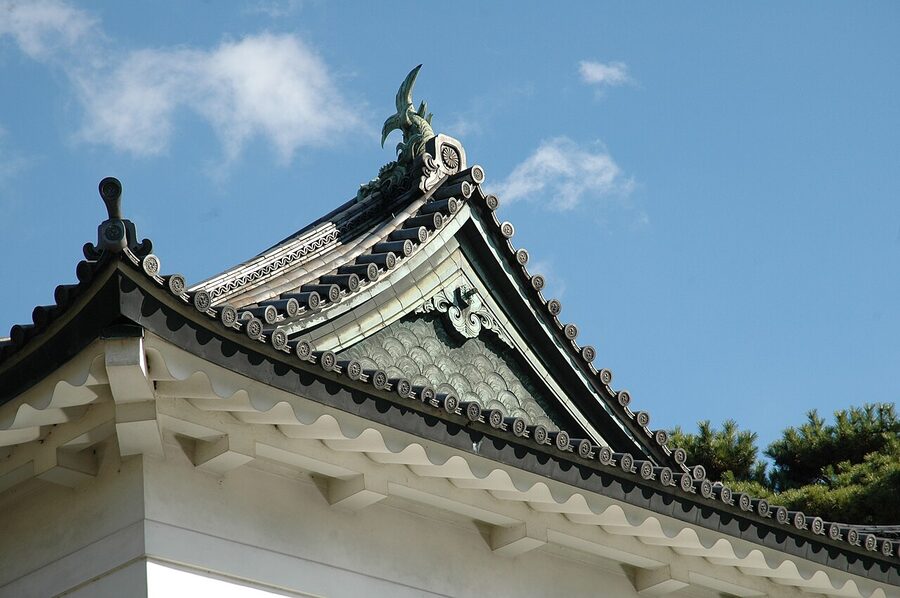
The Imperial Palace (皇居) in central Tokyo sits on the former Edo Castle grounds — 115 hectares of moats, stone walls, and formal gardens. The East Gardens are open to the public (free, 9am-4:30pm, closed Mon/Fri). Twice-yearly interior tours of the inner precinct (New Year and Emperor’s Birthday) are the only way to see the main building. Otherwise: the Nijubashi bridge from the outer plaza is the photograph everyone takes.
7. Breakfast at Tsukiji Outer Market
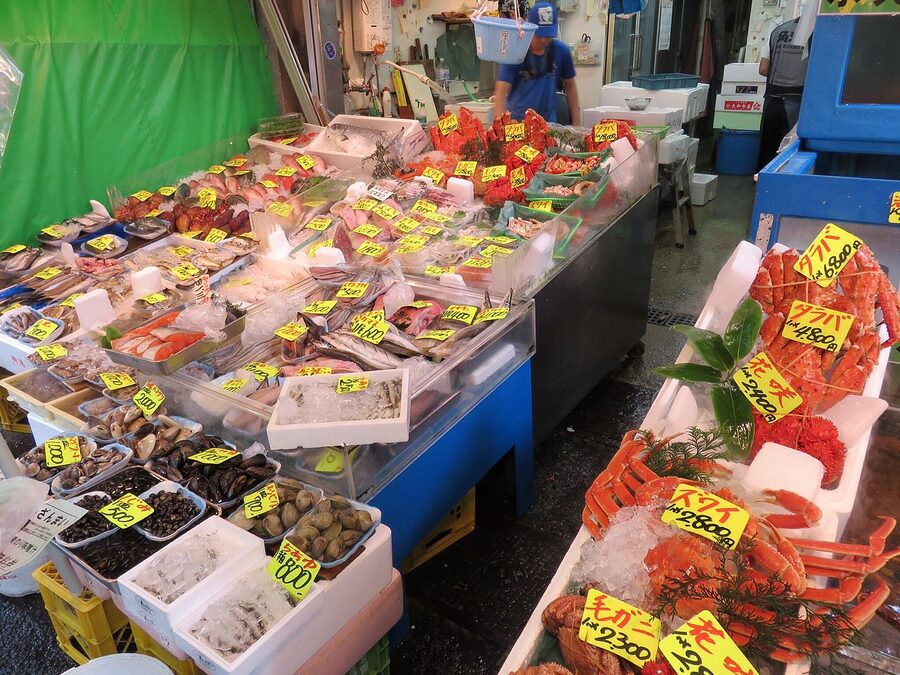
Tsukiji Outer Market (not the inner wholesale market, which moved to Toyosu in 2018) remains Tokyo’s best early-morning food district. 400+ small shops and sushi counters; dawn to ~2pm. Sushi breakfast at Sushi Dai or Daiwa Sushi (¥3,000-6,000) is the reliable splurge. Covered in our Ginza guide, 15-minute walk east.
8. Walk Ginza’s Chuo-dori
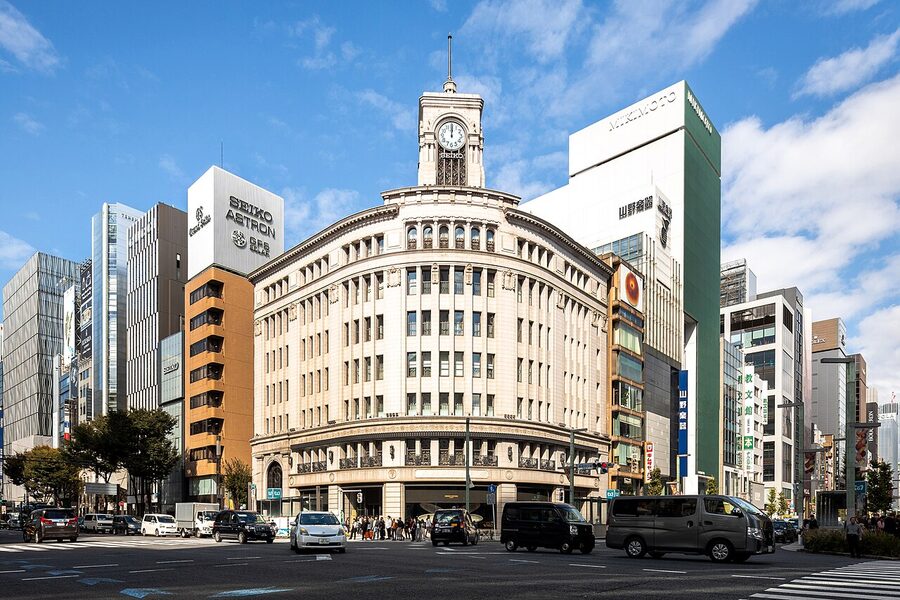
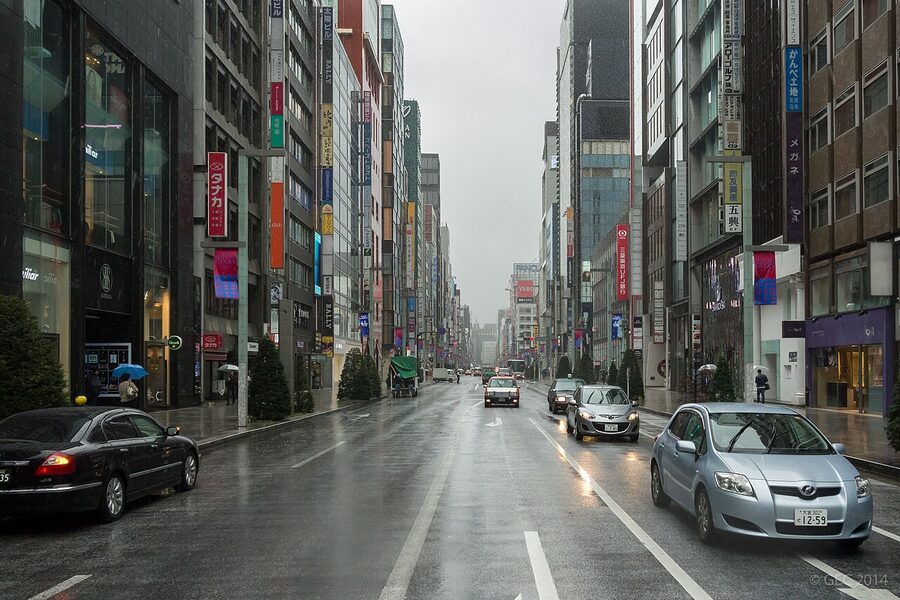
Ginza’s Chuo-dori is Tokyo’s luxury flagship avenue — best on weekends 12-5pm when the road closes for pedestrians. The 4-chome intersection (Wako clock tower, Mitsukoshi, Nissan showroom) is the classic Ginza shot. Free to walk, free to photograph. Our Ginza guide is the deep dive.
9. Ueno Park and its museums
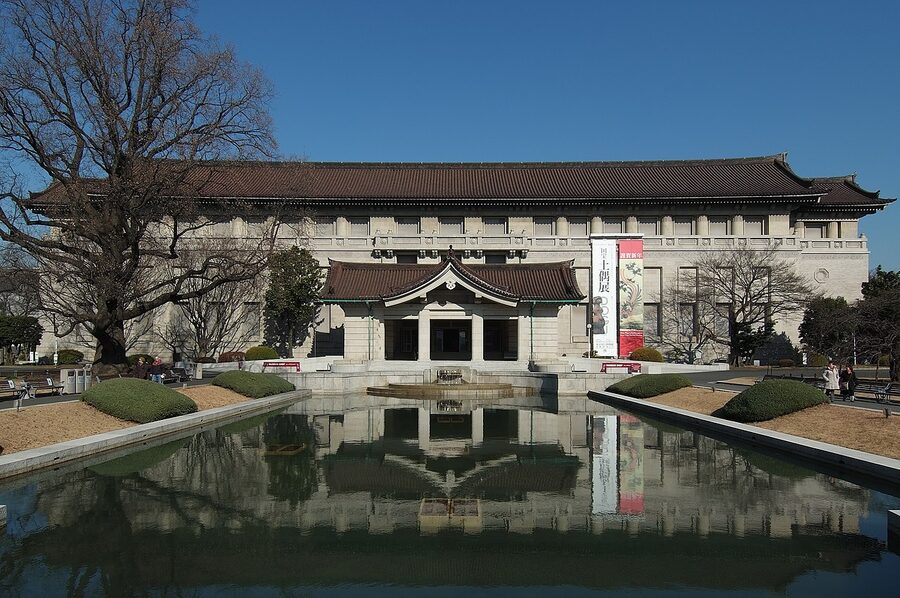
Ueno Park has Tokyo’s best museum cluster — Tokyo National Museum, National Museum of Western Art, National Museum of Nature and Science, plus the zoo and Shinobazu Pond. Budget a full day. ¥500-1,500 per museum. Our Ueno guide has the 25-item breakdown.
10. Takeshita Street in Harajuku
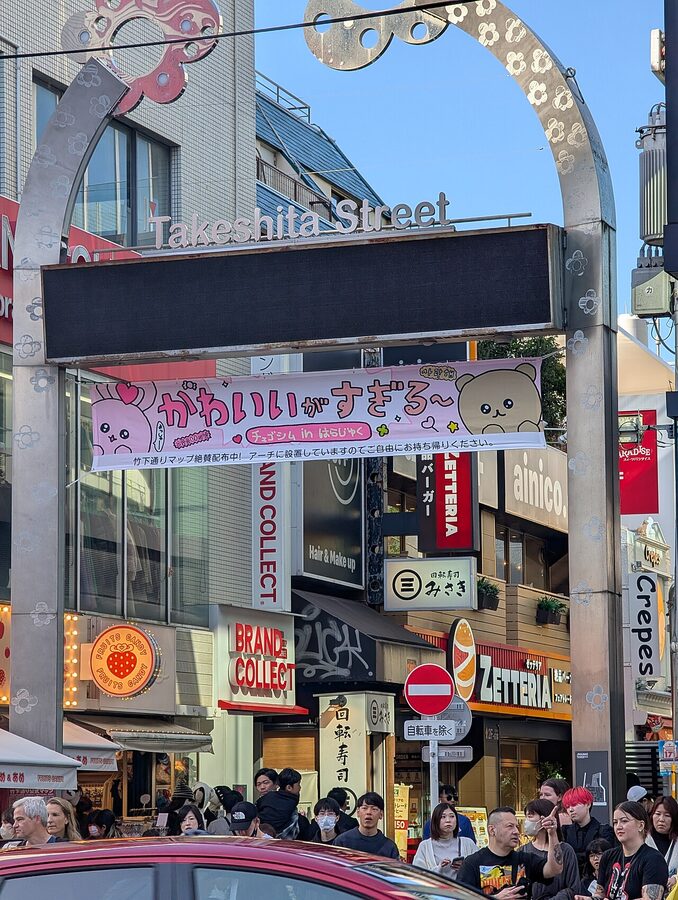
Takeshita Street is the 400m teenage kawaii shopping chaos zone just outside Harajuku Station. Crepes, fashion, thrift, weird sweets, Daiso. Essential first-timer Tokyo experience for an hour — leave after. More: our Harajuku guide.
11. Electric Town in Akihabara
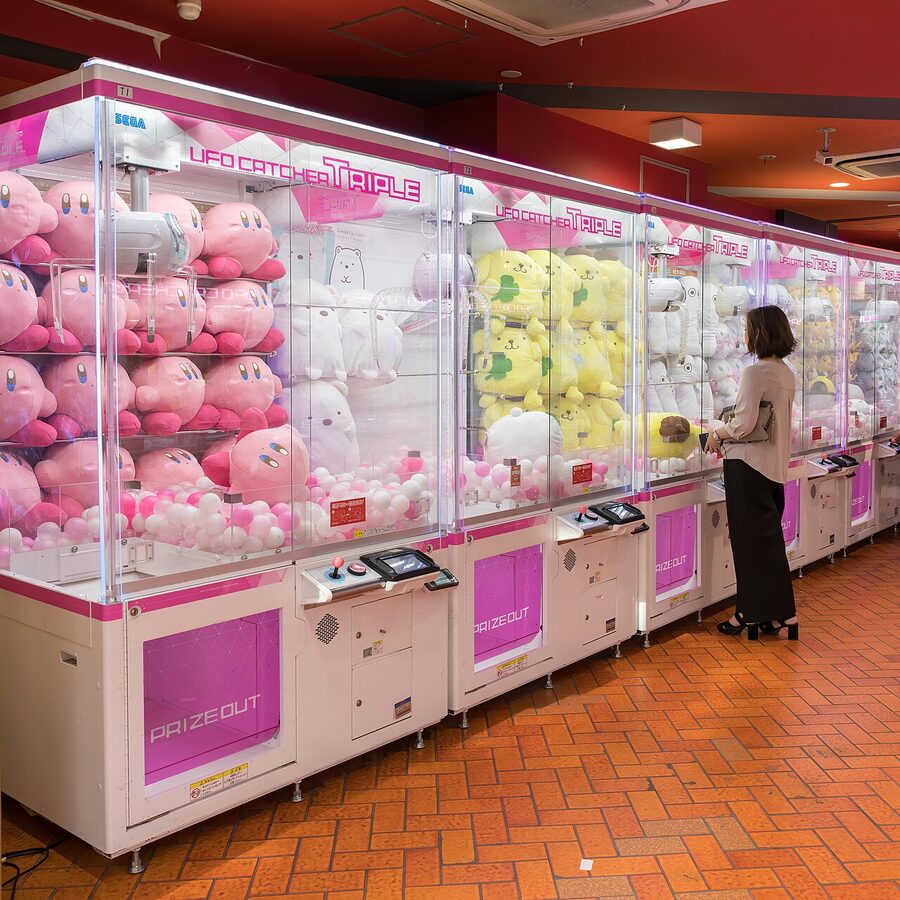
Akihabara’s Electric Town is the six-block otaku cluster where electronics, anime, manga, arcades, and maid cafes share real estate. Plan 2-3 hours. Even non-anime travellers should see it once. Detail: our Akihabara guide.
12. teamLab Planets in Odaiba
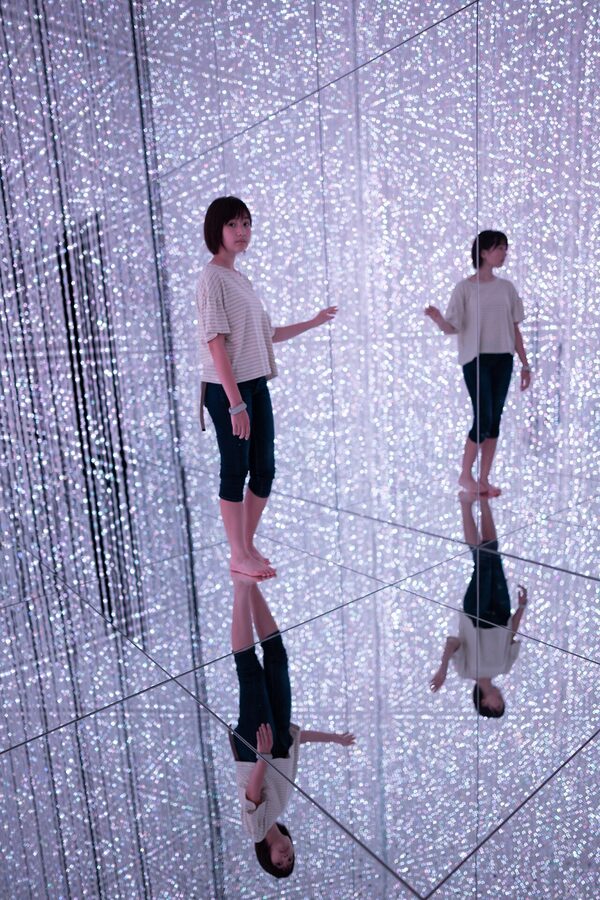
teamLab Planets is the immersive-art walking experience — 10 rooms, barefoot wading, infinity mirrors, projected light. ¥3,800, timed-entry, book 1-2 weeks ahead. 75 minutes. The single most-photographed art experience in Tokyo. In our Odaiba guide.
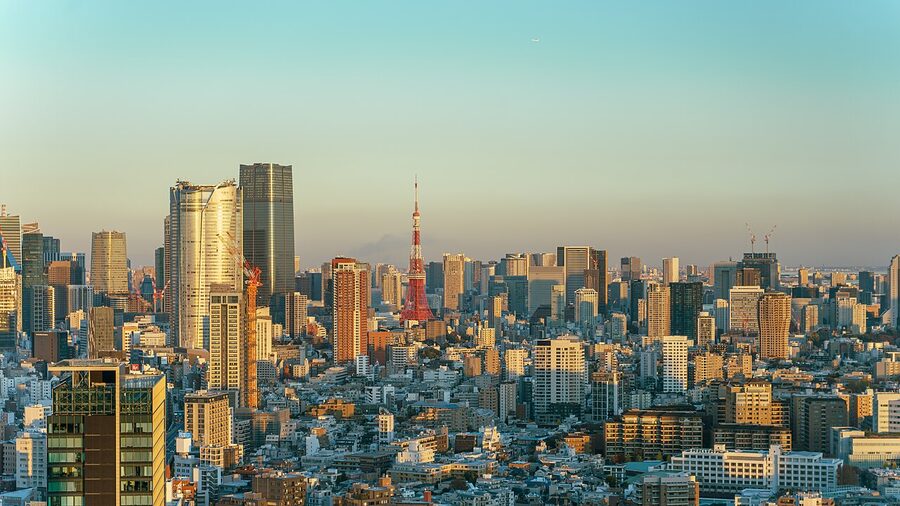
13. Tokyo Tower
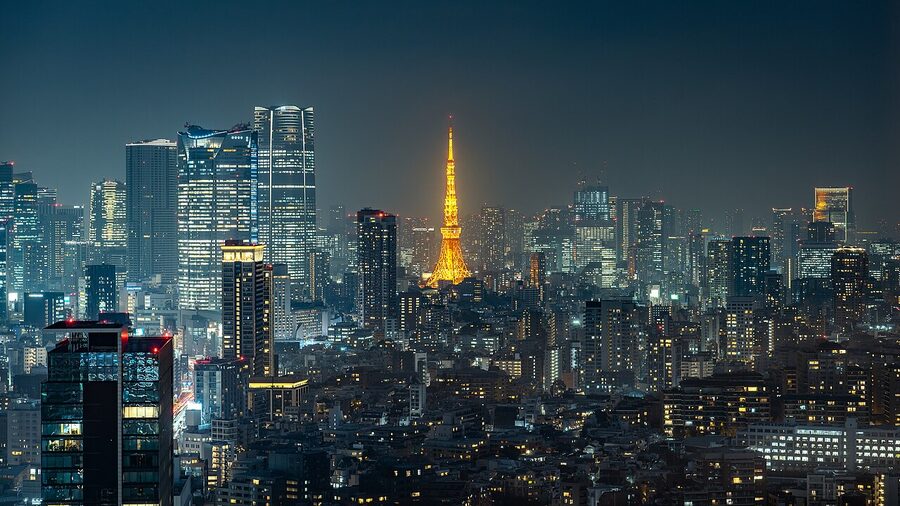
Tokyo Tower (1958) is the red-and-white Eiffel-like tower in Minato. 150m main deck (¥1,200) and 250m top deck (additional ¥2,800). It’s been overtaken by the Skytree but remains a genuine landmark and has better daytime visibility from central Tokyo. Especially photogenic at night (the lighting pattern changes seasonally).
14. Walk or photograph Rainbow Bridge
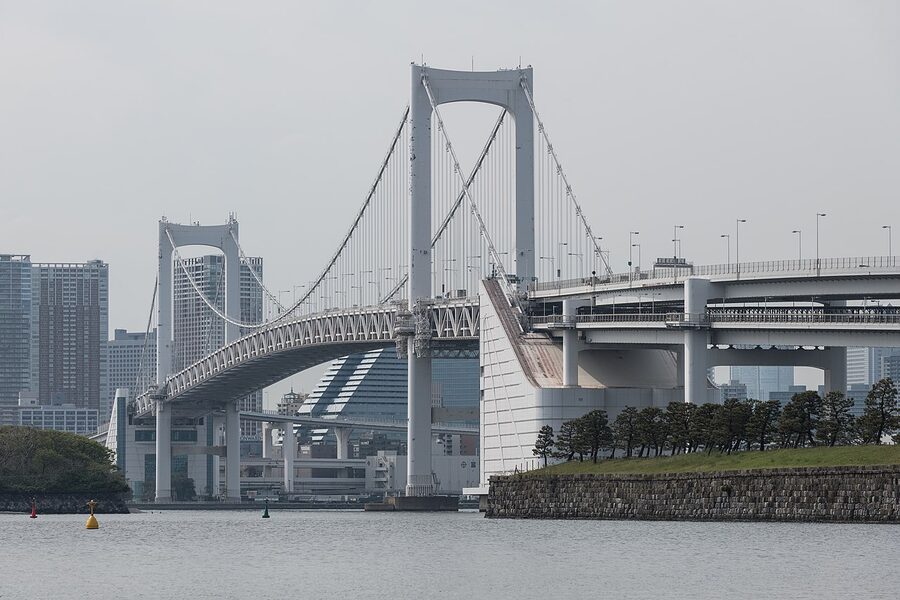
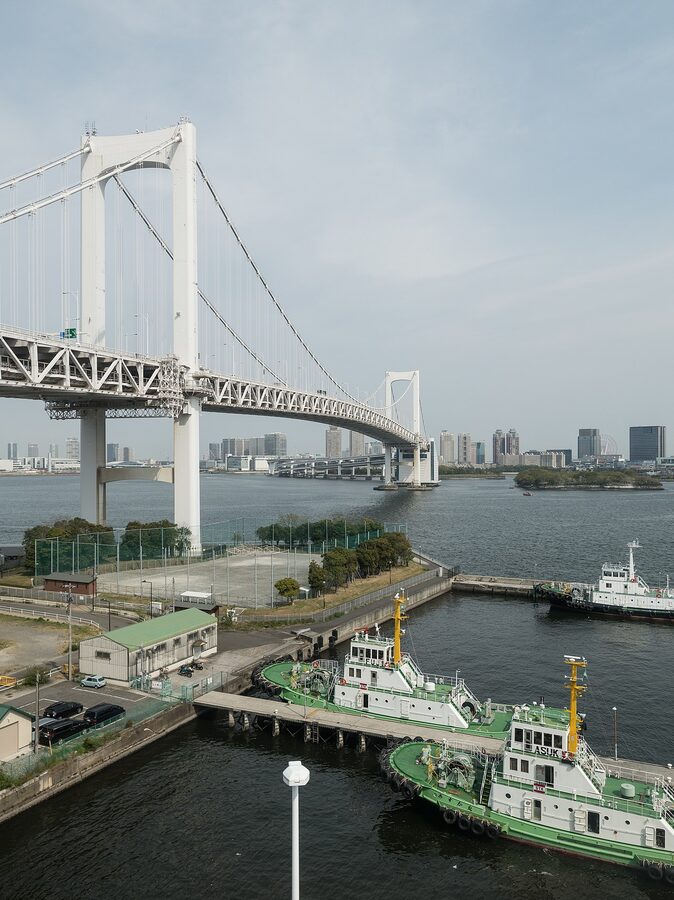
Rainbow Bridge (Odaiba side) offers pedestrian walkways (both directions) and the Yurikamome train crossing. 30-35 min walk. Best view: from Odaiba Seaside Park at sunset. Colour-cycling LED lights at night. In our Odaiba guide.
15. Tokyo Station Marunouchi side
Tokyo Station (1914) has been Tokyo’s main rail hub for over a century. The Marunouchi side is the preserved red-brick original — one of only a handful of pre-WWII station buildings in Japan. The plaza outside, with the Imperial Palace axis beyond, is a 10-minute photo stop. The underground Tokyo Character Street mall has 20+ character-theme shops (Studio Ghibli, Pokémon, Hello Kitty, etc.).
16. Roppongi Hills
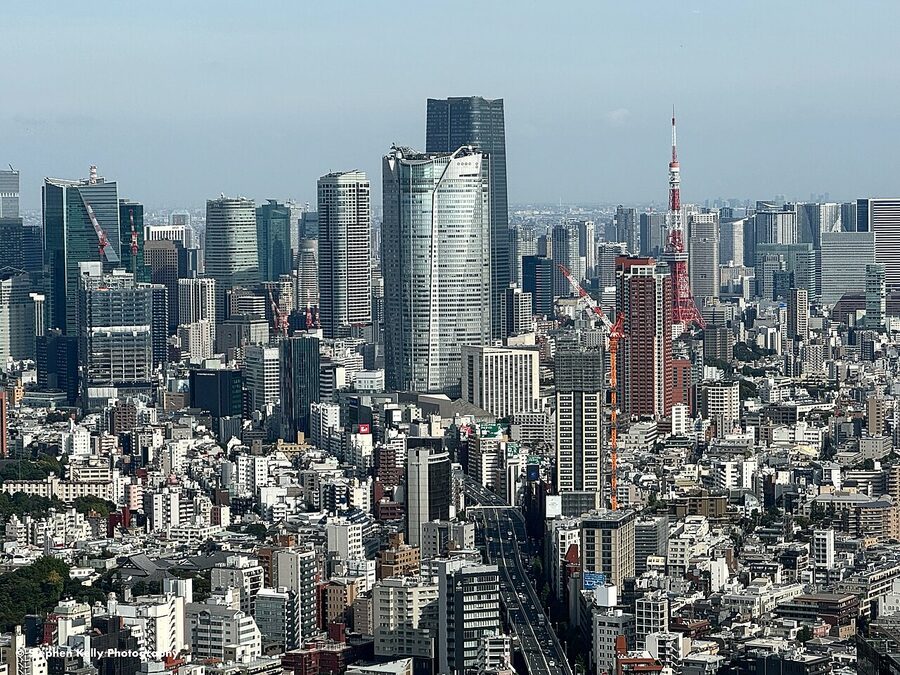
Roppongi Hills is the mixed-use complex around Mori Tower — shops, restaurants, the Mori Art Museum (52F, ¥2,000), and Sky Deck (52F + 54F, ¥1,800 combined). It’s the alternative to Skytree/Shibuya Sky for observation views, with a different skyline (Tokyo Tower framed toward the south). The neighbourhood also has central Tokyo’s densest night-life scene — expat-heavy, party-heavy, chain restaurant-heavy. The Mori Art Museum consistently has world-class rotating contemporary exhibitions.
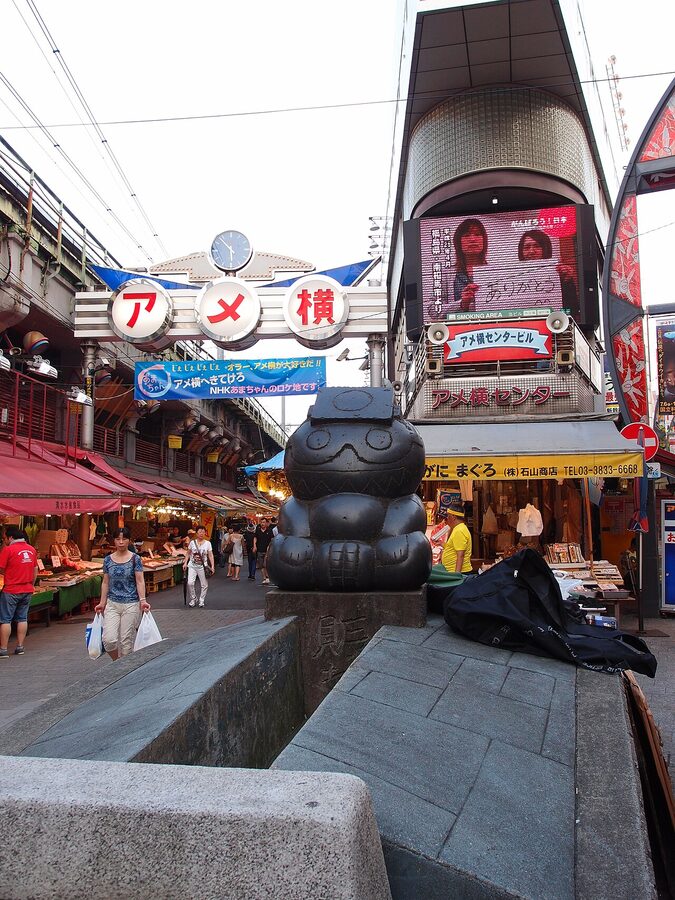
17. Ameyoko market (Ueno)
Ameyoko is the only survivor of Tokyo’s post-war black-market street trade — 400m of fish, dry goods, cheap cosmetics, shouty vendors, and stand-up bars. In Ueno. Covered in detail in our Ueno guide.
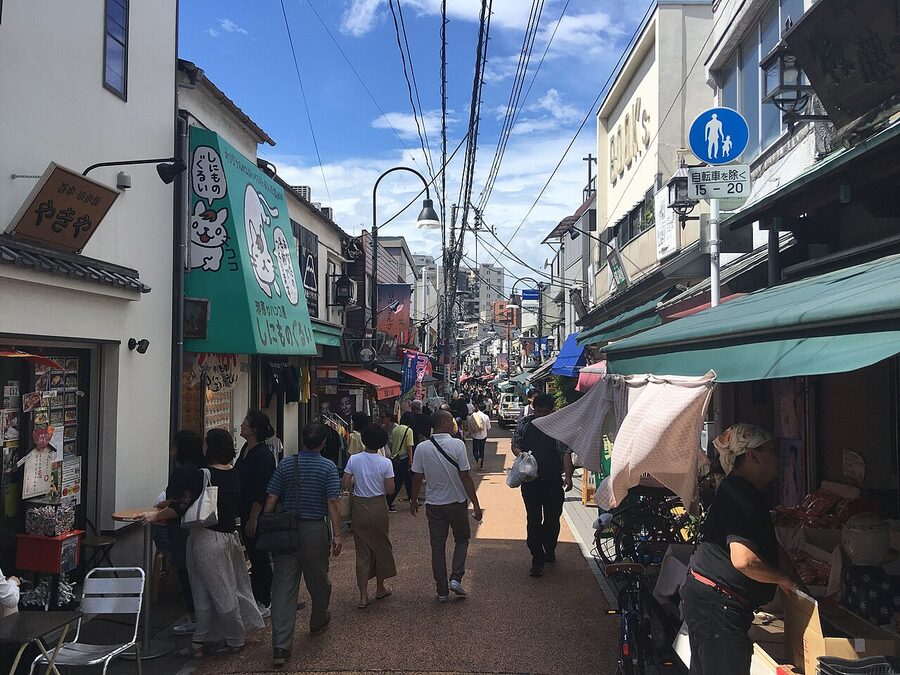
18. Yanaka Ginza
Yanaka is Tokyo’s best-preserved old-town neighbourhood, 15 minutes’ walk from Ueno Park. Yanaka Ginza (the main shopping alley) has 60+ independent shops, food stalls, and cat-themed everything. It’s a Tokyo photography pilgrimage site. In our Ueno guide.
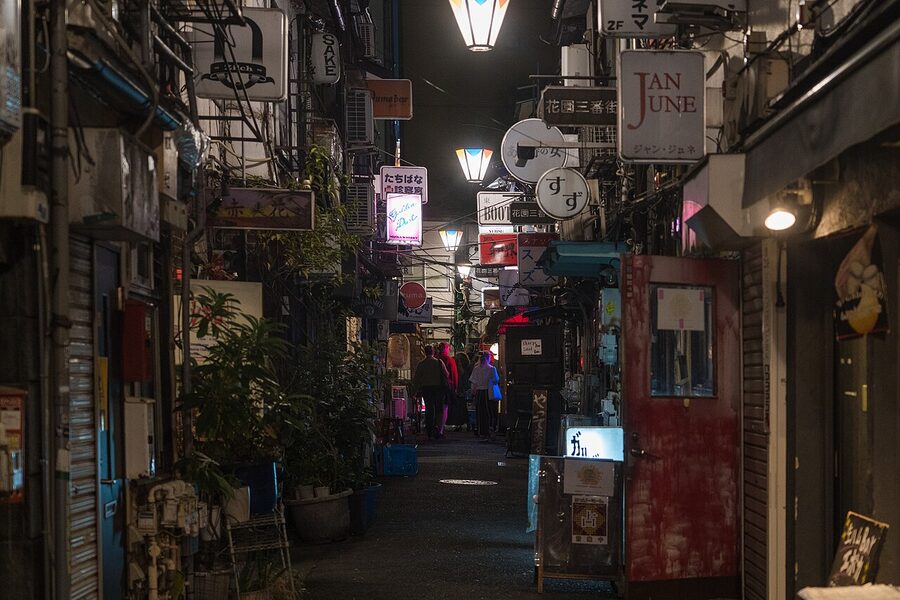
19. Drink in Golden Gai (Shinjuku)
Golden Gai is six narrow alleys of 200+ miniature themed bars in Kabukicho. Most seat 4-8 people. Most have cover charges. Some welcome foreigners, some don’t — respect the signs. Full experience: our Shinjuku guide.
20. Eat monja in Tsukishima
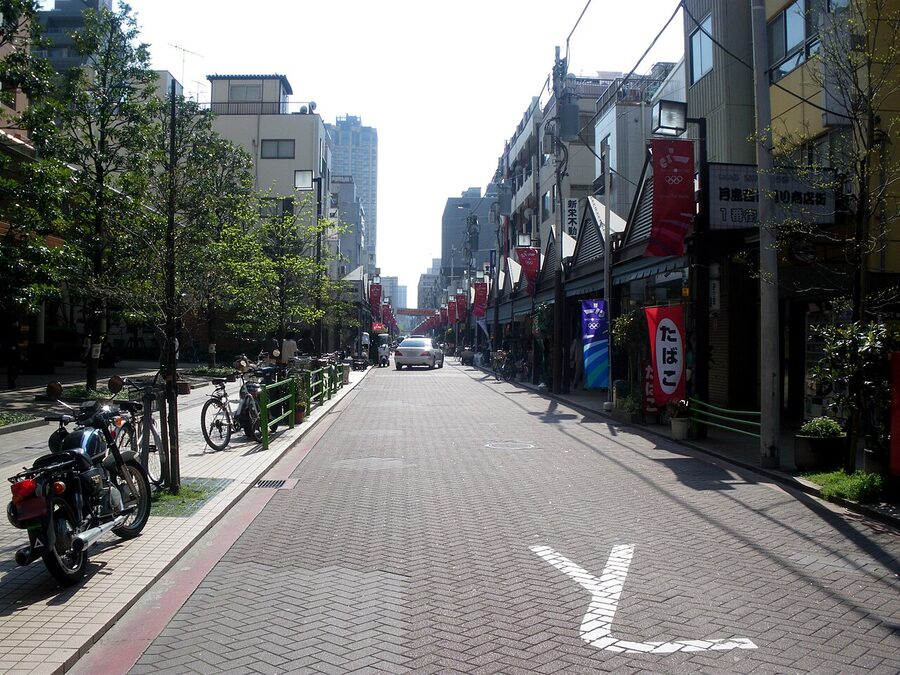
Tsukishima is the reclaimed Tokyo Bay island that’s Tokyo’s spiritual home of monjayaki — a runny, seafood-heavy, pan-cooked batter dish eaten off a shared hotplate. Over 70 monja restaurants line Monja Street in a single 500m stretch. Budget ¥2,000-3,500 per person for a proper meal. Reasonable walking from Ginza or accessible via the Oedo Line. It’s a Tokyo regional speciality tourists almost never eat.
21. See a kabuki show (or just the theatre)
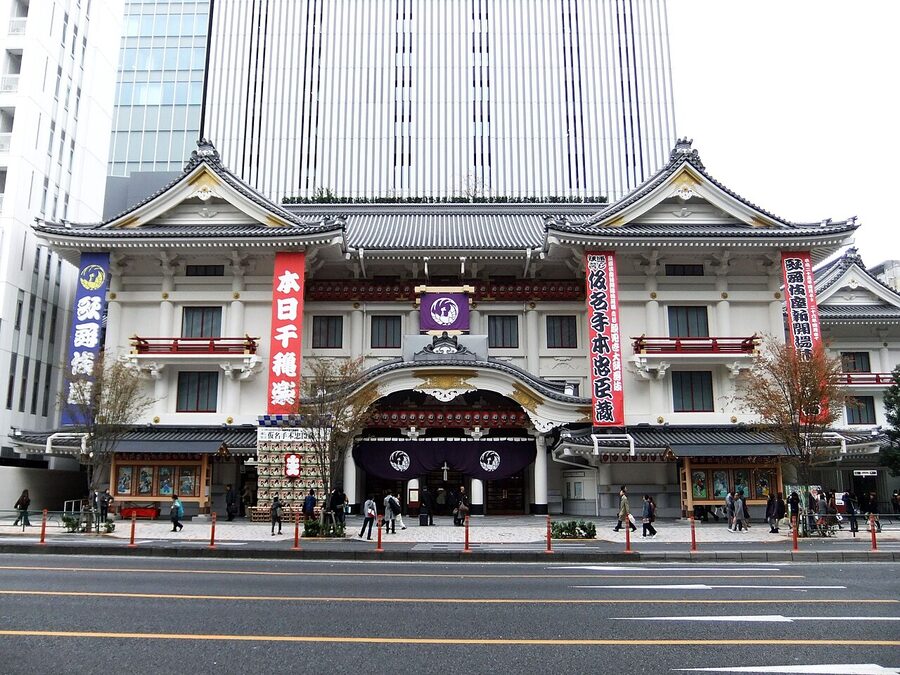
The Kabukiza Theatre in Higashi-Ginza is Japan’s most famous kabuki venue. Full 4-5 hour performances (¥3,000-18,000) or single-act tickets (¥700-2,000 for a 30-90 minute slice). English audio guide ¥700. Even without a ticket, the exterior is a 3-minute architectural stop. In our Ginza guide.
22. See Mt Fuji (from Tokyo)
On a clear winter day, Mt Fuji is visible from many Tokyo observation decks. Best viewpoints: Shibuya Sky (item 24), Tokyo Metropolitan Government Building (free, Shinjuku), Tokyo Skytree (item 2), and the Mori Tower Sky Deck (Roppongi). December through February gives the clearest visibility. The mountain is 100km south-west; it appears smaller than you expect in photos but genuinely dominant in person.
23. The architecture walk
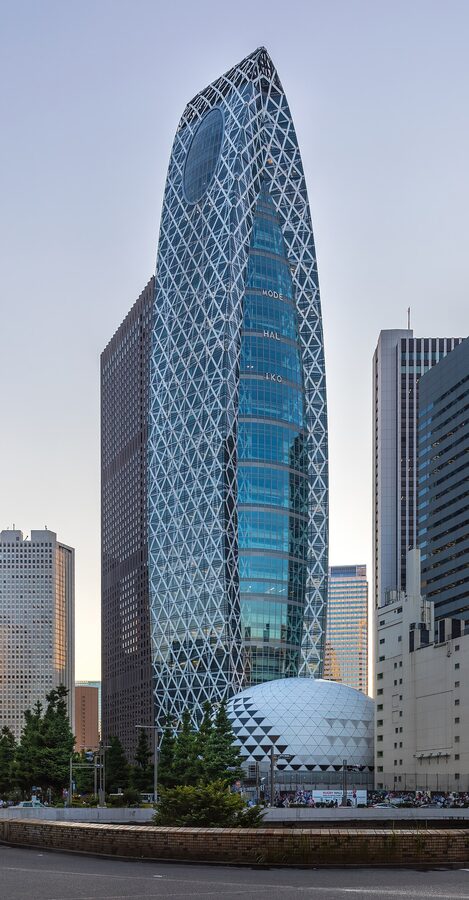
Tokyo has one of the world’s best collections of late-20th-century and contemporary architecture, much of it visible for free on street walks. Worth seeing: Mode Gakuen Cocoon Tower (Shinjuku, 2008), Tokyo International Forum (Yurakucho, Rafael Viñoly 1996), Omotesando Hills (Tadao Ando, 2006), Prada Aoyama (Herzog & de Meuron, 2003), Yoyogi National Gymnasium (Tange, 1964), Nakagin Capsule Tower (demolished 2022, sadly). Plan a half-day architecture-specific walk; most of these are on or near the Ginza/Marunouchi/Omotesando axis.
24. Shibuya Sky at sunset
Shibuya Sky is the 229m open-air rooftop observation deck atop Shibuya Scramble Square. ¥2,500 online, timed-entry, book ahead. Sunset slot is the one to get. 360-degree views, Mt Fuji visible on clear days. Details: our Shibuya guide.
25. Yoyogi Park on a weekend
Yoyogi Park (130 acres, next to Meiji Jingū) is Tokyo’s best people-watching park. On weekends: rockabilly dance groups, hip-hop crews, dog-walking parades, buskers, and picnic parties. In April: one of central Tokyo’s better-organised hanami locations. Free, always open. More: our Harajuku guide.
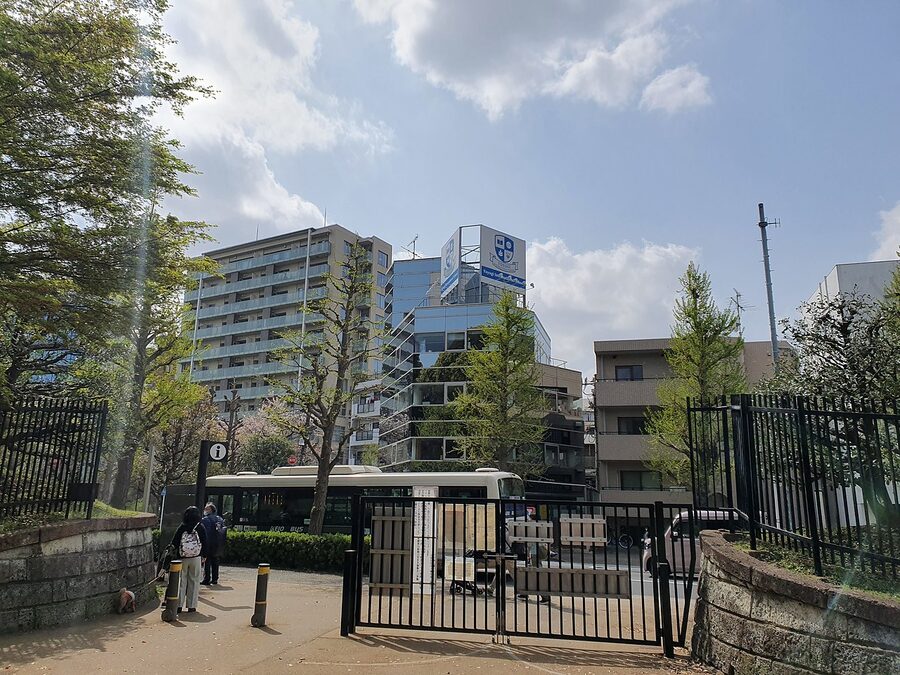
26. Eat a bowl of Tokyo ramen
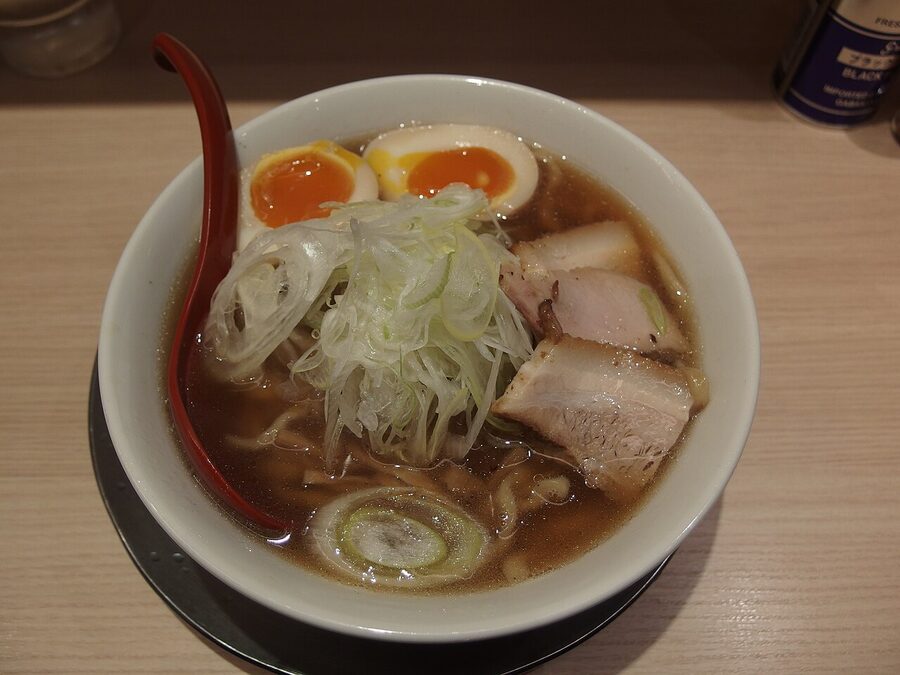
Tokyo has no single defining ramen style — it’s the country’s ramen laboratory, with every regional variant represented. Must-try styles: shoyu ramen (traditional Tokyo soy-base), tsukemen (dipping ramen, Shinjuku specialty, especially Fuunji), tonkotsu (pork-bone Fukuoka style, widely available). Budget ¥900-1,500 per bowl. Any ramen shop with a vending-machine ticket system out front is reliable.
Tokyo Ramen Street (Tokyo Station B1 food floor) has 8 top-regional-ramen shops side by side — useful for comparison in one meal.
27. Visit an Asakusa lantern-lit street
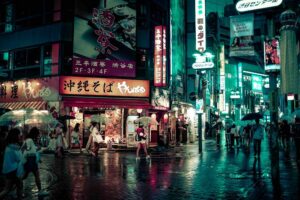
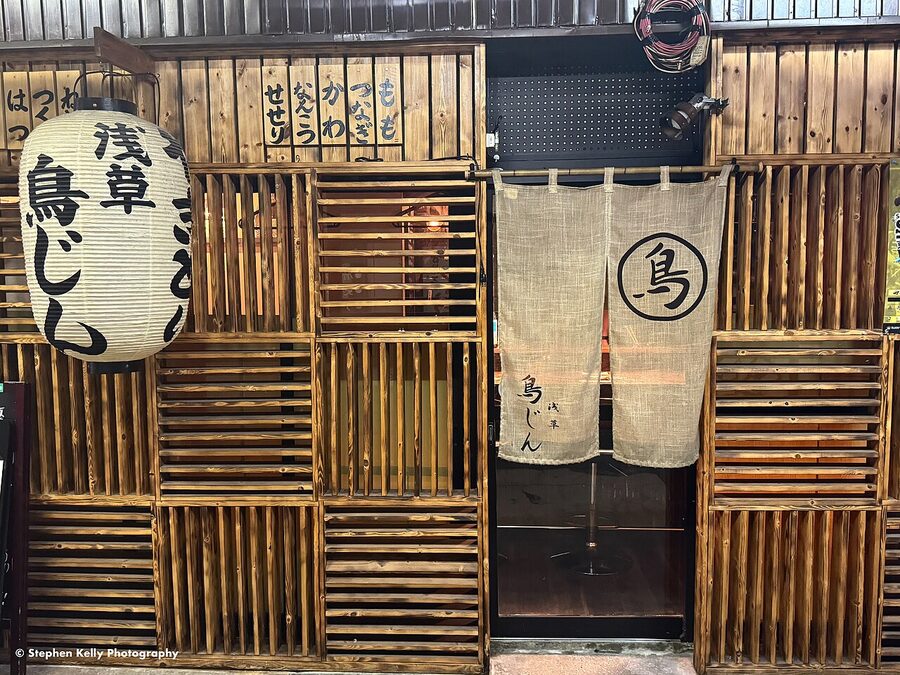
Asakusa’s side streets west of Senso-ji are Tokyo’s densest concentration of working paper-lantern restaurants. After 6pm, walk the Hoppy-Dori area — 50+ small eateries, each hanging a paper lantern announcing its trade. Budget ¥2,000-3,500 per person for drinks and small plates at a proper old-school izakaya. Full coverage: our Asakusa guide.
28. Walk Nakamise-dori
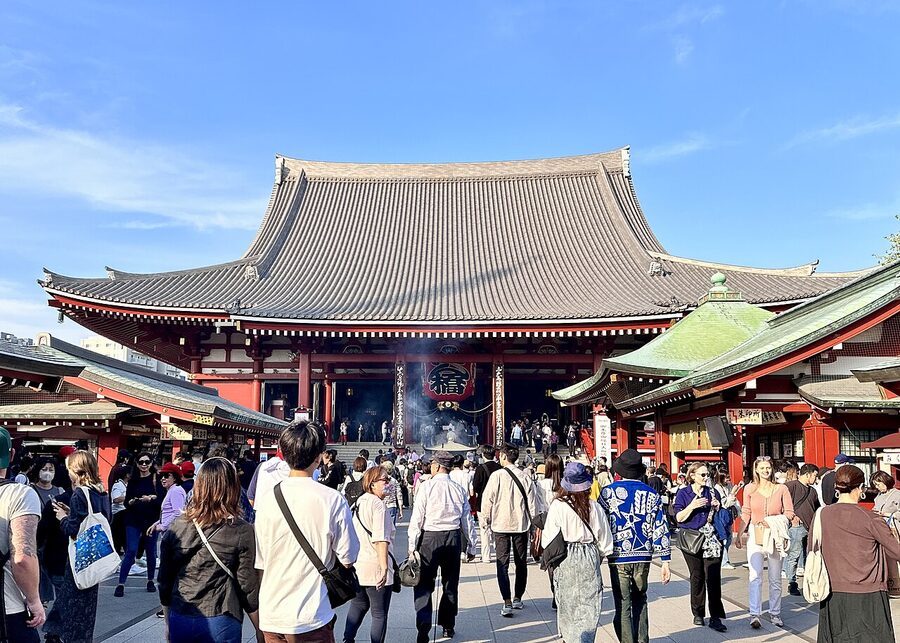
Nakamise-dori is the 250m shopping approach to Senso-ji from Kaminarimon. It’s been an approach market for 400+ years. Essential first-timer Tokyo experience. Eat nin-gyō-yaki (bean-paste sponge cakes) from any shop there 100+ years. More: our Asakusa guide.
29. The big-shrine morning (Meiji + Harajuku)
A Meiji Jingū morning visit pairs brilliantly with the Harajuku/Omotesando afternoon — arrive at the shrine at 7-8am for empty grounds and morning light, walk to Takeshita Street for ridiculous teenage chaos, end with Omotesando’s luxury flagship tour and coffee in Cat Street. 4-5 hours total. It’s the most concentrated Tokyo contrast you can fit into a morning.
30. The sundown train loop (Yamanote at dusk)
At dusk, ride the JR Yamanote line a full loop (65 min, ¥170 covered by any IC card). You’ll pass Shibuya, Harajuku, Shinjuku, Ikebukuro, Ueno, Akihabara, Tokyo Station — essentially Tokyo’s greatest-hits reel in one hour. It’s a ritual we do on every trip. Window seat, IC card tap, watch Tokyo unfold.
The Yamanote goes both directions (uchimawari inner loop, sotomawari outer loop). Trains every 2-3 minutes. Do this on day one if you want orientation, or day five if you want a summary ride.
31. Hachiko meeting point
Hachiko Statue (Shibuya) — Tokyo’s most famous meeting point since 1935. Takes 2 minutes, belongs in every first-timer itinerary, and the 9-year-waiting-dog story is genuinely moving. Ringed by people taking photos constantly. Free. Always there. Covered in our Shibuya guide.
32. Cherry blossom season (late March – early April)
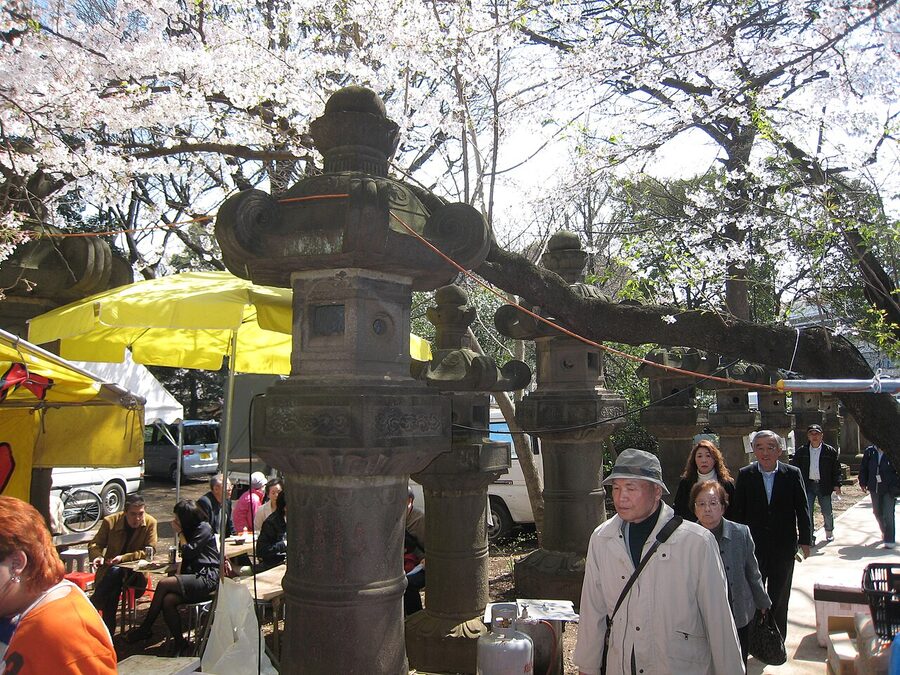
Cherry blossoms (sakura) peak in Tokyo for ~1 week in late March or early April — the exact dates shift annually and are forecast by the Japan Meteorological Corporation from early February. Best Tokyo viewing spots: Ueno Park (most famous, most crowded), Shinjuku Gyoen (¥500 entry keeps crowds manageable), Meguro River (evening illumination, our quiet favourite), Chidorigafuchi (Imperial Palace moat, row boats available), Yoyogi Park (weekend picnic-friendly).
Peak bloom hits fast. From first bloom to full bloom is 4-7 days; from full bloom to petal fall is another 7-10 days. If your trip is within the window, you’ve got a day or two of perfect viewing before it’s over. Book time-specific activities around the forecast.
33. See the Shinjuku 3D cat
Above the Cross Shinjuku Vision billboard at Shinjuku East Exit, a 12-metre calico tortoiseshell cat performs animated sequences every ~10 minutes during daylight. Launched 2021. Free viewing from the East Exit plaza. Night views more dramatic. In our Shinjuku guide.
34. Tokyo Bay sunset from Odaiba
Sunset from Odaiba Seaside Park — Rainbow Bridge silhouette, Mt Fuji in winter, Liberty statue foreground. Tokyo’s best free sunset photo spot. 30 minutes before sunset; stay 90 minutes through blue hour. Route: Yurikamome to Odaiba-kaihinkoen. In our Odaiba guide.
35. Omoide Yokocho at dusk
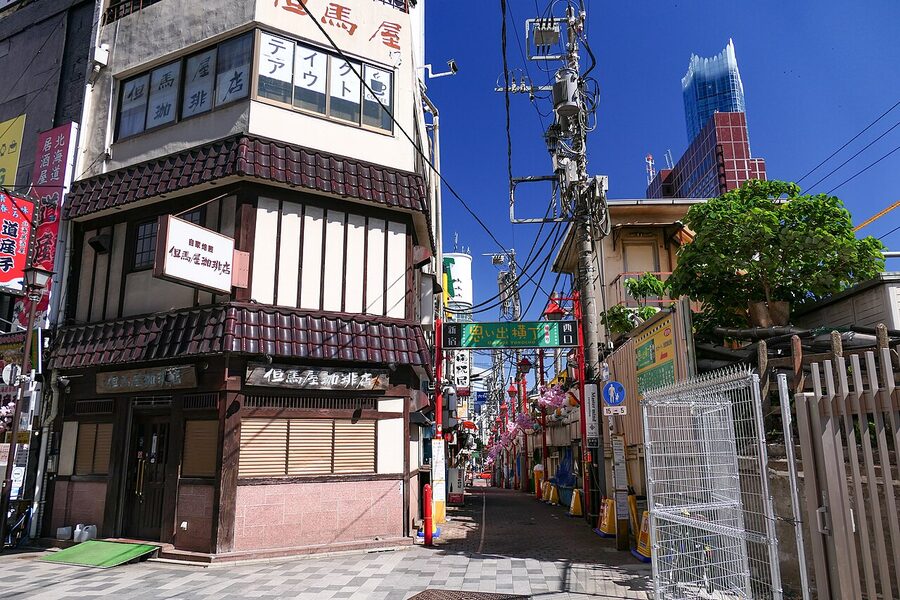
Omoide Yokocho (Shinjuku West Exit) — 60+ tiny yakitori and standing-bar stalls in a postwar-era covered alley. Dusk is the moment when it feels most Tokyo. ¥2,000-3,500 per person. In our Shinjuku guide.
36. Shinjuku at full volume
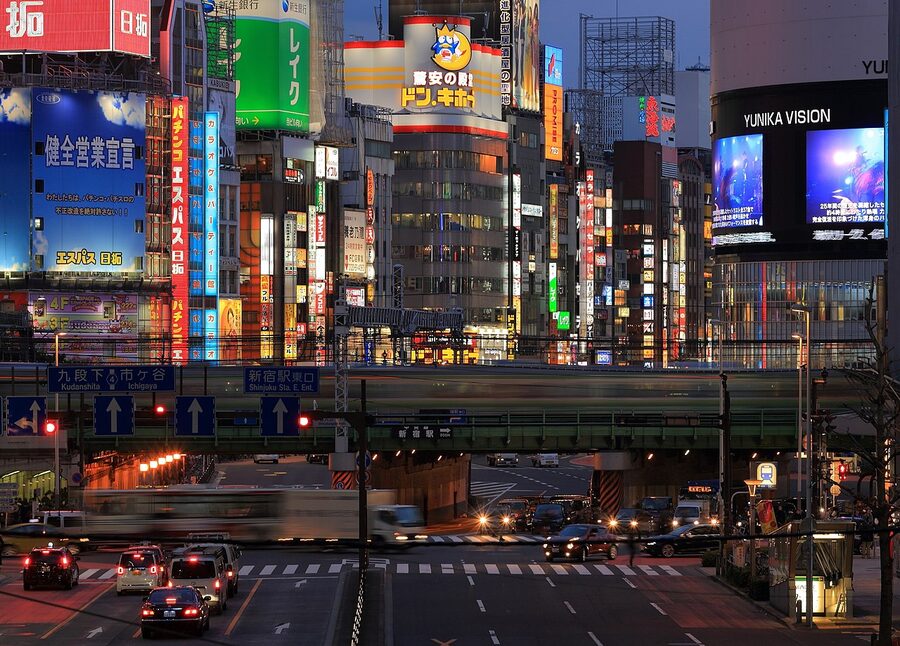
Shinjuku at night is what Tokyo looks like in your head before you visit. Kabukicho gate, Godzilla Road, the Kabukicho Tower, endless alleys of neon, the 3D cat, Golden Gai. Do a full loop 6-10pm, dinner in between, one drink in Golden Gai to round out. Full map: our Shinjuku guide.
37. See the DiverCity Gundam
Outside DiverCity Tokyo Plaza (Odaiba), a 19.7m Unicorn Gundam statue does transformation shows every 30-60 minutes during daytime and projection-mapped shows after dark. Free. The most photographed robot in Tokyo. More: Odaiba guide.
Getting around Tokyo
Buy an IC card (Suica or Pasmo) on arrival — rechargeable transit card that works on all trains, buses, and many convenience stores. ¥2,000 deposit + ¥1,000-3,000 typical starting load. Mobile Suica (via Apple Wallet) is the modern version if you have an iPhone.
JR Yamanote line is the 35km loop that covers everything. Budget 30-45 min to cross central Tokyo end-to-end by train. Metro lines fill the interior. Don’t buy a JR Pass unless you’re doing multiple Shinkansen day-trips — for Tokyo-only, pay-as-you-go with IC card is cheaper.
Taxis cost ¥420 starting fare, ¥80-100 per subsequent kilometre. Reasonable for 2-3 people on a rainy night, useless for everyday movement. Uber and GO (local equivalent) apps both work.
Where to stay in Tokyo
Our recommended first-time-visitor bases: Shibuya (central, hyper-connected, loud), Shinjuku (biggest hotel range, middle of everything), Ueno (quieter, cheaper, great for museum-heavy trips), Asakusa (atmospheric, cheapest, easy airport access via Keisei Skyliner from Ueno). Avoid staying only in Shinjuku Kabukicho — close to the action but loud at night. For a dedicated where-to-stay breakdown with each neighbourhood’s trade-offs, see our forthcoming Where to Stay in Tokyo guide.
When to visit Tokyo
Best: late March-early April (cherry blossoms, cool weather). Late October-early December (autumn colour, cool, clear). Winter (clear skies, Mt Fuji visible, festive illumination season). Avoid: Golden Week (late April to early May, domestic travel peak), obon week (mid-August, hot + crowded), New Year’s (1-3 January, many restaurants and shops closed).
Rainy season is mid-June to mid-July. Summer heat (July-September) is genuinely uncomfortable — 33-35°C plus high humidity. Winter (Dec-Feb) is cold but crisp and clear, ideal for Fuji visibility from observation decks.
Tokyo FAQ
How many days do I need in Tokyo?
Minimum 5 days for a proper first-time visit. 7-10 days if you want to include day-trips (Hakone, Nikko, Kamakura). You won’t "see Tokyo" in any complete sense — nobody does — but 5 days gets you to the major neighbourhoods with breathing room.
Is Tokyo expensive?
Less than you think. Budget ¥15,000-25,000/day for a comfortable mid-range trip (business hotel + mid-range restaurants + trains + one attraction). Ramen lunch: ¥1,000. Sushi lunch set: ¥1,500-3,000. Metro day pass: ¥800. Observation deck: ¥1,500-3,000. You can do Tokyo on ¥8,000/day with a hostel and konbini meals; you can also do it on ¥100,000/day at the Park Hyatt.
Can I get by without speaking Japanese?
Yes, in central Tokyo. English signage is ubiquitous in train stations, restaurants, and tourist attractions. Translation apps handle menus and questions well. Basic phrases ("sumimasen" — excuse me, "arigatou gozaimasu" — thank you) go a long way. The smaller and older the shop, the more Japanese you’ll need — but even then, pointing and nodding works.
What’s the one thing I shouldn’t miss?
If we had to pick one: a Yamanote line loop ride at dusk. It’s ¥170, takes an hour, and passes through every major Tokyo identity — shopping districts, residential zones, business centres, entertainment quarters. No single activity gives you more Tokyo per hour of time.
Is it safe to walk around Tokyo at night?
Yes — Tokyo is one of the safest large cities in the world. Kabukicho has minor touts to ignore; usual pickpocket awareness in dense crowds. Women generally feel safer in Tokyo at midnight than in most cities at noon. Standard travel common sense applies.
The short version
Tokyo is 23 special wards, 35 million people, the world’s best train system, the densest restaurant-per-square-metre concentration on earth, and a perpetual rebuilding project that means no two visits look the same. 32 items above are a starting framework — not an exhaustive list. Pick the 15 that interest you, pair them with one or two neighbourhood deep-dives from our district guides, and you’ll have the week of your travel life.
If you’re just starting your research: our first-timer’s guide covers logistics (budget, timing, visa, transit, SIM cards), while our neighbourhood-specific guides cover the depth of what happens inside each district. Happy Tokyo-ing.