
Akihabara — Akiba to locals — is Tokyo’s otaku capital: a six-block cluster of electronics shops, arcades, manga stores, collectible outlets, maid cafes, and neon-lit multi-storey game centres. It’s the place every anime nerd pilgrimage-plans before they land in Japan. It’s also, surprisingly, a perfectly interesting afternoon even if you’ve never watched an anime or owned a Game Boy. The scale is what does it — you’ll walk past shops selling specific things you didn’t know were categorisable.
Below is our run-through of 28 things to do in Akihabara — the retro game pilgrimage, the gachapon walls, which maid cafes are worth it, and where to go when you’ve had enough of the noise. Pair this with our Ueno guide (they’re one stop apart on the Yamanote) or our citywide list.
Akihabara Station is your access point. Electric Town Exit (east side) puts you straight into the main electronics district. Showa-dori Exit (west side) gets you to Yodobashi Camera faster. Everything is walkable within 15 minutes. The neighbourhood is best at night — plan to arrive mid-afternoon and stay through dark.
In This Article
- 1. Walk Electric Town
- 2. Exit Akihabara Station
- 3. Raid Yodobashi Camera Akiba
- 4. Walk through Radio Kaikan
- 5. Play at SEGA Akihabara
- 6. Browse the gachapon walls
- 7. Retro-game pilgrimage at Super Potato
- 8. Visit a maid cafe
- 9. Dig through Mandarake
- 10. Photograph Chuo-dori at night
- 11. Stop at Kanda Myojin Shrine
- 12. Spend a moment at Akihabara Radio Center
- 13. Shop at Animate
- 14. Shop Don Quijote Akihabara
- 15. See the anime billboards
- 16. Spot cosplayers (and AKB48 promoters)
- 17. Win (or lose) at claw cranes
- 18. Loop through UDX
- 19. Cross to 2k540 Aki-Oka Artisan
- 20. Try a theme cafe (non-maid)
- 21. See the AKB48 Theater (even if you can’t get in)
- 22. Eat at the 1000-yen curry shops
- 23. Pick up specific collectibles at Mandarake sub-floors
- 24. Shop Akihabara duty-free
- 25. Shoot the JR tracks from above
- 26. Walk the Akihabara pedestrian crossings
- 27. Catch evening rush
- 28. End the night at a Kanda Myojin evening prayer
- Getting to Akihabara
- Where to stay in Akihabara
- Akihabara FAQ
- Is Akihabara worth visiting if I’m not into anime?
- How many hours do you need in Akihabara?
- Are maid cafes weird?
- Can I combine Akihabara with Ueno in one day?
- What’s the best time to visit?
- The short version
1. Walk Electric Town
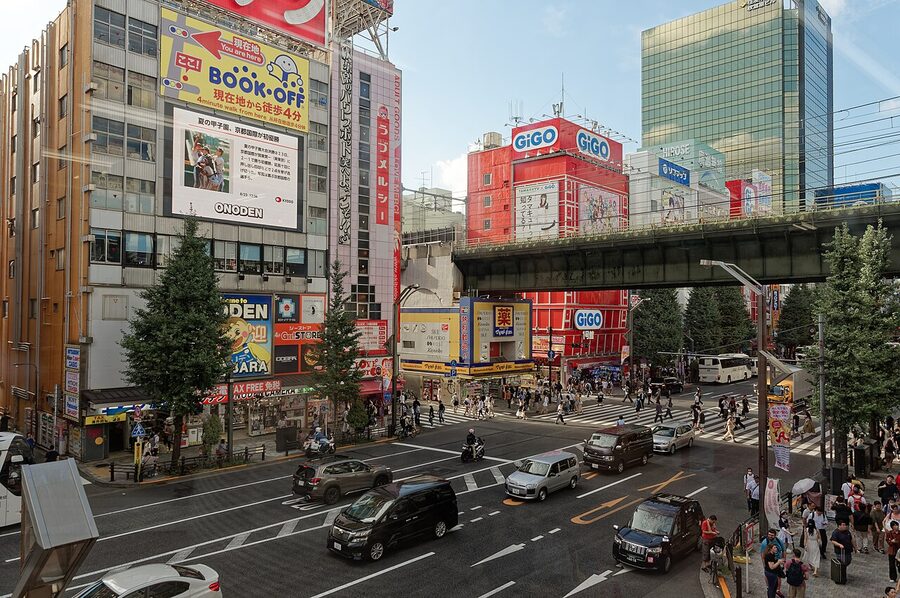
Akihabara Electric Town is the unofficial name for the six or so blocks immediately east of Akihabara Station. Post-WWII, this was where returning soldiers set up radio-parts stalls under the railway tracks. By the 1960s it had evolved into Tokyo’s electronics district. By the 1990s-2000s it had added anime, manga, and otaku culture. Now all four eras co-exist in the same few streets — you’ll walk past a radio-components shop, an anime figurine store, a retro game shop, and a maid cafe in the space of three minutes.
Start at the Electric Town Exit and walk east along Chuo-dori. Give yourself 2-3 hours just to wander. Don’t plan too much — part of the point is stumbling into weird, specific shops.
2. Exit Akihabara Station
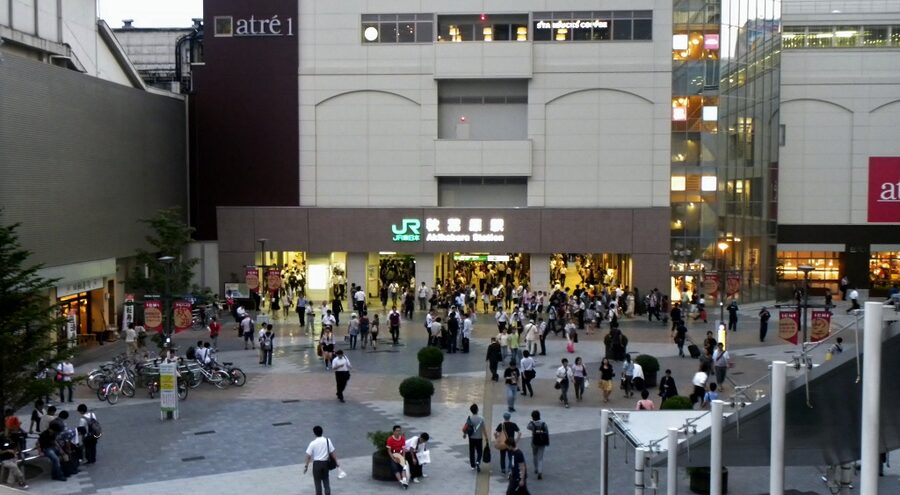
The Akihabara Station itself has three useful exits: Electric Town (east, the heart of the otaku district), Showa-dori (west, closer to Yodobashi), and Central (between the platforms, for quick transfers). Look up at the old red-brick sections of the station — they’re 1930s-era and one of the few pre-war elements in the district.
Free, always on. Take 2 minutes at the Electric Town plaza to orient yourself — the main landmarks (Radio Kaikan, SEGA, Yodobashi) are all visible from here.
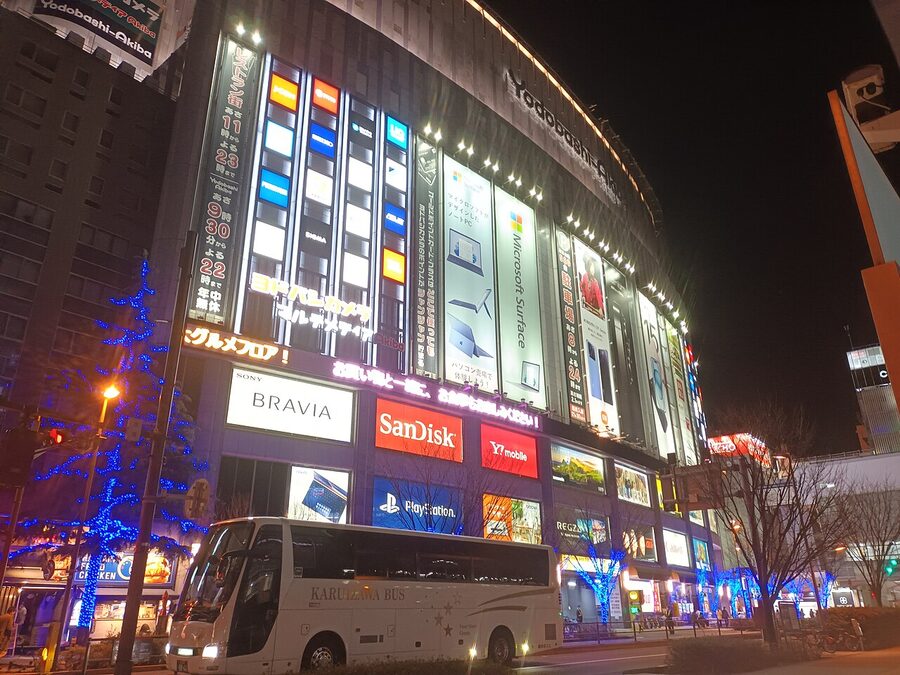
3. Raid Yodobashi Camera Akiba
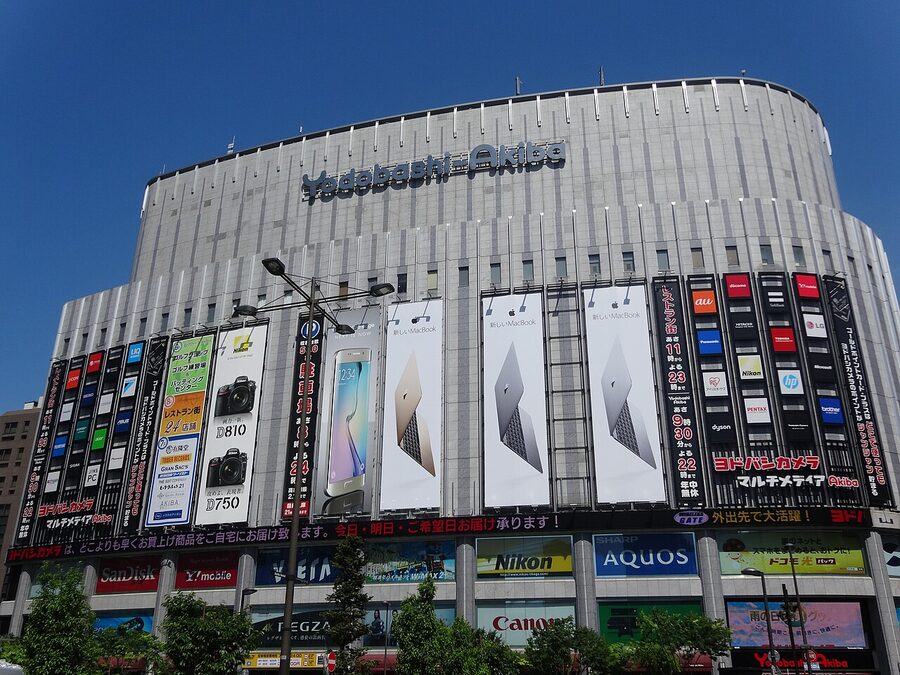
Yodobashi Camera Akiba is the 8-floor flagship of Japan’s biggest electronics chain — one of the largest retail electronics stores on earth. You want a camera, computer, gaming hardware, kitchen gadget, beauty device, or obscure Japan-exclusive tech? It’s in there. The prices are fair; the returns policy is civilised (14 days with receipt); the staff on each floor speak at least some English.
Tax-free counter on the ground floor with passport. Don’t try to walk out with items still in their original boxes — Japanese customs requires you carry them in the tax-free seals. Hours: 9:30am–10pm. Opposite the station’s Showa-dori Exit.
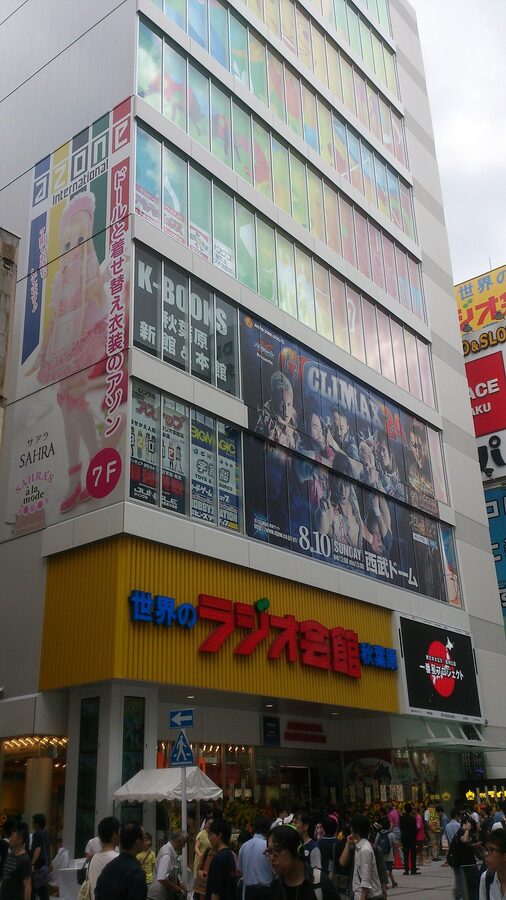
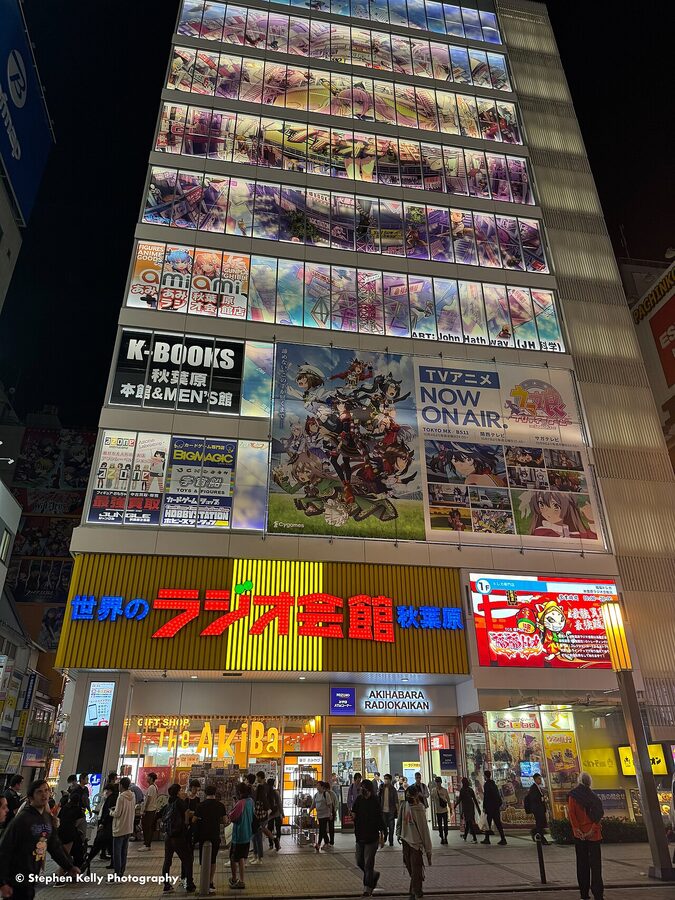
4. Walk through Radio Kaikan
Radio Kaikan is the 10-storey tower just opposite the Electric Town Exit — the historic centre of otaku Akihabara. Each floor is a different specialty (model kits, trading cards, idol memorabilia, manga, doll supplies, specific gaming franchises). It’s not a mall — it’s a vertical stack of individual specialty shops. If you’re looking for a specific niche (say, Gunpla models or Pokémon trading cards), this is where you start.
The Kotobukiya (model kits) and the Mandarake branch on floor 9 are the highlights for most visitors. Hours: most shops 10:30am–8pm.
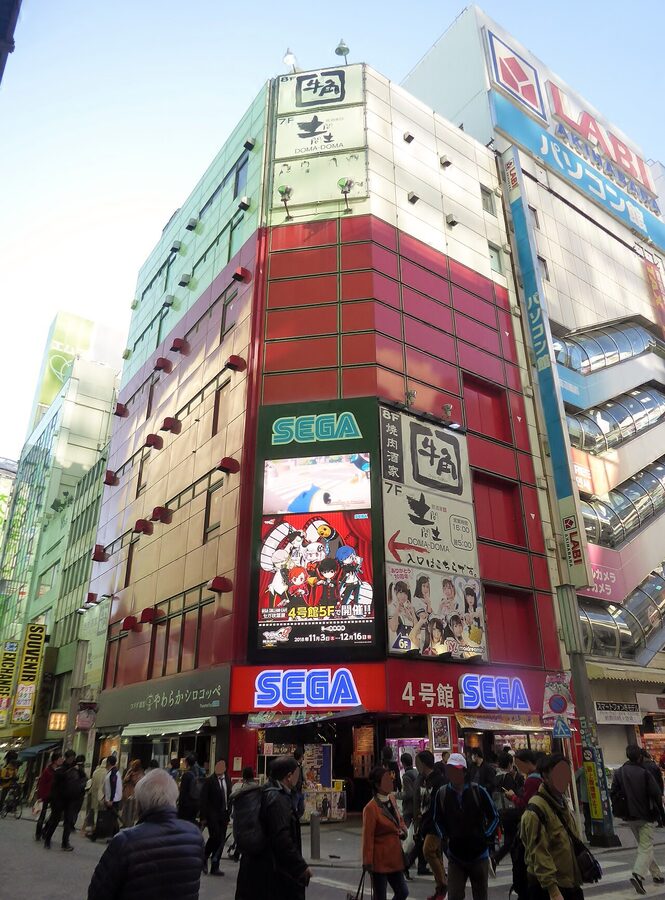
5. Play at SEGA Akihabara
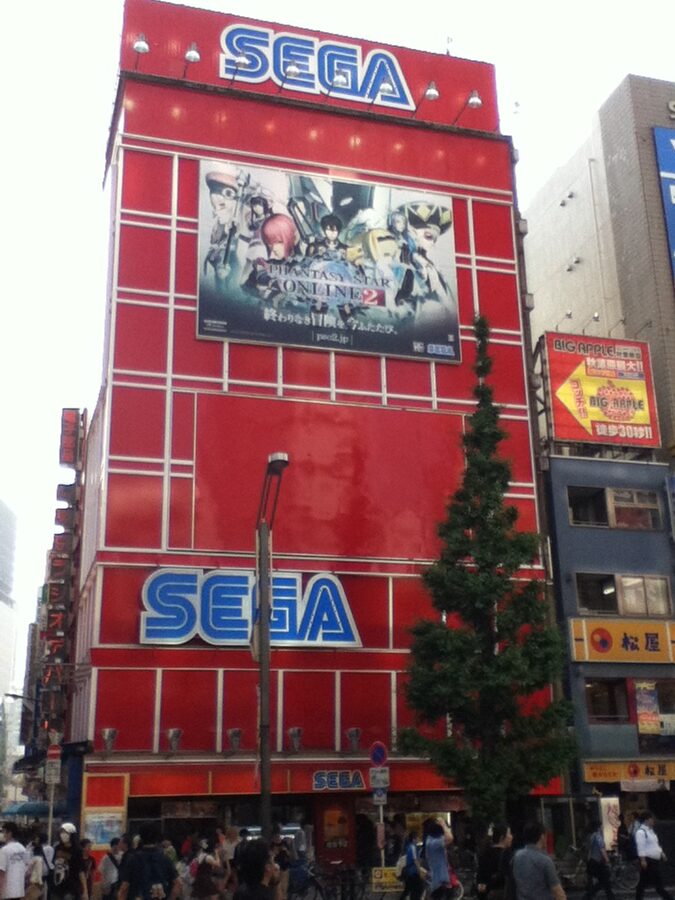
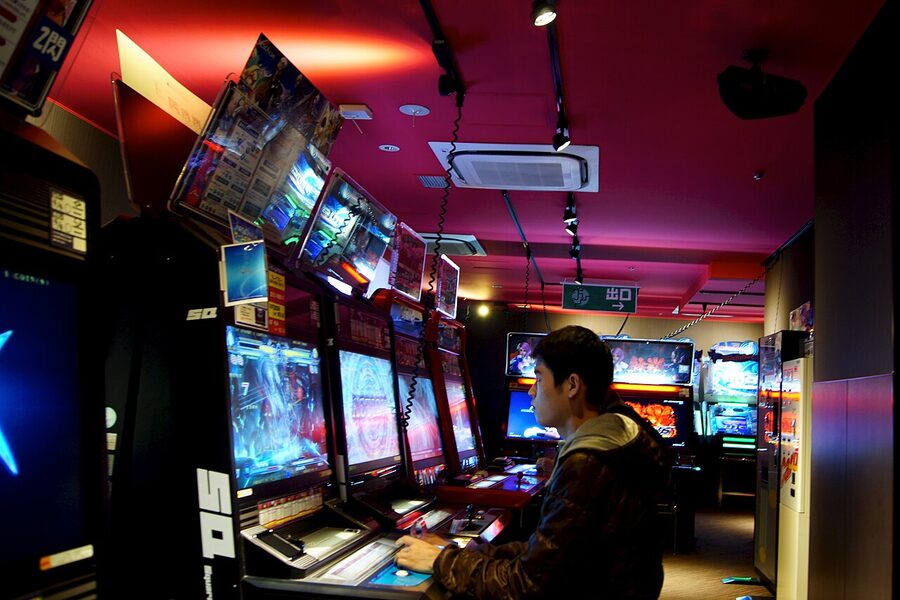
SEGA Akihabara is the big multi-floor arcade on Chuo-dori — the one on every Tokyo postcard. Four or five floors of claw machines, rhythm games, fighting games, and retro arcade cabinets. ¥100-500 per game. The top floor has photo booths (purikura) and karaoke. Come ready to burn ¥2,000-3,000 across an evening — and have a lot of fun doing it.
The claw machine floors are notoriously rigged; most crane games have minimum force settings that require multiple coin plays. Watch a few other people before trying. The rhythm games (Taiko no Tatsujin, Beatmania) are the pure-skill ones and the best value. Hours: 10am–11:30pm.
6. Browse the gachapon walls
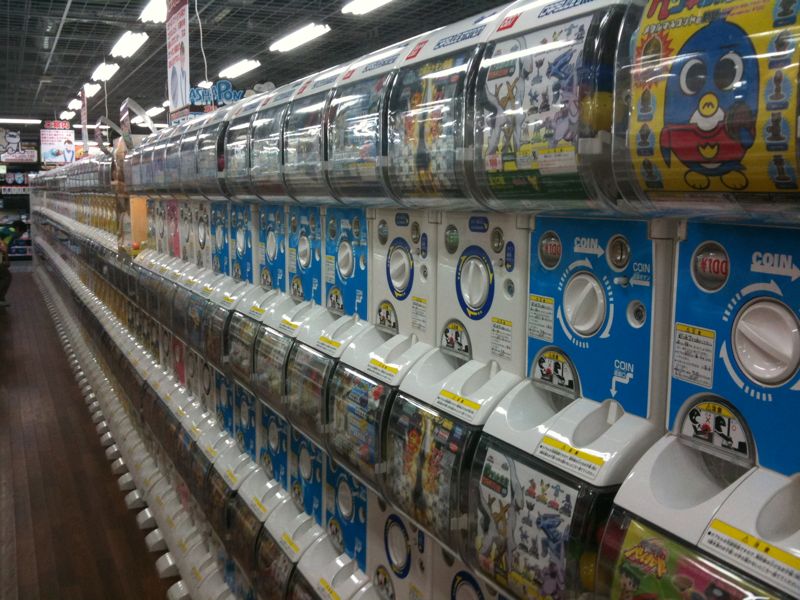
Gachapon (ガチャポン) or gashapon are the coin-operated capsule-toy machines Japan perfected. Akihabara has multi-floor gachapon centres — rows of 100+ machines, ¥300-600 per turn, random small toys in plastic capsules. The themes are absurdly specific: dog breeds wearing hats, miniature realistic condiment bottles, anime-specific keyring sets, various internet memes.
Gachapon Kaikan (on Chuo-dori) and Akihabara Gachapon Hall are the main dedicated venues. Budget ¥1,000-2,000 for a full round of pulls. English lists of what’s in each machine are increasingly common; if not, point at the pictures.
7. Retro-game pilgrimage at Super Potato
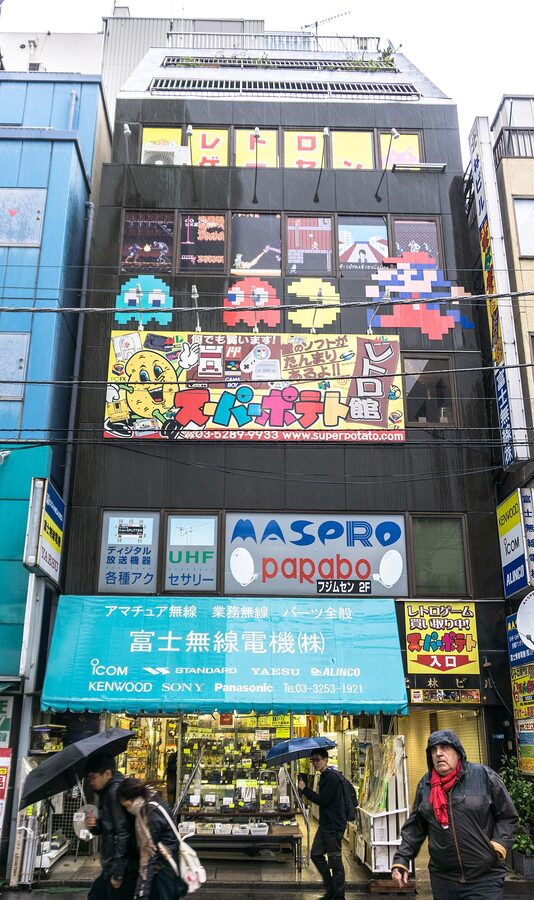
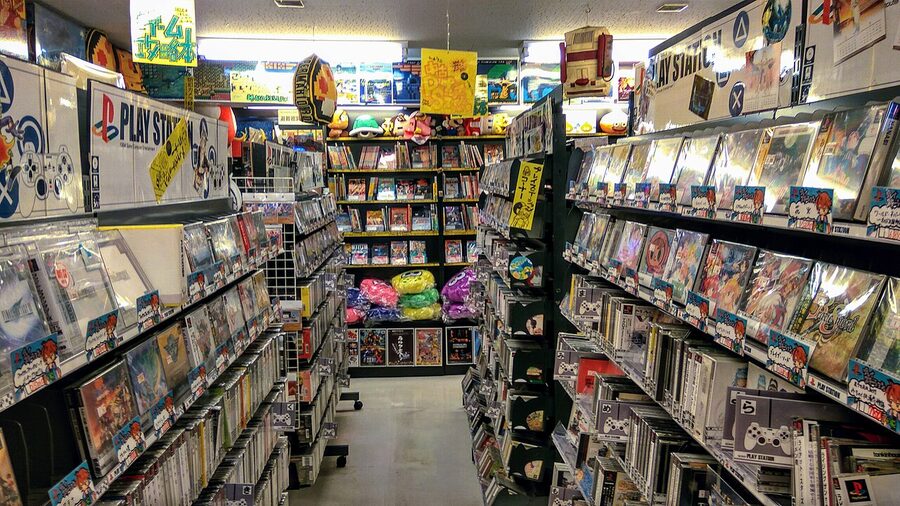
Super Potato is Akihabara’s most famous retro game shop — three floors of vintage consoles, cartridges, and arcade cabinets (Famicom, Super Famicom, Mega Drive, PC Engine, Neo Geo). The second floor has the playable retro arcade where you can try a ¥100 round of Street Fighter II on original hardware. Prices on collectibles are tourist-inflated compared to 2015, but it’s still the single best retro game shop in Tokyo.
Hours: 11am–8pm. Cash preferred for smaller items; cards for anything ¥3,000+. Look for rare boxed Famicom titles on floor 1 — ¥3,000-100,000 depending on rarity.
8. Visit a maid cafe
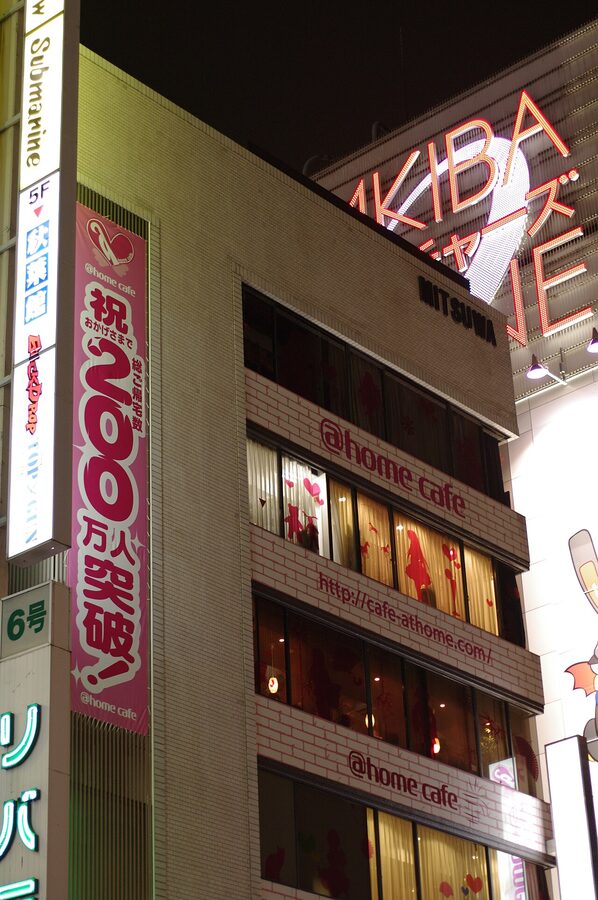
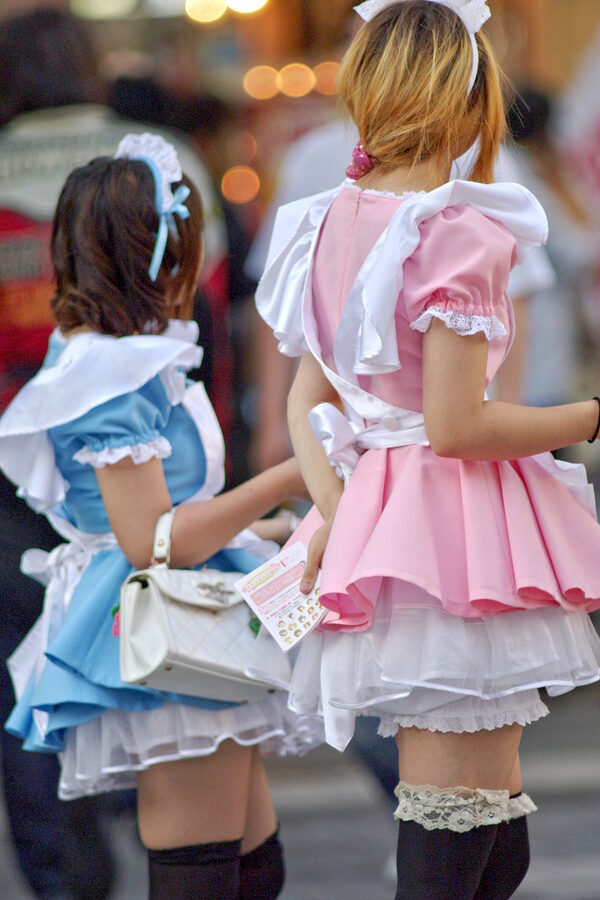
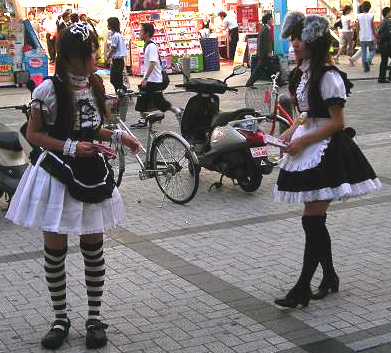
Maid cafes (メイドカフェ) are Akihabara’s most infamous institution — cafes where the staff wear French-maid uniforms and the experience is heavily performative (chants over drinks, drawing on omelettes with ketchup, photo sessions). It’s cheesy. It’s touristy. It’s also a genuine piece of Japanese pop culture that’s worth doing once.
@home cafe (multiple branches) is the main English-friendly tourist choice. Entry is typically a ¥700-1,000 cover charge plus ¥1,200-1,800 per drink/food item. Plan on ¥3,000-5,000 per person for the full experience. Photography policies vary — usually no photos of the maids, but photos with them cost ¥500-1,000.
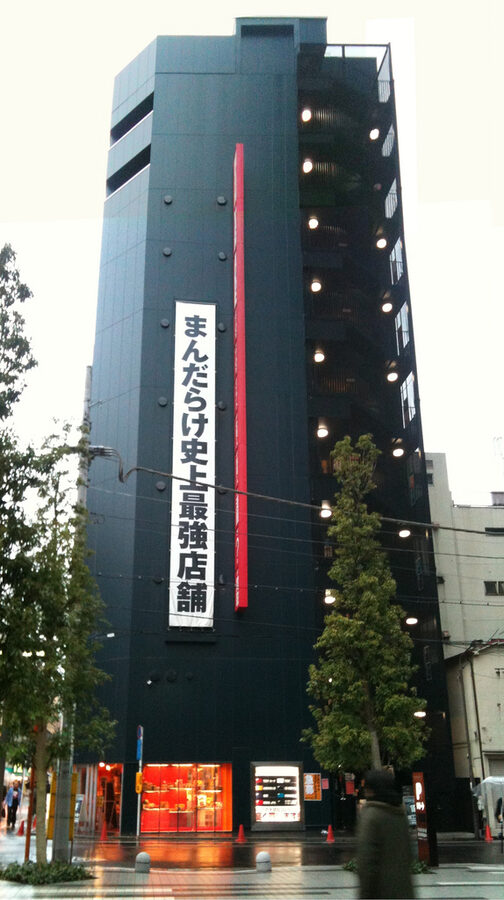
9. Dig through Mandarake
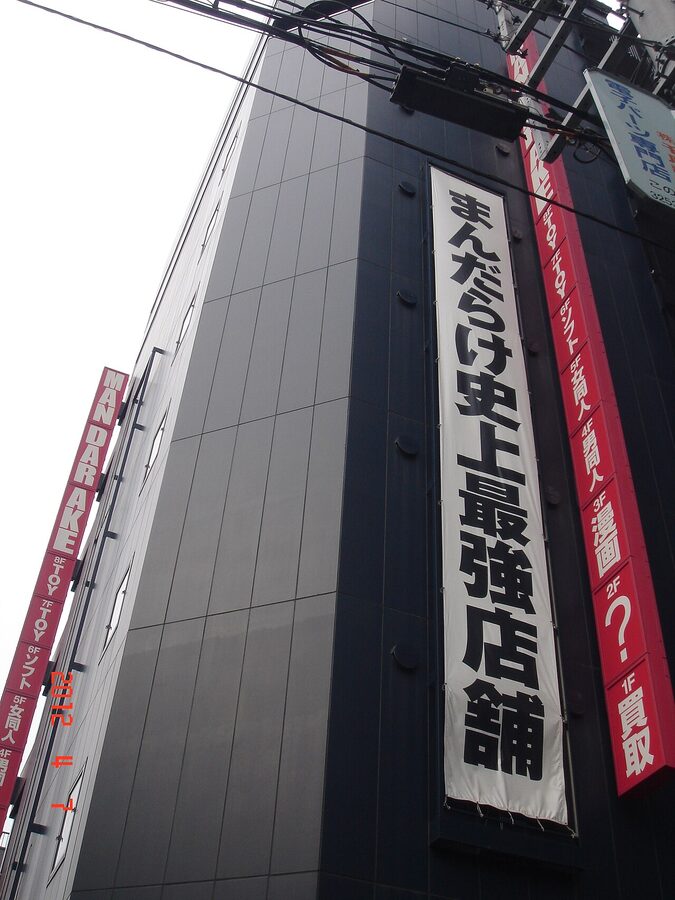
Mandarake (まんだらけ) is Japan’s biggest second-hand anime/manga/collectibles chain, and the Akihabara flagship is their most intense 8-floor location. Each floor is a different specialty: manga, trading cards, cosplay, doujinshi (fan comics), rare figurines, vintage toys. Prices run from ¥100 (basic manga) to ¥500,000+ (rare 1970s mecha figures in original packaging).
Even if you’re not buying, the vintage floors (6-7, usually) are a free museum of Japanese pop culture. Original 1970s Ultraman figures. First-print Sailor Moon cels. 1980s idol photo books. Two hours minimum. Hours: 12pm–8pm.
10. Photograph Chuo-dori at night
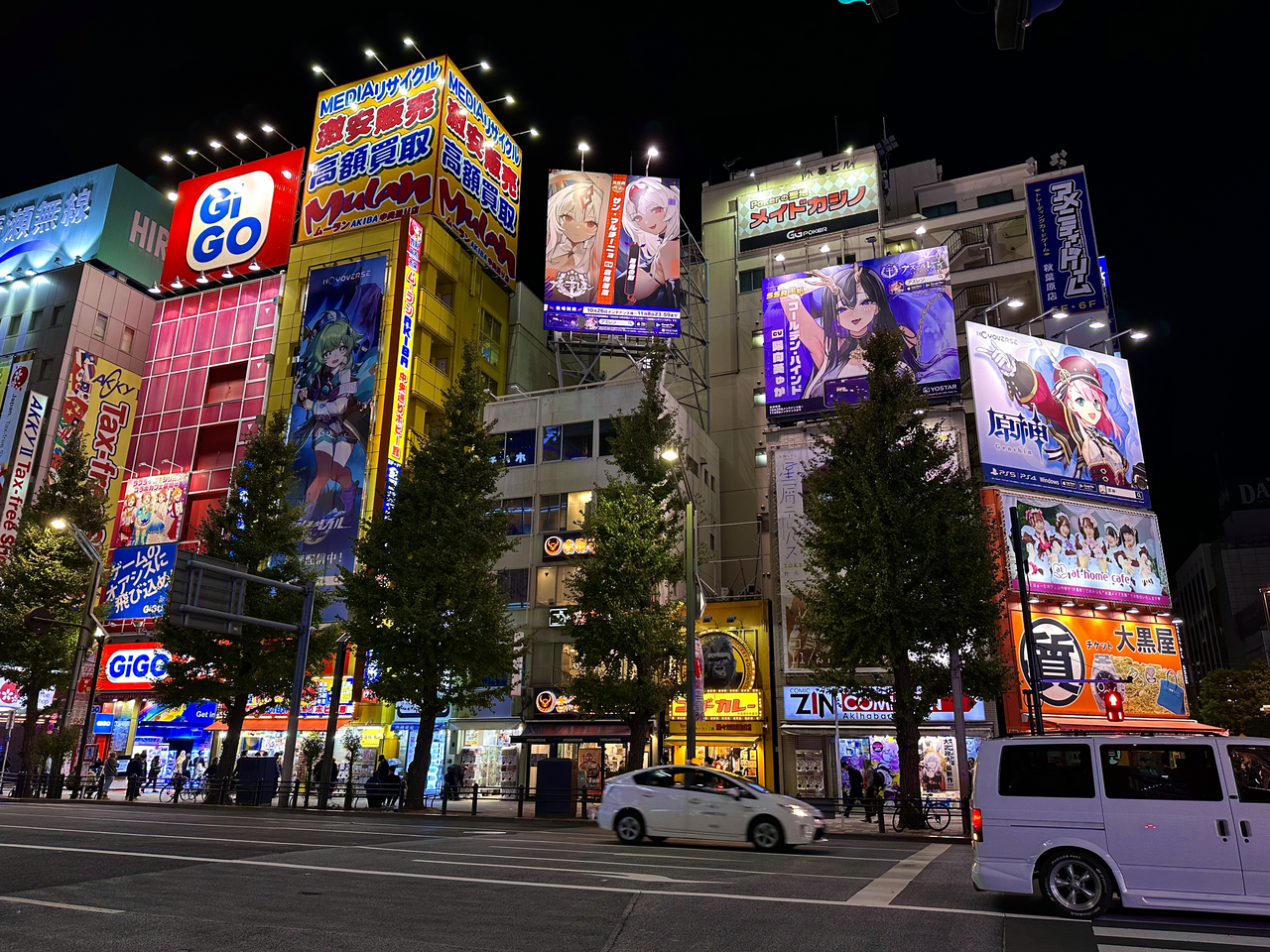
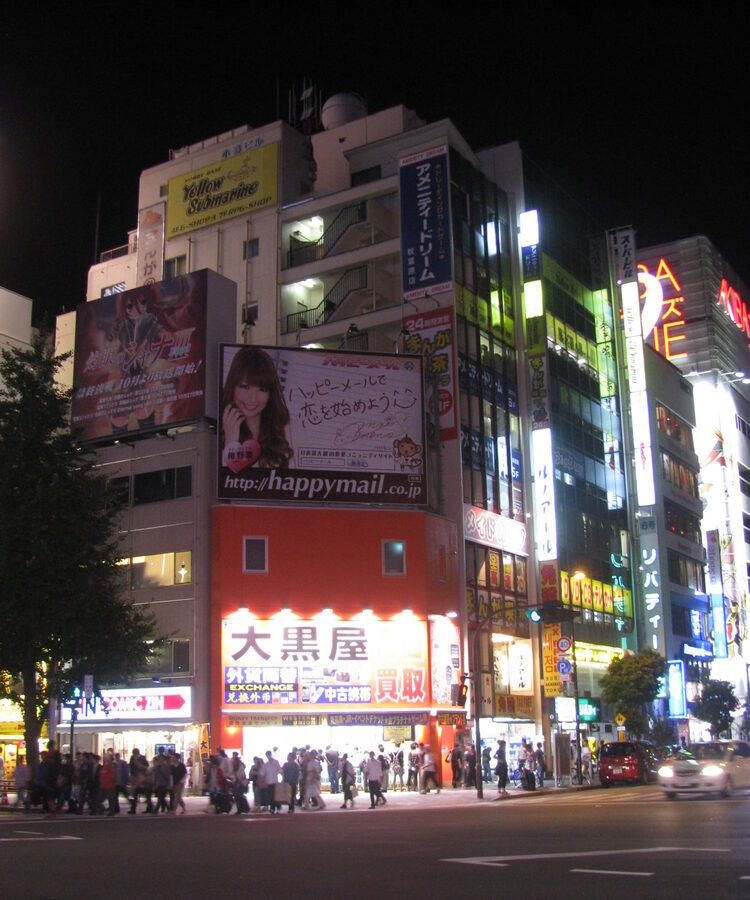
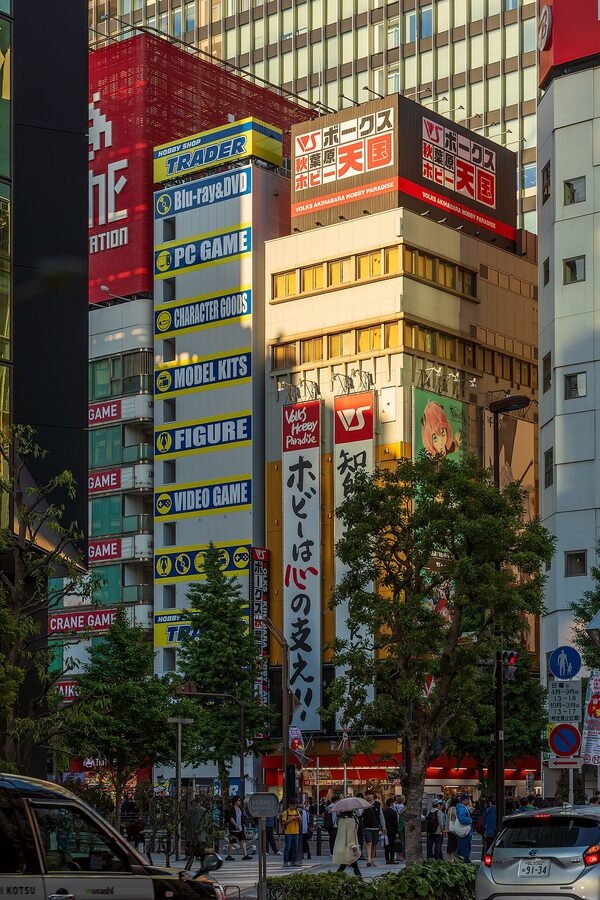
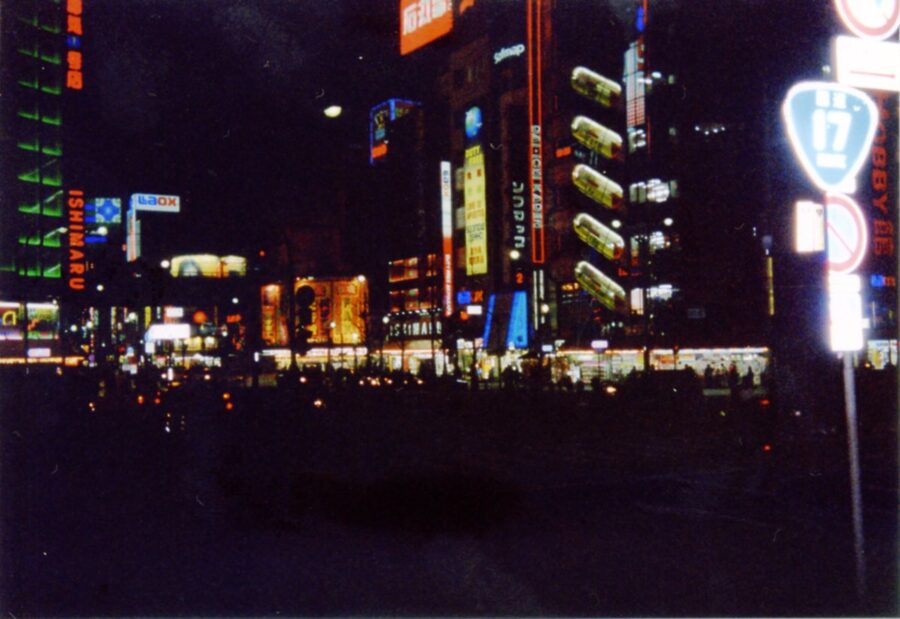
Chuo-dori (中央通り) is Akihabara’s main north-south avenue and the single best street-photography location in the neighbourhood. On weekends and holidays the street is closed to cars between 1pm and 5pm and becomes a pedestrian paradise. At night the neon signage, electronic displays, and wall-to-wall illumination create one of Tokyo’s densest light displays.
Best shots: from the pedestrian crossings looking north or south at blue hour. The view up toward the SEGA building from the Kanda River bridge is textbook Akihabara.
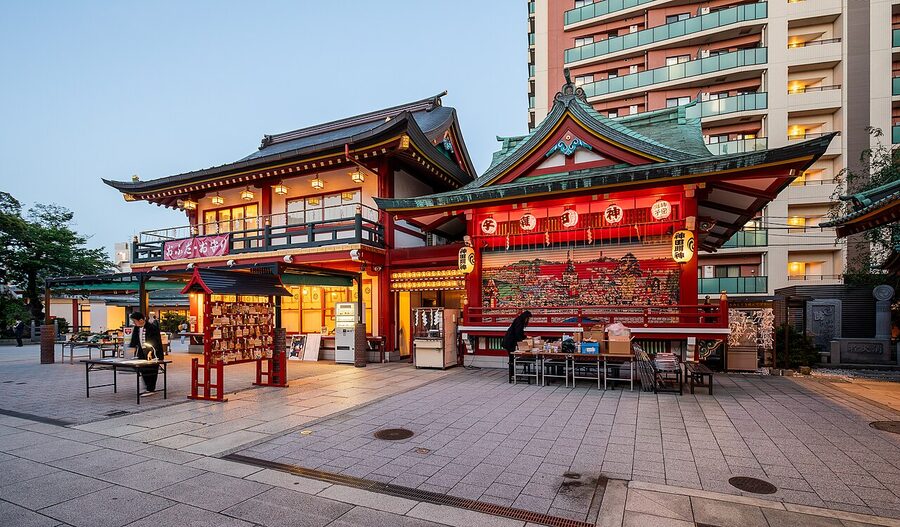
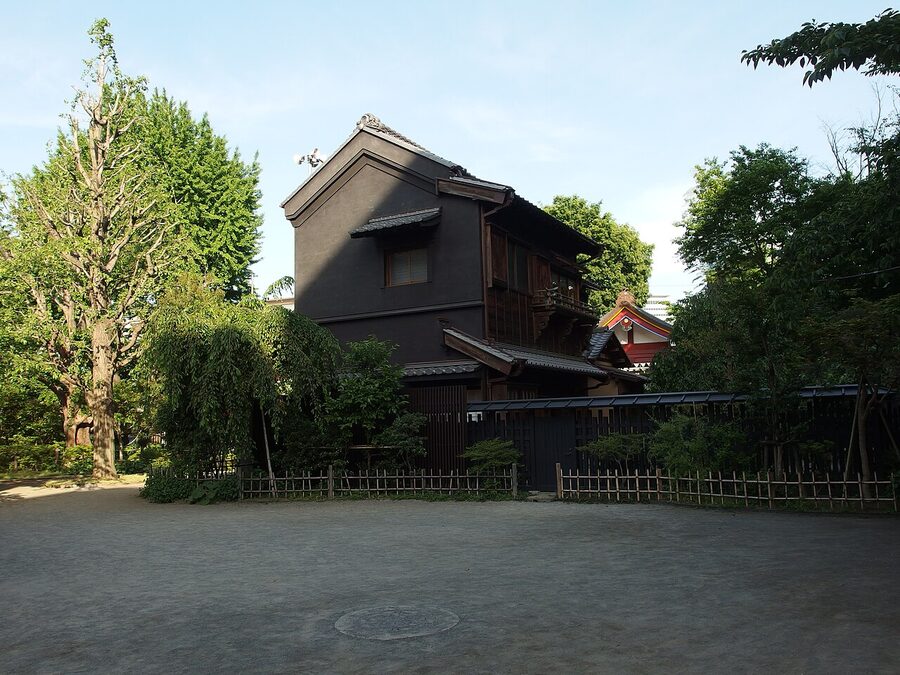
11. Stop at Kanda Myojin Shrine
A 10-minute walk south-west of Electric Town sits Kanda Myojin (神田明神) — a 1,300-year-old Shinto shrine that’s become Akihabara’s unofficial guardian. The shrine genuinely supports IT and electronics companies (local tradition links its protective deity to commerce), and you’ll see local businesses bringing new hard drives and laptops to be blessed. It’s a Tokyo-quiet counterpoint to the neon chaos a few blocks away.
Free, always open. Best timing: right after Akihabara’s evening peak (around 7-8pm) when the shrine is lit up and nearly empty. Anime fans will recognise it as a Love Live! pilgrimage site — signage and collaboration merch in the shrine office.
12. Spend a moment at Akihabara Radio Center
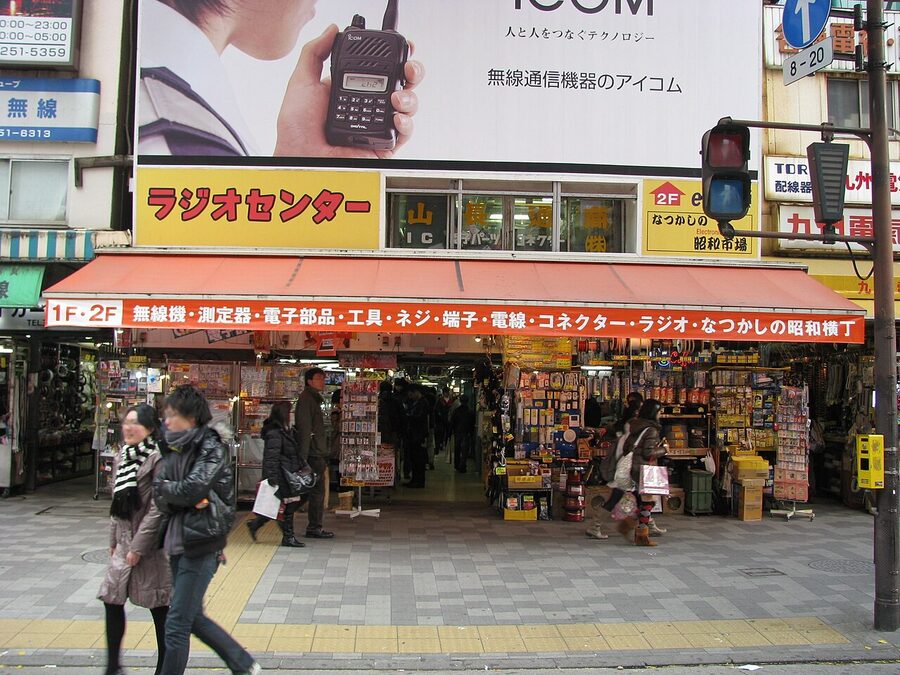
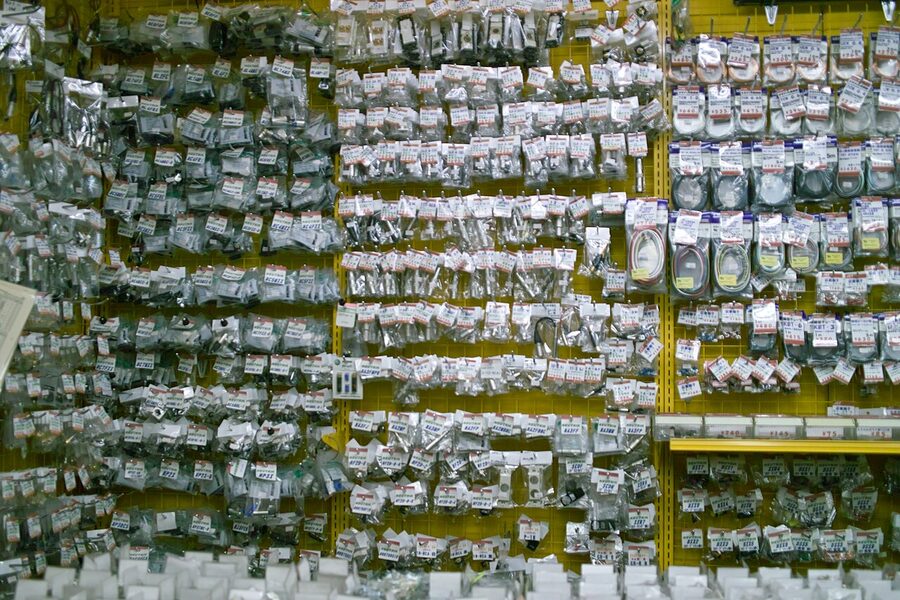
Under the elevated JR tracks runs Akihabara Radio Center — the maze of 1950s-era electronics stalls that launched Akihabara’s reputation. It’s a physically cramped, atmospherically concentrated, mostly-still-open collection of tiny shops selling transistors, resistors, vintage radio parts, and specialist hardware. The lighting hasn’t been updated since about 1978. It is glorious.
Free to wander. Most stalls 10am-7pm. Even if you have no electronics interest at all, the 15-minute walk through is a time capsule of early-Akihabara Tokyo.
13. Shop at Animate
Animate (アニメイト) is Japan’s biggest anime/manga retail chain, and the Akihabara branch is the flagship — 7 floors of manga, anime merchandise, voice-actor CDs, BL (boys’ love) genre material, and Japan-exclusive collectibles. Where Mandarake is second-hand and weird, Animate is new, clean, and organised. It’s the best first stop for an overview of current Japanese anime/manga commerce.
Hours: 10am–9pm. Tax-free with passport. The basement stocks yaoi/BL material — genre-specific, visible age-verification on some shelves.
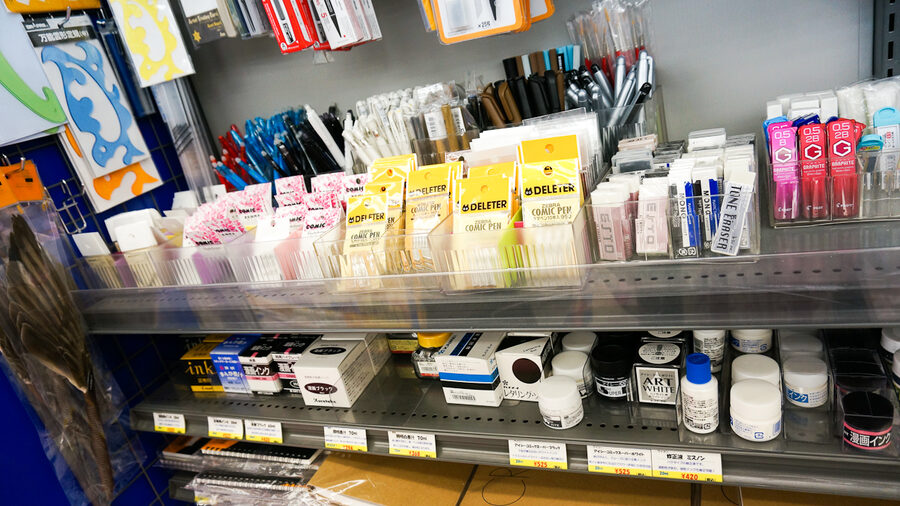
14. Shop Don Quijote Akihabara
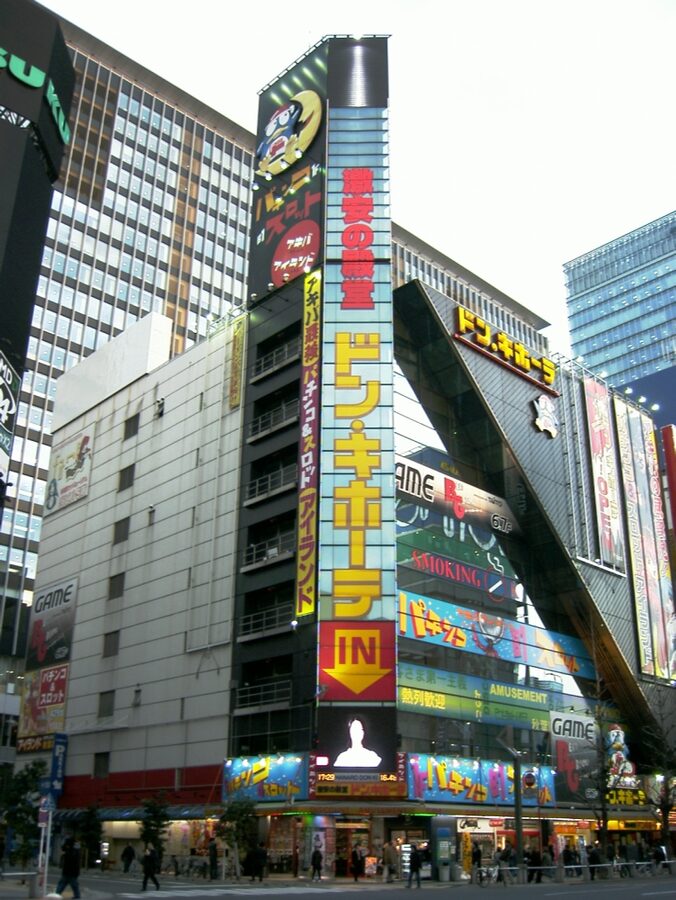
Don Quijote Akihabara (known locally as Donki) is the 9-storey discount store with — notably for Akihabara — the AKB48 Theater on the 8th floor, where Japan’s most famous idol group performs multiple shows a week. The bottom floors are standard Donki chaos (snacks, cosmetics, souvenirs, electronics); the upper floors host the theatre, a maid cafe, and various otaku-specialty shops.
The theatre has a fan lottery system for tickets; tourists rarely get in but can visit the lobby/merchandise stores during daytime (free). Hours: Donki 24/7.
15. See the anime billboards
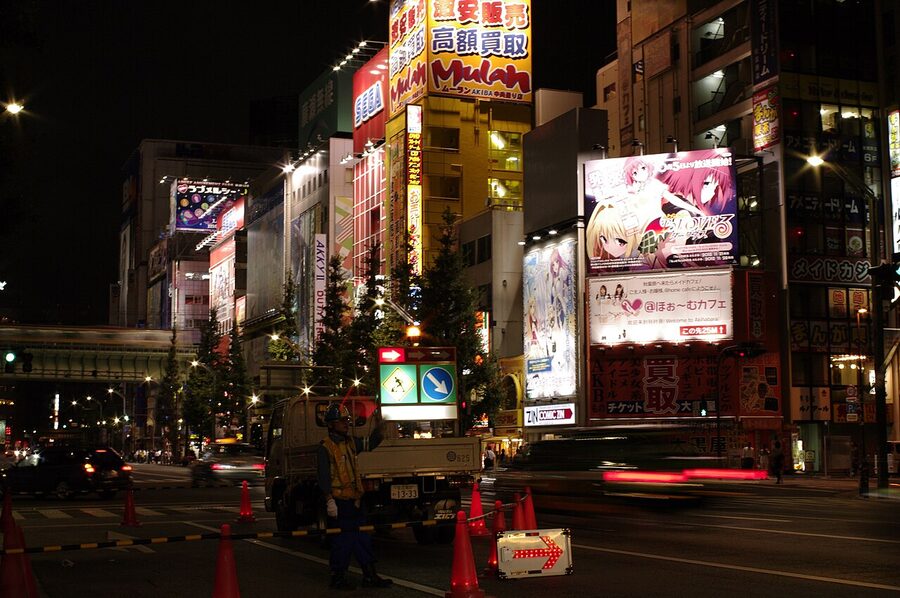
Chuo-dori and the surrounding blocks display giant anime billboards that are rotated by series’ debut dates — essentially a calendar of what’s currently big in Japanese anime. Walking the main avenue in the evening is a visual tour of which shows have marketing budgets right now. It’s free, always happening, and strictly unique to Akihabara.
16. Spot cosplayers (and AKB48 promoters)
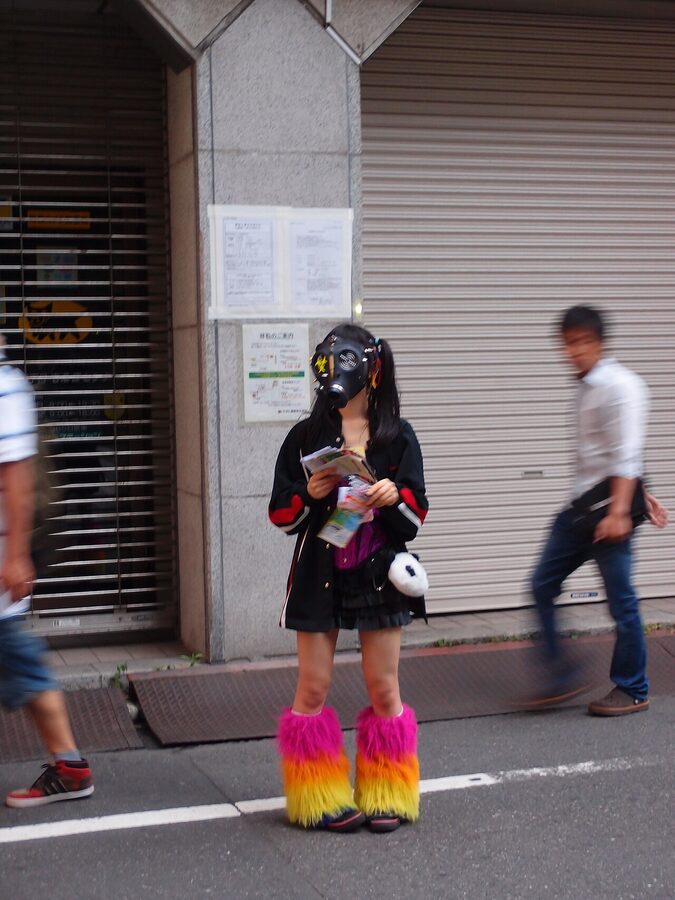
On weekends, especially Sunday afternoons, Akihabara cosplayers cluster near Chuo-dori — not quite Harajuku-peak numbers, but a steady ~50-100 per afternoon. Mostly anime/game character cosplay. Separately, the pavement has the AKB48 team promoters — young women handing out idol-group flyers and posing for photos in genuine-looking excitement.
Photography etiquette: ask first (a polite "Shashin ii desu ka?" always works). Most want to be photographed. Tip ¥100-500 for involved poses. Don’t crowd. Don’t touch costumes.
17. Win (or lose) at claw cranes
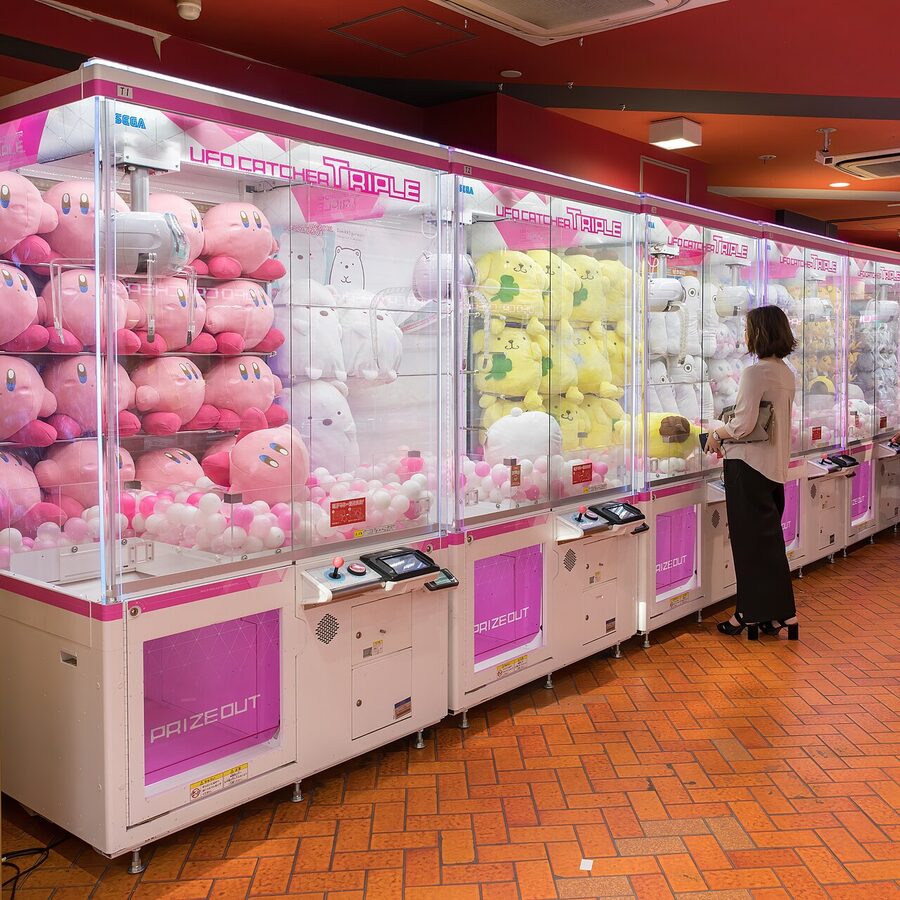
The claw crane machines (UFO catchers) in Akihabara arcades are their own tourist attraction. You’re unlikely to win — these are calibrated to prevent easy victories — but the experience of standing in a room of 100+ machines stocked with kawaii plush prizes is visually overwhelming. Top spots: SEGA Akihabara (floors 2-3), Taito Station, and the Chuo-dori Claw Machine Island.
Budget ¥500-1,500 on attempts. Don’t be embarrassed about losing — even Japanese regulars don’t win often. Rumour has it staff will top up the claw’s grip after repeated failures — ask politely and sometimes they will.
18. Loop through UDX
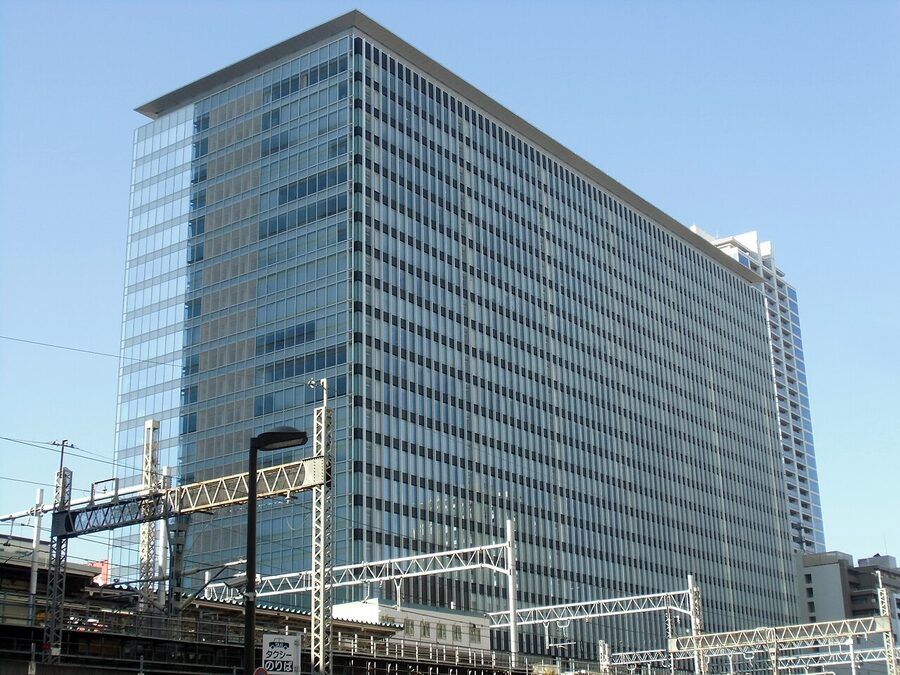
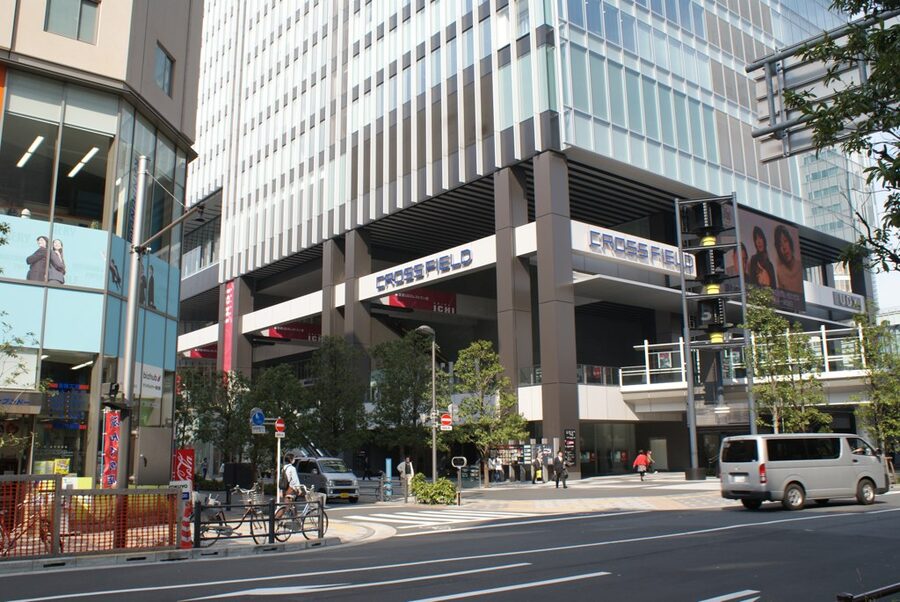
Akihabara UDX is the 22-storey glass office complex immediately north of the station — built on the old freight terminal in 2006. It houses Tokyo Anime Center on the 4th floor (free anime exhibition and event space), restaurants on floors 3-5, and offices above. The ground-floor plaza hosts rotating pop-up events, cosplay shoots, and cultural fairs.
Free access to the public floors. Tokyo Anime Center hours: 11am-7pm, closed Mondays. Good rain/AC escape for an hour.
19. Cross to 2k540 Aki-Oka Artisan
Between Akihabara and Okachimachi — a 10-minute walk south — sits 2k540 Aki-Oka Artisan, the craft-studio complex we mentioned in our Ueno guide. It’s the perfect palate-cleanser after Akihabara: ~50 quiet studios selling handmade Japanese crafts. Leather goods, ceramics, stationery, wood. Nothing neon. No arcade sounds. A genuine context shift.
Closed Wednesdays. Most shops 11am–7pm. It’s an acquired-taste destination for some visitors ("that wasn’t Akihabara at all") but we think the contrast is the point.
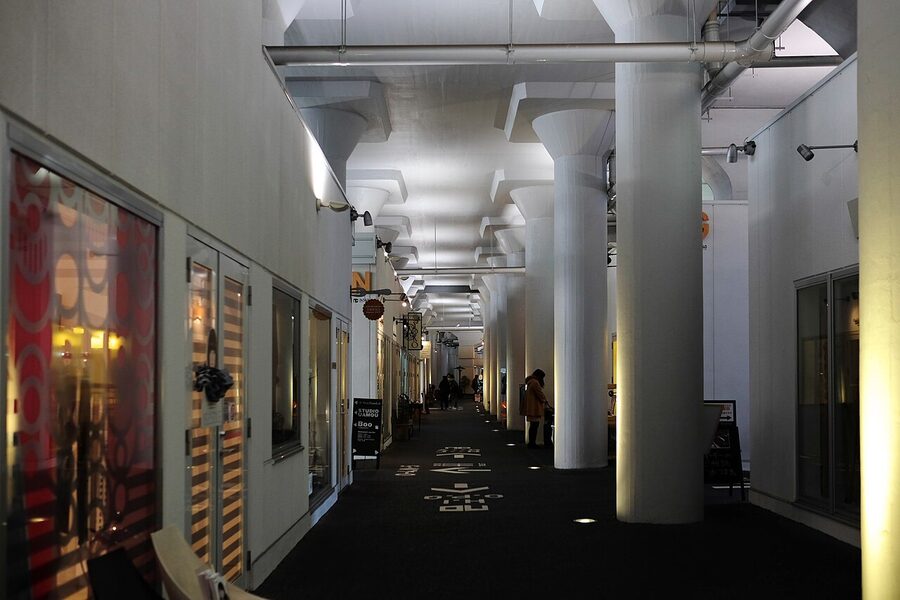
20. Try a theme cafe (non-maid)
Akihabara has more theme cafes than maid cafes if you widen the definition. Gundam Cafe (closed 2022, but similar concept cafes remain), Moomin Cafe, One Piece Cafe (rotating), and various anime-seasonal pop-ups open around specific series launches. Prices run ¥800-1,500 per drink, ¥1,200-2,500 per meal. Most do reservation + walk-in mix.
Keep an eye on the posters and flyers in the Electric Town plaza — temporary cafes are the best of them and close before they can be over-reviewed.
21. See the AKB48 Theater (even if you can’t get in)
AKB48 Theater on Don Quijote’s 8th floor is the permanent home of Japan’s most commercially successful idol group. Shows happen multiple times a week. Tickets are issued via a fan lottery that foreigners effectively can’t enter. The lobby, merchandise store, and photo wall are all accessible to anyone during daytime (free) and are a legitimate stop even without attending a show.
Stand at the AKB theatre entrance at 5pm and watch the fans arriving. It’s a phenomenon worth observing even if it’s not your thing.
22. Eat at the 1000-yen curry shops
Akihabara’s side streets are full of cheap lunch-to-dinner spots aimed at salary-working otaku on limited budgets. CoCo Ichibanya (chain Japanese curry, ¥700-1,200 customisable), Gusto (family restaurant, ¥800-1,500), Ichiran (tonkotsu ramen, ¥980-1,400). Plus the themed cafes, several 24-hour standing-sushi chains, and the Yodobashi 8F food court. You will not go hungry on a ¥1,500 budget.
For something more atmospheric: Akihabara Radio Center basement has a cluster of tiny lunch stalls run by local operators — ¥500-800 for simple dishes, mostly Japanese salarymen at lunchtime.
23. Pick up specific collectibles at Mandarake sub-floors
We mentioned Mandarake at item 9. Its sub-floors each specialise in different collectibles that are worth calling out individually. Floor 3: cosplay costumes and materials. Floor 4: trading cards (including rare Magic: The Gathering, Pokémon TCG, Yu-Gi-Oh!). Floor 6: vintage toys. Floor 7: idol memorabilia. Each floor is a destination in itself for the right visitor.
If you know what you want, go directly. If not, the vintage toys floor is the tourist sweet spot — you can see the full arc of Japanese pop culture from the 1970s to now in one room.
24. Shop Akihabara duty-free
Several stores in Akihabara specialise in tax-free electronics export — the kind of shop that stocks Japanese-spec items plus international-spec equivalents for tourists. LAOX (multiple floors, multi-language staff), Akihabara Duty Free (rice cookers, hair dryers, camera gear), and the upper floors of Yodobashi all fit this category.
Prices are often higher than Yodobashi’s domestic shelves but you get voltage-adapted versions and English manuals. Budget ¥3,000-30,000 for a souvenir-tier Japanese appliance. Bring your passport — tax-free purchases need it.
25. Shoot the JR tracks from above
The elevated JR Yamanote/Sobu lines pass through Akihabara at first-floor window height — a photograph-ready subject for train spotters and urbanists. The JR Kanda River bridge just north of the station gives you a clean angle of trains passing against the Akihabara skyline. Free, always accessible.
Best angle: from Kanda Myojin approach looking east, or from the UDX rooftop (which is sometimes accessible).
26. Walk the Akihabara pedestrian crossings
We’ve mentioned Chuo-dori at night multiple times. The pedestrian crossings — specifically the large one at Akihabara Denkigai-guchi intersection — are where the Akihabara photo happens. Sunday pedestrianisation (1-5pm) opens the road up completely. Blue hour through 8pm gives you the neon-against-sky gradient that defines the district visually.
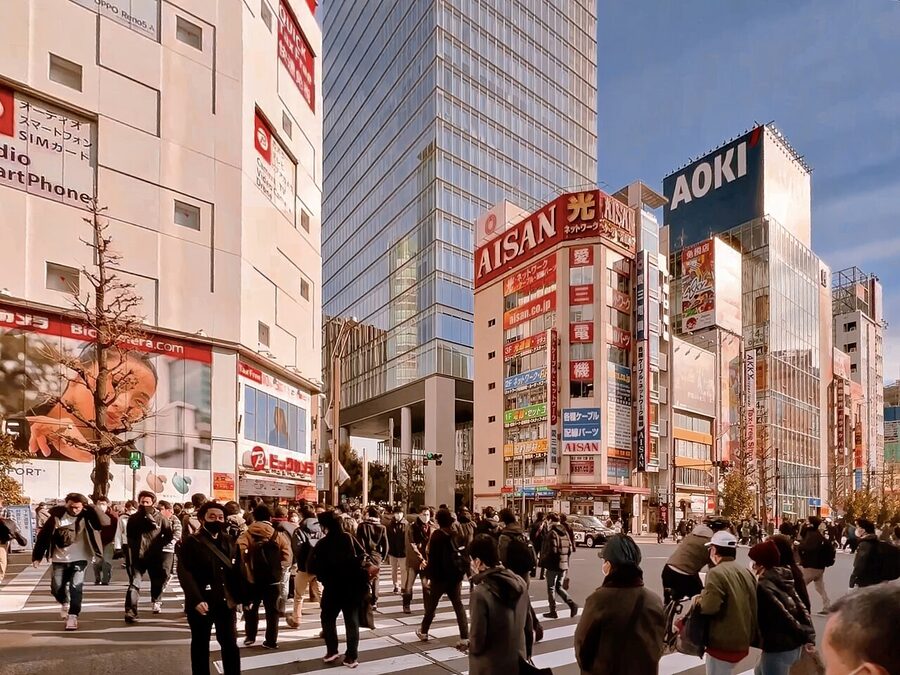
27. Catch evening rush
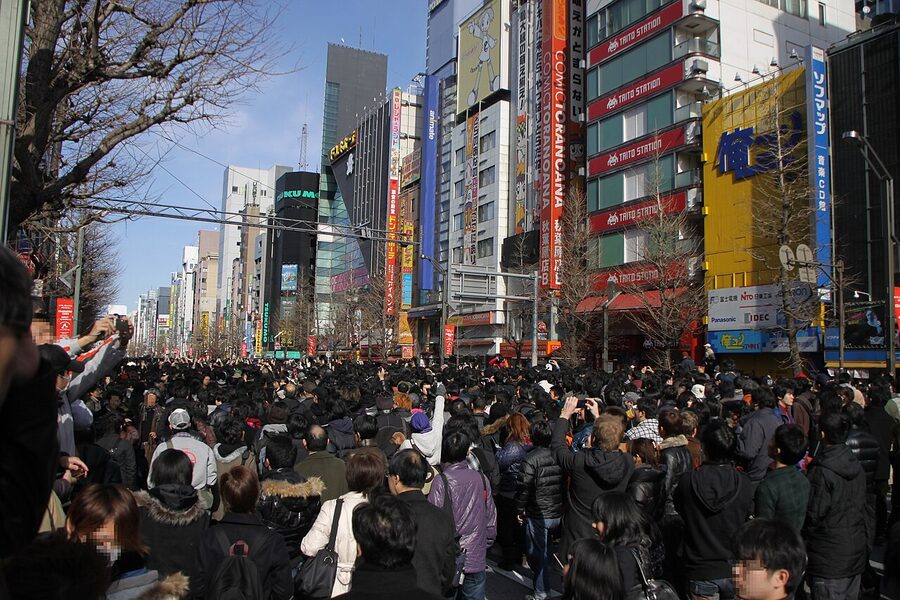
Akihabara’s peak atmospheric moment isn’t dawn or late-night — it’s the evening rush, roughly 6-8pm on weekdays, when the local otaku office workers leave their jobs in Akihabara’s tech companies and the neighbourhood crowds converge. Chuo-dori becomes a pulsing wall of humanity. Every shop front is packed. The sound level peaks.
Best place to watch: the pedestrian overpass between the station and Yodobashi (free) or any Chuo-dori crossing. The human density in a 30-minute window makes Akihabara feel larger than it is.
28. End the night at a Kanda Myojin evening prayer
After the Chuo-dori neon, reset at Kanda Myojin (item 11) between 7-8:30pm. The shrine is lit up, almost empty, and the contrast with Akihabara’s sensory assault is the cleanest way to end an evening there. 15 minutes. Free. Makes the whole district’s weirdness land properly.
Getting to Akihabara
From Narita: Keisei Skyliner to Nippori, Yamanote south to Akihabara. 65 min, ¥2,700. Or Narita Express via Tokyo Station, transfer to Yamanote north.
From Haneda: Tokyo Monorail to Hamamatsuchō + JR Yamanote north. 50 min, ¥700.
Within Tokyo: Yamanote line stop between Ueno and Tokyo Station. 1 stop from Ueno (5 min), 3 stops from Tokyo Station (8 min). Also on Chuo, Sobu, Hibiya (metro), and Tsukuba Express lines.
Where to stay in Akihabara
Akihabara isn’t traditionally a tourist accommodation base but has grown that way in the last 10 years — Anime Hotel, REMM Akihabara, Akihabara Washington — all mid-range business hotels optimised for otaku visitors. Cheaper than Shinjuku/Shibuya, walking distance to Ueno and Asakusa. If you’re a serious anime or gaming pilgrim, stay here. Otherwise Ueno or Shinjuku are likely better bases. Search Akihabara on Booking.com.
Akihabara FAQ
Is Akihabara worth visiting if I’m not into anime?
Yes — the electronics, the scale, and the pure visual experience are worth an afternoon regardless of your anime interest. Think of it as a themed-neighbourhood tourist stop.
How many hours do you need in Akihabara?
2-3 hours for the basics (Electric Town walk, Yodobashi, one maid cafe or arcade). Half a day to include Mandarake, Super Potato, and proper cosplay spotting. A full day if you’re a specific-genre collector doing pilgrimage shopping.
Are maid cafes weird?
Yes. That’s the point. For first-time visitors they’re a cultural experience. For repeat visitors they can become genuinely enjoyable if you find a good one. They’re not inherently sexual — think theatrical-service, not adult entertainment.
Can I combine Akihabara with Ueno in one day?
Easily — they’re one Yamanote stop apart (2 minutes) or 15 minutes on foot via 2k540 Aki-Oka Artisan. Common split: Ueno morning (park, museum, Ameyoko), Akihabara afternoon/evening (Chuo-dori, arcades, dinner). See our Ueno guide.
What’s the best time to visit?
Sunday afternoon (pedestrian Chuo-dori + full cosplay presence). Weekday evening rush 6-8pm (peak human density). Avoid Golden Week and obon week — tourist crowds plus domestic visitors doubles density.
The short version
Akihabara is six blocks of arcades, anime shops, electronics stores, gachapon walls, maid cafes, and weekend cosplay. It’s aggressively itself. You’ll either love it for three hours and leave, or fall down a specific rabbit hole and stay until closing. Both outcomes are valid. Pair it with Ueno for a full day on the Yamanote north-east quadrant.
Next up: Ueno is the quieter one-stop neighbour. Asakusa is a 15-minute walk north via Kappabashi. Our citywide list keeps you oriented.