There’s a sub-genre of Tokyo visit where you’ve already done the Skytree, you’ve already crossed Shibuya three times, and now you want the city as you first saw it on a screen. A specific karaoke room. A bar suspended on the 52nd floor. A shrine approach at the top of a steep staircase that you’ve already watched twenty times in a film you love. The Japanese word for this is seichi junrei — literally "sacred-place pilgrimage" — and until recently it meant anime fans with print-outs of reference frames. Now it means everyone.
What follows is 20 Tokyo locations worth a pilgrimage — five from big Western films, nine from anime (and one Japanese TV drama), five from classic Japanese cinema, one bonus from a dog movie that will absolutely make you cry. Station exits, what was filmed, what it looks like in 2026, and the real answer on whether the current location still repays the trip. A few are paid. Most are free. None are hard to find. Pair with our citywide things-to-do list for a broader framework, or slot individual stops into one of our neighbourhood guides.
In This Article
- 1. The 52nd-floor bar from Lost in Translation
- 2. The karaoke room where Bill Murray sang Roxy Music
- 3. The crossing that every film wanted to own
- 4. Where The Bride killed everyone (well, on a set modelled on here)
- 5. Golden Gai — a back-alley scene in a hundred films
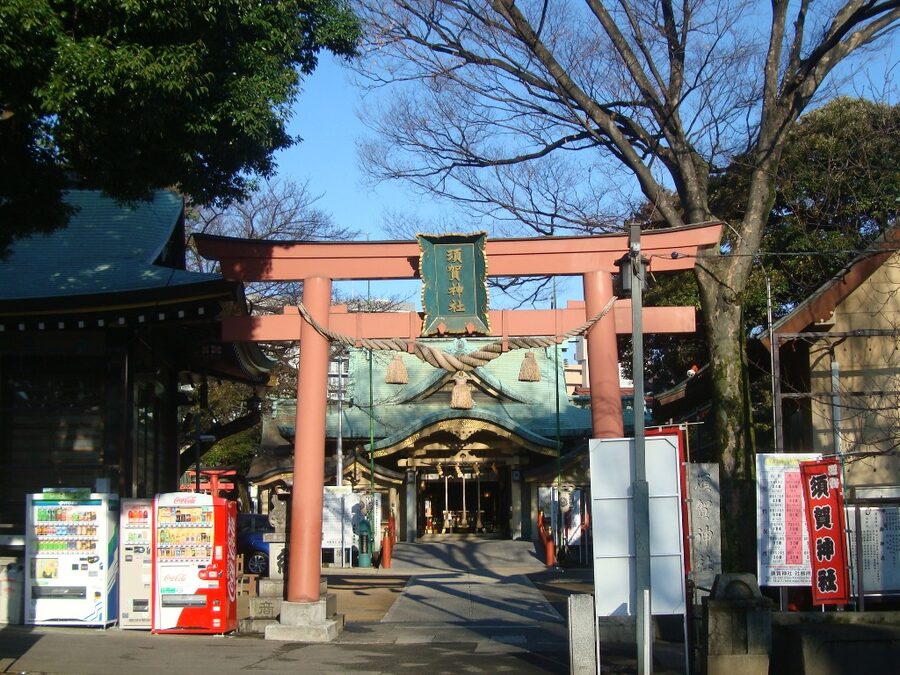
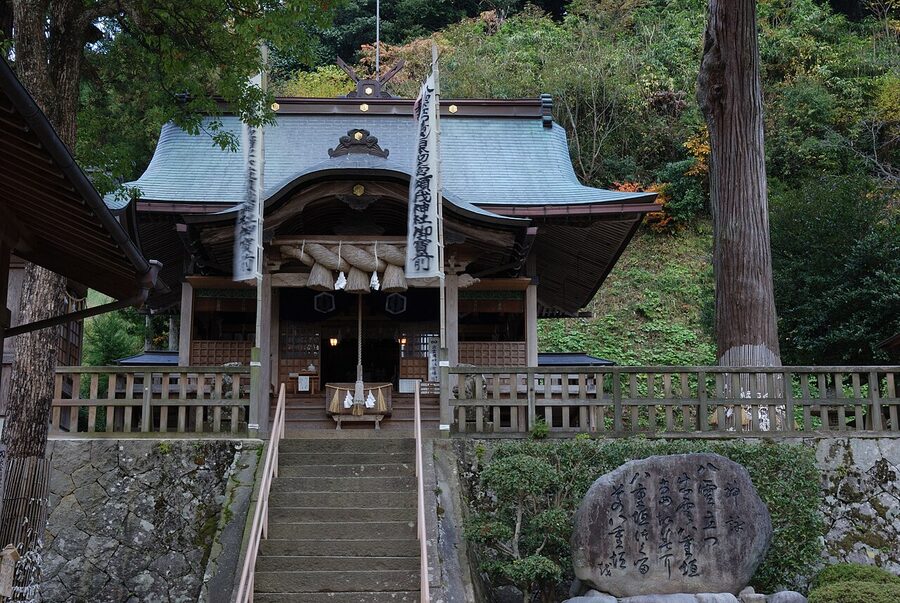
- 6. Suga Shrine — where Your Name ends
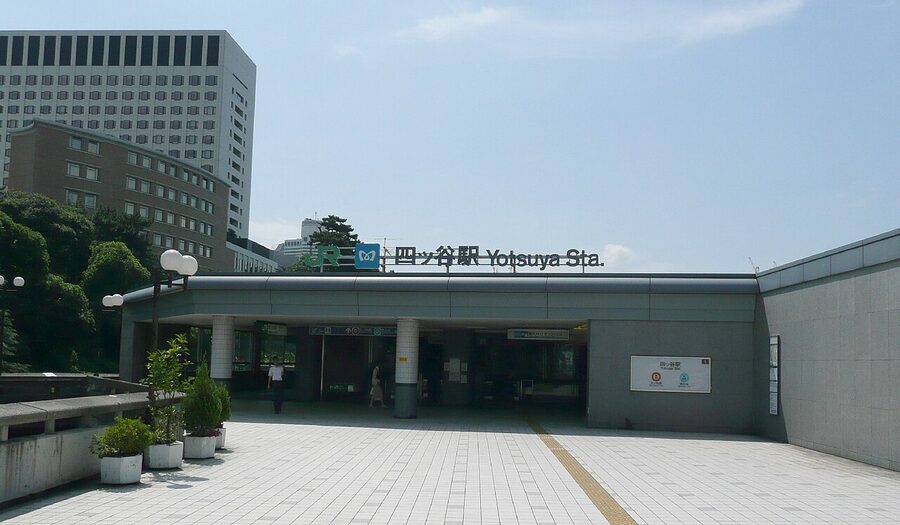
- 7. The Yotsuya pedestrian bridge (also Your Name)
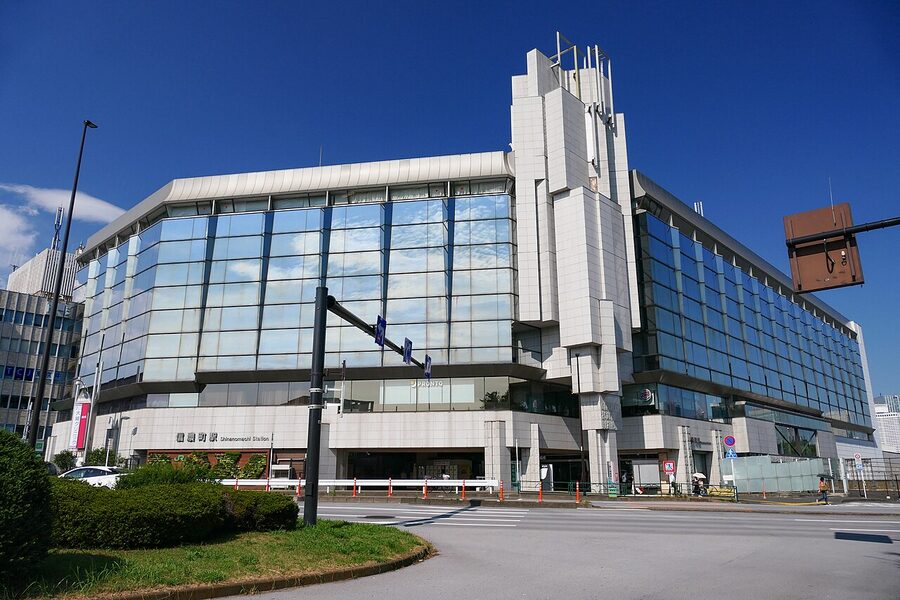
- 8. Shinanomachi Station, where Taki takes the train
- 9. The National Art Center (Your Name’s museum scene)
- 10. Cafe La Boheme — the café where Taki kind of works
- 11. Kanda Myojin — Love Live! and Steins;Gate holy ground
- 12. Steins;Gate’s lab (kind of) above Radio Kaikan
- 13. The abandoned rooftop from Weathering With You
- 14. Nakano Broadway — otaku-romance, the movie version
- 15. Azabu-Juban, the Sailor Moon neighbourhood
- 16. The park where Durarara!! happens (plus about fifty other anime)
- 17. The Wako clock tower Godzilla crushed (1954)
- 18. The sumo hall. So many films.
- 19. Ghibli Museum + Inokashira Park (Whisper of the Heart)
- 20. Hachiko — the statue Richard Gere cried next to
- One more — the Senso-ji cameo in every Tokyo film
- How to do these in one sensible day
- Further reading (official + useful)
- FAQ
- Are there tours specifically for this?
- What if a location’s closed or changed?
- How close are the real locations to the film versions?
- Is anime pilgrimage respectful?
- What’s the single most worth-it spot?
- Short version
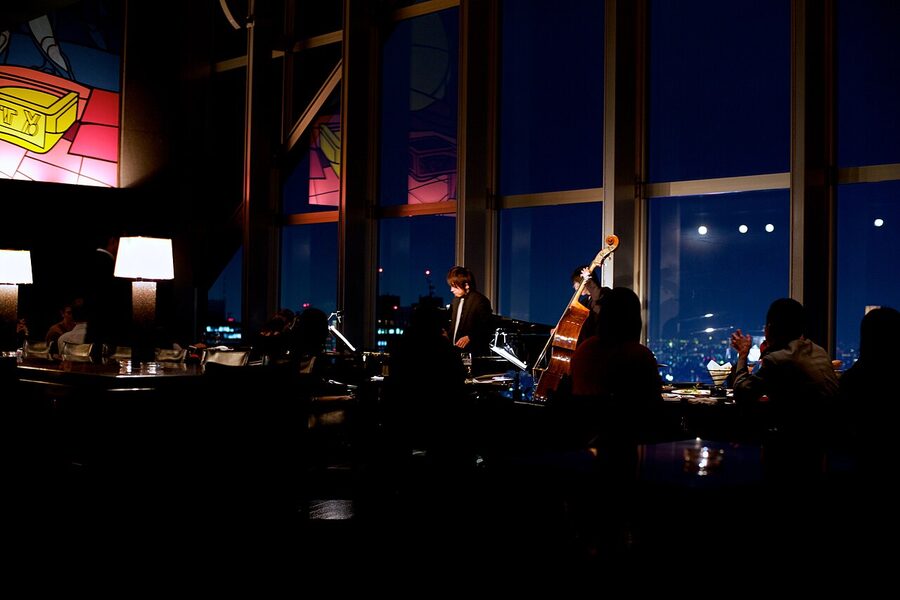
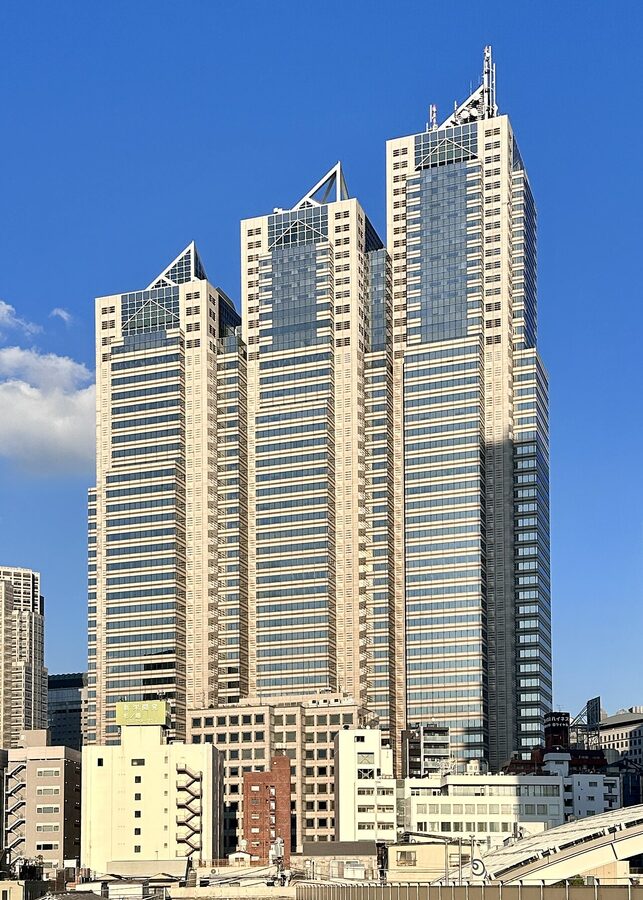
1. The 52nd-floor bar from Lost in Translation
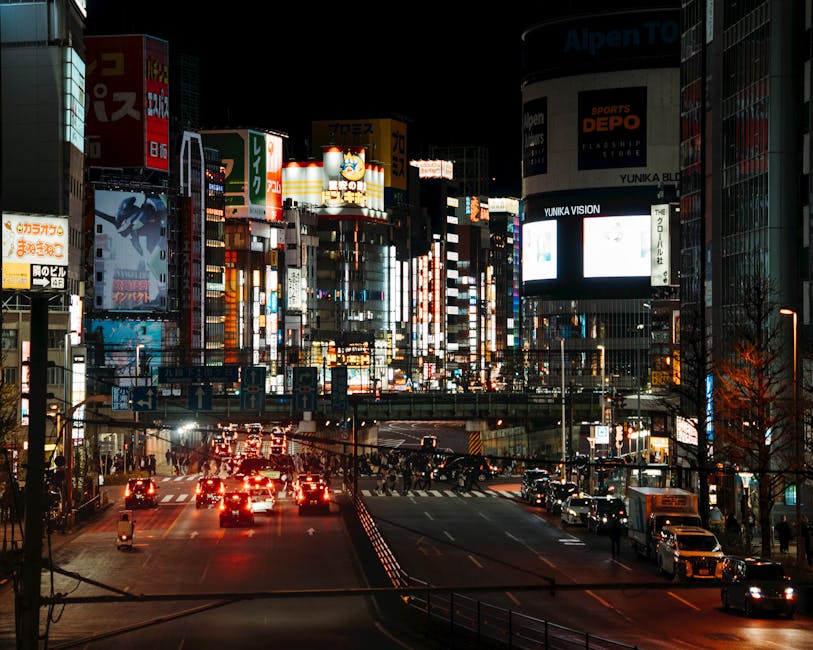
Sofia Coppola’s Lost in Translation (2003) filmed most of Bill Murray’s jet-lagged whisky scenes at the New York Bar on the 52nd floor of the Park Hyatt Tokyo, in West Shinjuku. The bar, the jazz trio, the floor-to-ceiling windows looking at the sleeping city at 2am — unchanged. The hotel still runs a 52nd-floor restaurant, a 52nd-floor bar, and live jazz sets in the same room.
What a visit costs: ¥2,000–3,500 per cocktail, a ¥2,750 music charge after 8pm when the jazz trio starts. Smart casual dress code (no shorts, no sandals). Book the sunset slot a few days ahead if it’s weekend. The concierge will ask if you’re here for the film; say yes.
Access: free shuttle bus from Shinjuku Station West Exit; or 10-minute walk. Full context in our Shinjuku guide.
2. The karaoke room where Bill Murray sang Roxy Music
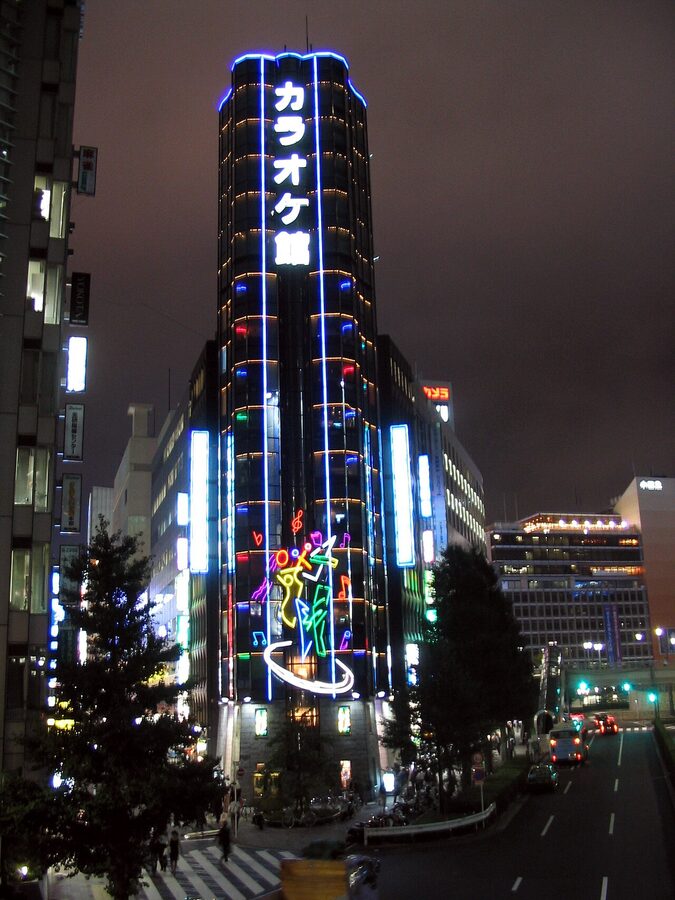
"More Than This." The moment Bob (Murray) and Charlotte (Scarlett Johansson) sing together, tentatively, in a private karaoke room with red-velvet walls — it was filmed at Karaoke-kan Shibuya Utsukushigaoka-dori, specifically Rooms 601 and 602. The building is still there. The rooms are still rentable. You can book them specifically by asking for "Bill Murray’s room" — the staff know.
Address: 30-8 Udagawacho, Shibuya. 5-minute walk from Hachiko Exit. Prices: ¥1,500–2,500/hour per room plus drinks. Nomihōdai (all-you-can-drink) packages from ¥2,800/hour. English song catalogue extensive. No pre-booking needed unless you specifically want rooms 601/602 on a weekend.
3. The crossing that every film wanted to own
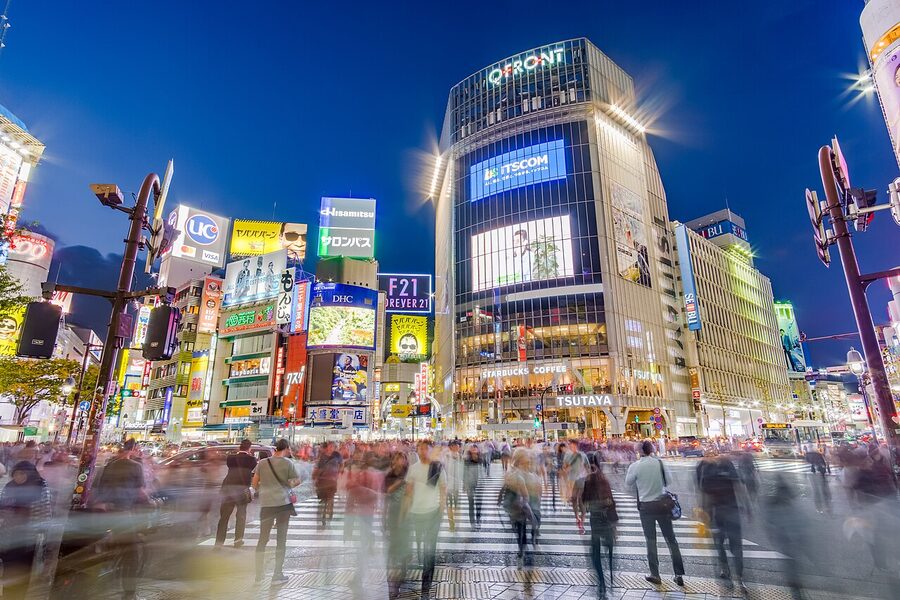
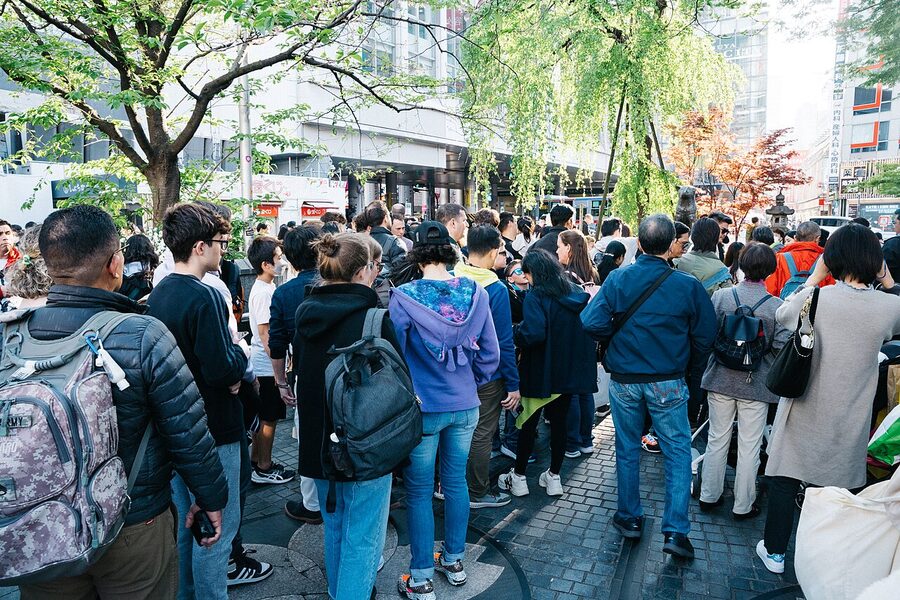
Shibuya Scramble Crossing appears in so many films that listing them is its own sub-article. Lost in Translation (Charlotte crosses it alone, in a pink wig). The Fast and the Furious: Tokyo Drift (the street-race finale). Resident Evil: Retribution (the opening zombie scene). Enter the Void (Gaspar Noé’s hallucinatory neon version). Babel (Brad Pitt’s Tokyo segment). Godzilla vs. Kong. It’s the most-filmed intersection outside Times Square.
What to do: cross it. At least three times. Once with the crowd straight across, once diagonally, once slowly-with-eyes-up to take it all in. Pair with Shibuya Sky or the Starbucks Tsutaya window upstairs for the aerial shot — we cover those in our Shibuya guide.
4. Where The Bride killed everyone (well, on a set modelled on here)
The House of Blue Leaves — the Japanese restaurant where Uma Thurman fights the Crazy 88s in Kill Bill Vol. 1 — was a Tarantino set built in Beijing. But the set was a near-exact replica of Gonpachi Nishi-Azabu, where Tarantino ate while he was writing the film. He took the interior photos back to the production designer and said: build this. It’s still open, still serves tonkatsu and yakitori under the same exposed-beam second-floor balcony.
Address: 1-13-11 Nishi-Azabu, Minato. 10-minute walk from Roppongi Station or Hiroo Station. Dinner: ¥4,000–7,000/person. Reservations recommended (they know — the staff will seat you with a small smile). The fight scene happened here in Quentin’s head; you’re eating in the source material.
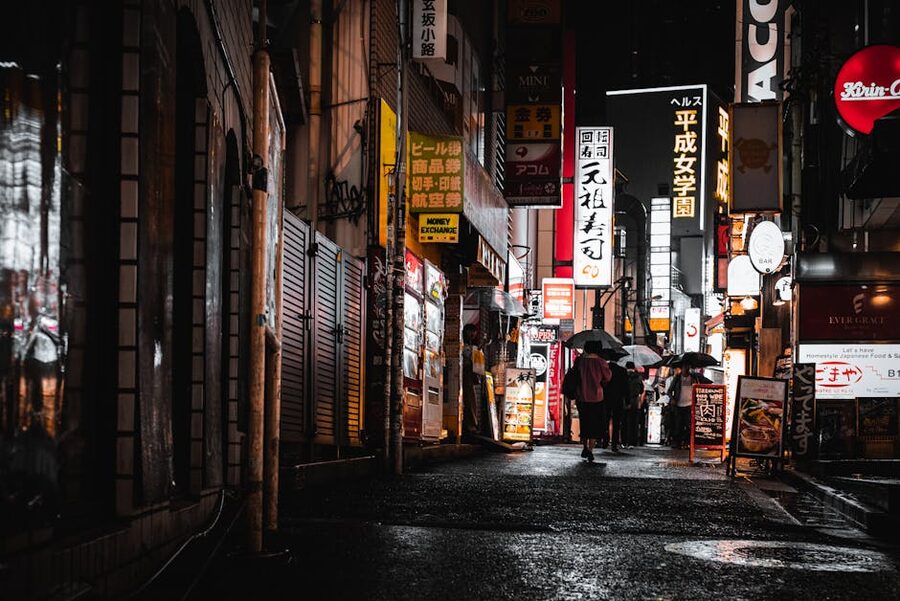
5. Golden Gai — a back-alley scene in a hundred films
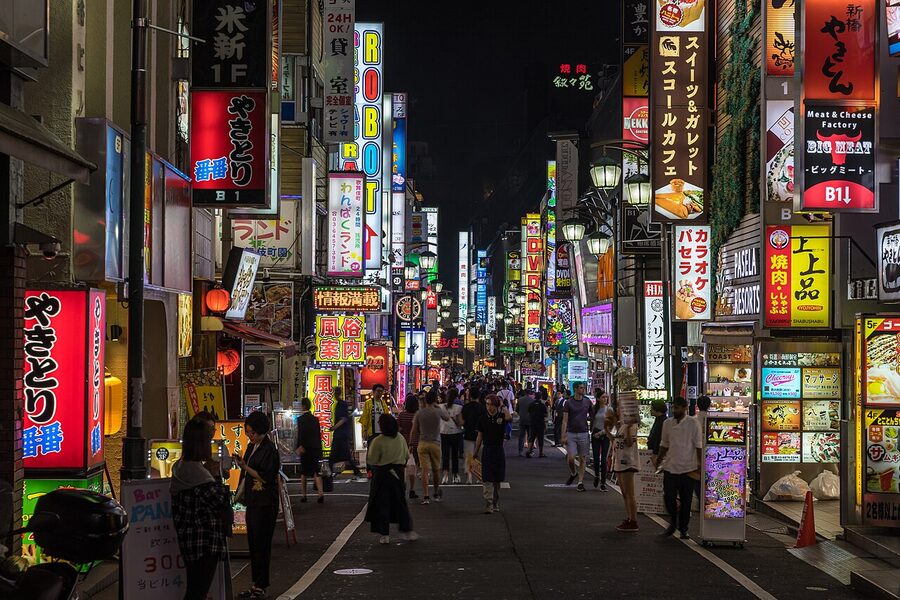
The 200+ bars of Golden Gai have been filmed so often it’s almost a pastiche at this point. Lost in Translation‘s earlier Shabu-Zen sequence was around here. Kill Bill‘s sushi bar scenes were modelled on Golden Gai architectural feel. Every Japanese yakuza film of the last 30 years has a Golden Gai montage. Wim Wenders’ recent Perfect Days (2023) — Koji Yakusho winning the Cannes best-actor award — has scenes in this area.
What it costs: ¥500–1,500 cover charge per bar + ¥700–1,200 per drink. Most bars seat 4–8 people. Full guide in our Shinjuku guide.
6. Suga Shrine — where Your Name ends
Makoto Shinkai’s Your Name (Kimi no Na wa) (2016) has maybe the most visited animated-film set of the 21st century. The film’s final emotional scene — Taki and Mitsuha passing each other on a staircase, turning, asking each other’s names — takes place on the stairs next to Suga Jinja, a small shrine in Yotsuya. The staircase is real. The angle is the same. The red railings are the same. It’s a 7-minute walk from Yotsuya-sanchome Station.
Fair warning: other pilgrims will be there. Patient queues of couples and families, most in their 20s-30s, all waiting for the shot. Behave like a respectful guest — locals live on this staircase. Best timing: early morning (before 9am) or weekday afternoon. Free, always accessible.
7. The Yotsuya pedestrian bridge (also Your Name)
Two minutes’ walk from Suga Shrine, the pedestrian bridge outside Yotsuya Station is another frame-for-frame match from Your Name — where Taki waits to meet Mitsuha. Also appears in Shinkai’s 5 Centimeters Per Second (2007) and Weathering With You (2019). Shinkai lives in this area; his films are practically a geographic autobiography of Yotsuya-Shinanomachi.
Access: JR Yotsuya Station, Kojimachi Exit. 1-minute walk. Free. The bridge is still an active pedestrian overpass — people actually use it.
8. Shinanomachi Station, where Taki takes the train
One stop from Yotsuya on the Chuo-Sobu line sits Shinanomachi Station — another recurring Shinkai location, particularly in Your Name‘s Tokyo commuter scenes. The station’s specific platform, signage, and bridge appear in the film’s morning-rush sequences. Chuo-Sobu trains run every 3-4 minutes; stand where Taki stood.
Access: JR Chuo-Sobu line Shinanomachi Station, on the route between Shinjuku and Yotsuya. Free.
9. The National Art Center (Your Name’s museum scene)
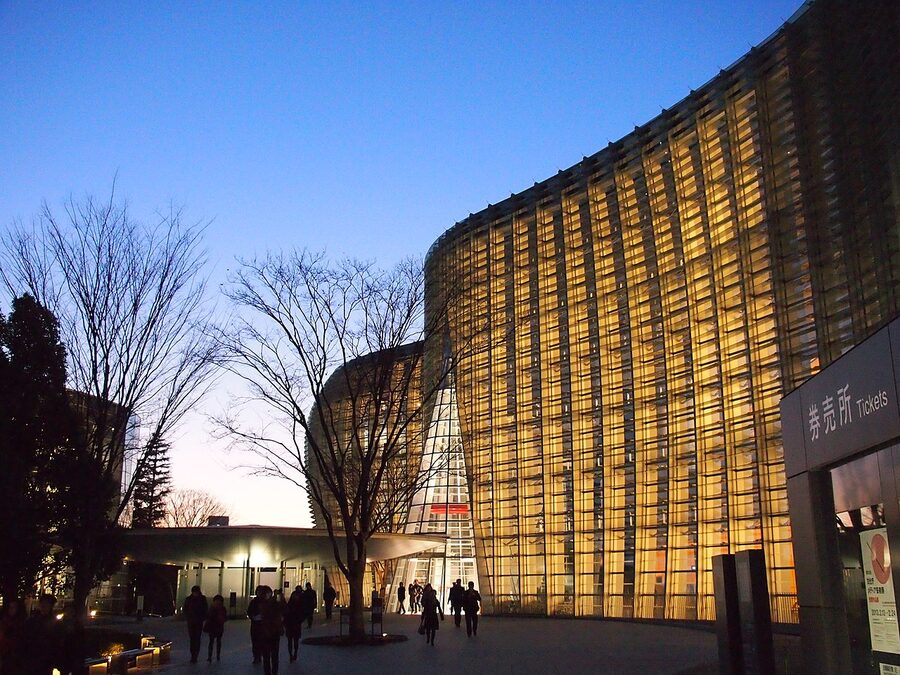
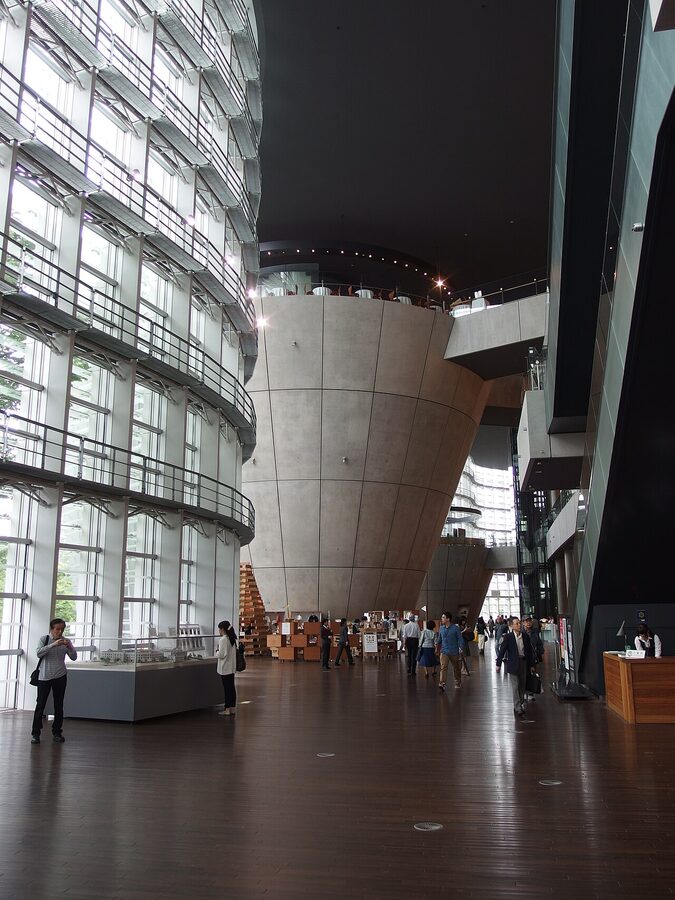
The gallery interior where Mitsuha and Taki visit the "Memories" exhibition late in Your Name is the National Art Center Tokyo, in Roppongi. Kisho Kurokawa’s wave-glass-facade building is an architectural piece in its own right — one of Tokyo’s cleanest modernist spaces. The interior atrium, which Shinkai redrew as a memorial-exhibition setting, genuinely exists.
Entry: free to the atrium + ground floor; ¥1,200–1,800 for the specific rotating exhibitions (no permanent collection — every show is special). Hours: 10am-6pm, closed Tuesdays. 5-minute walk from Nogizaka Station. Official site.
10. Cafe La Boheme — the café where Taki kind of works
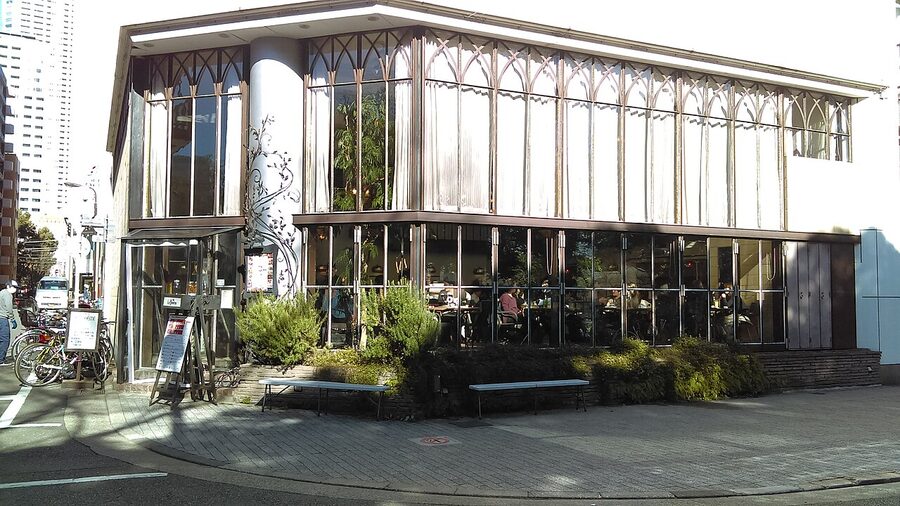
Taki’s part-time-job Italian cafe in Your Name is modelled closely on Cafe La Bohème in Shinjuku Gyoen-mae. The cafe is real and operating — part of a mid-range Italian chain, now with multiple Tokyo branches. The ceiling design, the dark wood, and the specific table Mitsuha sits at are essentially unchanged.
Lunch: ¥1,200-2,000 pasta sets. Dinner: ¥2,500-4,500. Access: 3-minute walk from Shinjuku-gyoenmae Station. Cafe La Bohème has several Tokyo branches; the specific Your Name one is in Shinjuku. Nomibition — drink the non-alcoholic espresso.
11. Kanda Myojin — Love Live! and Steins;Gate holy ground
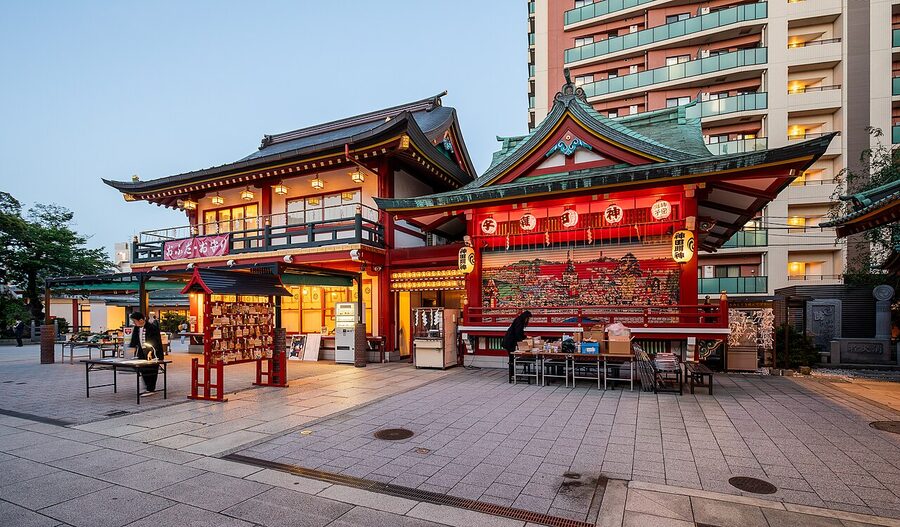
Kanda Myojin, a 10-minute walk from Akihabara, is the Shinto shrine at the centre of the Love Live! School Idol Project anime (2013–2014) — the shrine where the schoolgirl idol group holds their rituals and performances. It’s also a recurring Steins;Gate (2011) location and appears in multiple other anime. The shrine leans into its status: you’ll see collaboration merchandise at the shrine office (special ema prayer plaques with Love Live! characters, special omamori amulets).
Free. Always open. The shrine annually hosts otaku-focused events (Kanda Festival weekend in May is particularly intense with anime-fan attendance). Full context: our Akihabara guide.
12. Steins;Gate’s lab (kind of) above Radio Kaikan
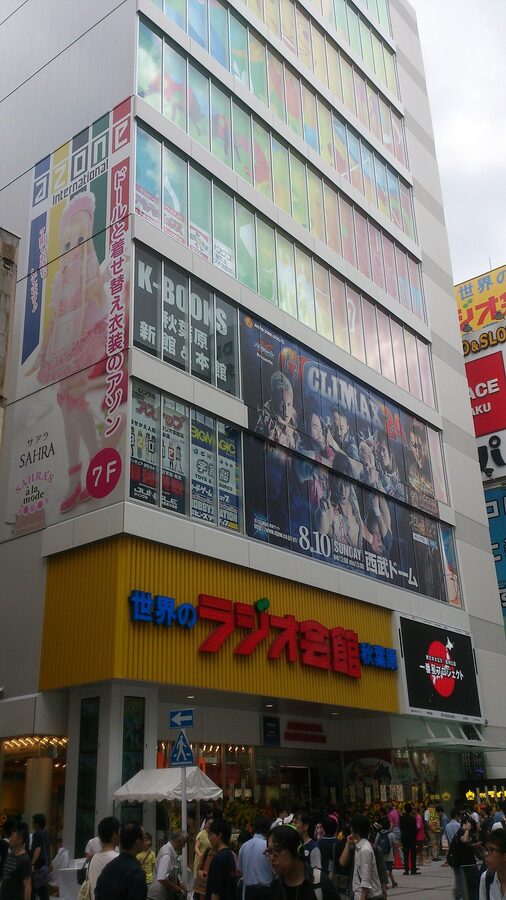
The Steins;Gate (2011) protagonists’ makeshift lab is on the top floor of a building above Akihabara Radio Kaikan — the tall electronics-tower building directly opposite Akihabara Station’s Electric Town Exit. The original Radio Kaikan you see in the anime was demolished in 2011 (referenced in the show); the current 2014 rebuild keeps the footprint and general silhouette. Fans climb to the top-floor corner to recreate the opening-credits shot of a character falling from it.
The lab itself doesn’t exist (it’s a rooftop invention). Radio Kaikan’s 10 floors are still genuine otaku shopping territory — model kits, trading cards, manga, idol merch. Hours: 10:30am-8pm most shops.
13. The abandoned rooftop from Weathering With You
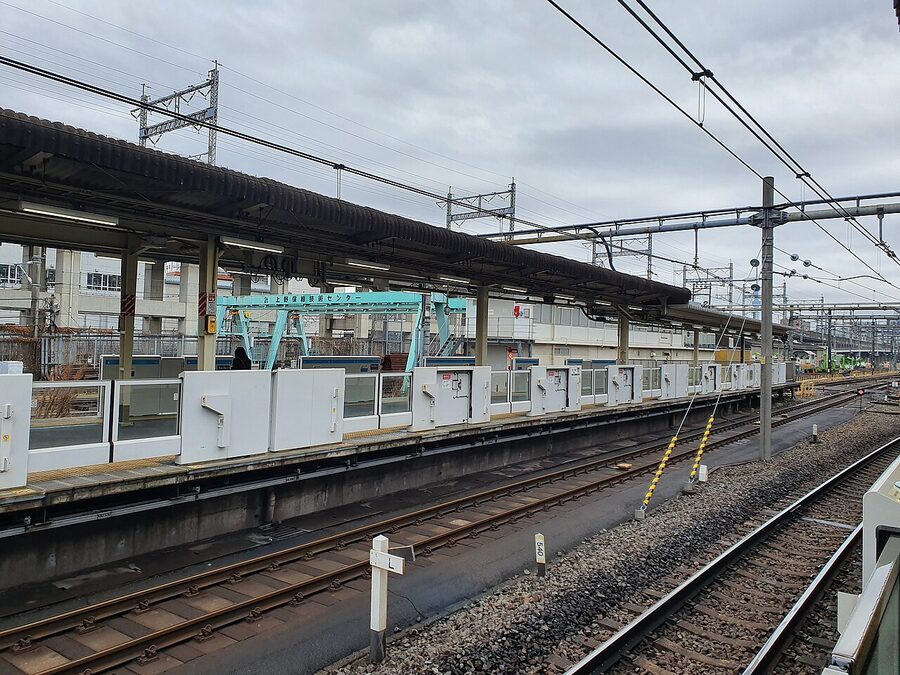
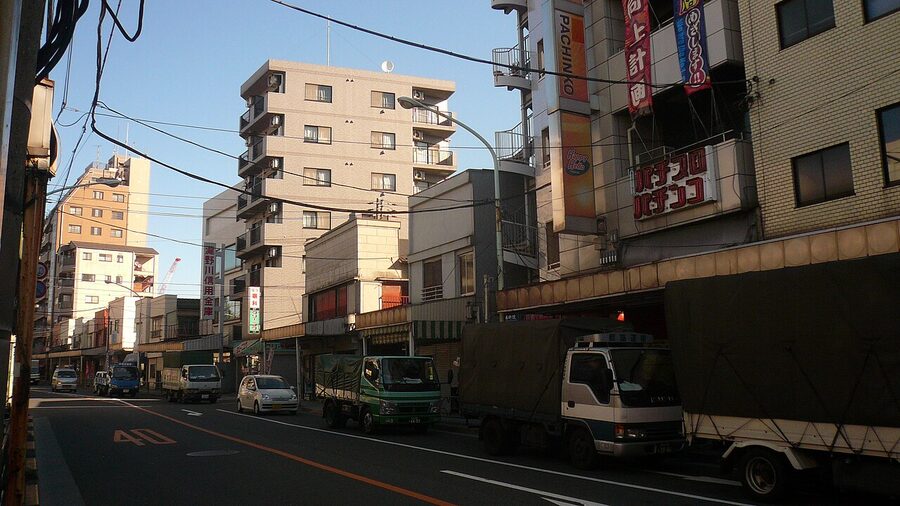
Makoto Shinkai again. Weathering With You (2019) — specifically the abandoned building where Hina and Hodaka perform the weather ritual — was visually based on a real derelict rooftop in Tabata, a quiet residential neighbourhood north of Nippori. The exact building is private property and (responsibly) hard to access. But Tabata station itself, the surrounding streets, and the train tracks that appear throughout the film are perfectly accessible.
Tabata Station is 3 stops north of Akihabara on the Yamanote line. Free. The old-residential streetscape (low wooden buildings, narrow lanes, occasional cats) is the Shinkai-film aesthetic in concentrated form.
14. Nakano Broadway — otaku-romance, the movie version
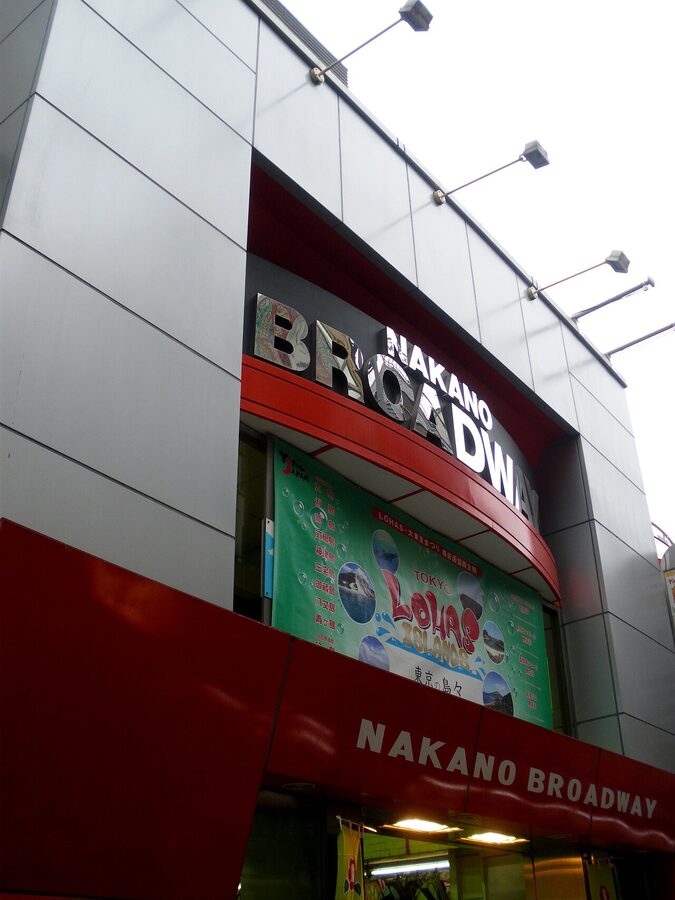
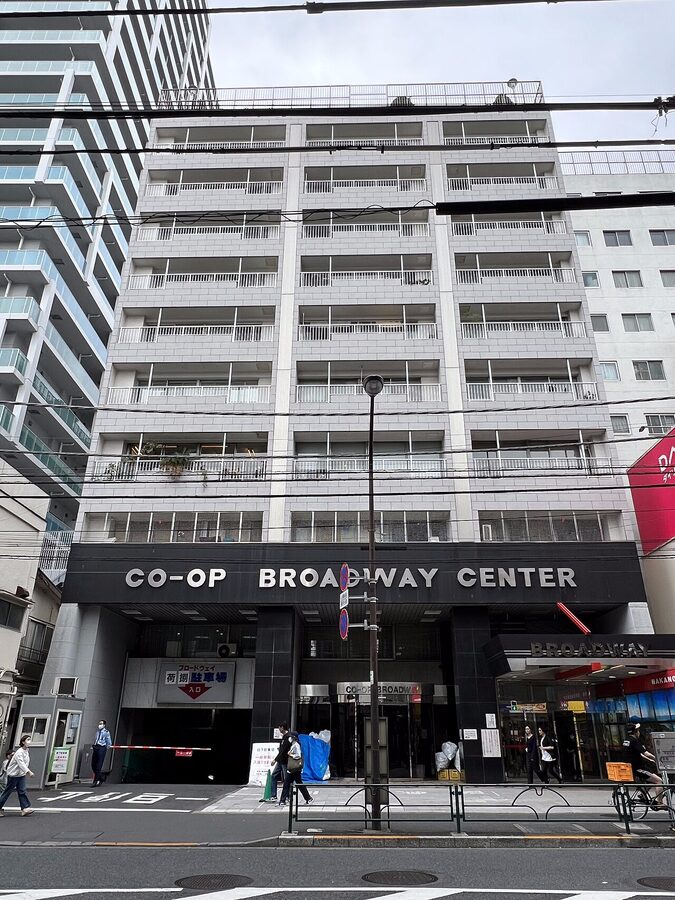
Densha Otoko (Train Man) — the 2004 Japanese film and subsequent TV drama about an otaku who falls in love with a woman he meets on the train — used Nakano Broadway heavily as its otaku-Tokyo backdrop. The shopping complex of four floors of specialty anime/collectibles shops is the real-life epicentre of a world the film (and its later anime) fictionalised. Less touristy than Akihabara; more authentically anoraky.
Access: 5-minute walk from Nakano Station on the JR Chuo line (from Shinjuku, 4 minutes direct). Hours: most shops 12pm-8pm. Mandarake (second-hand anime/manga/collectibles) has its flagship-flagship here — 20+ themed floors.
15. Azabu-Juban, the Sailor Moon neighbourhood
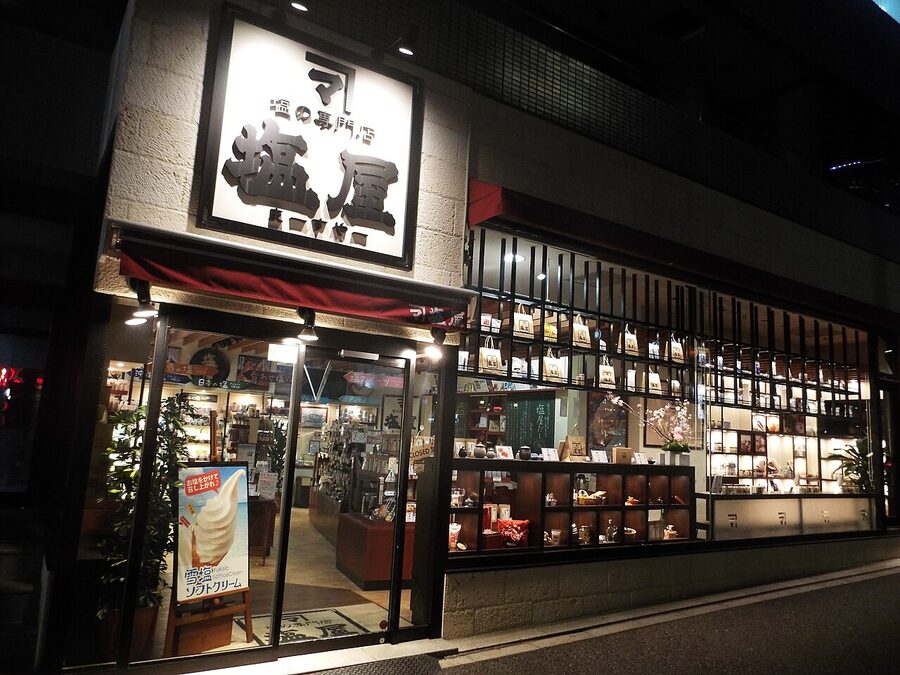
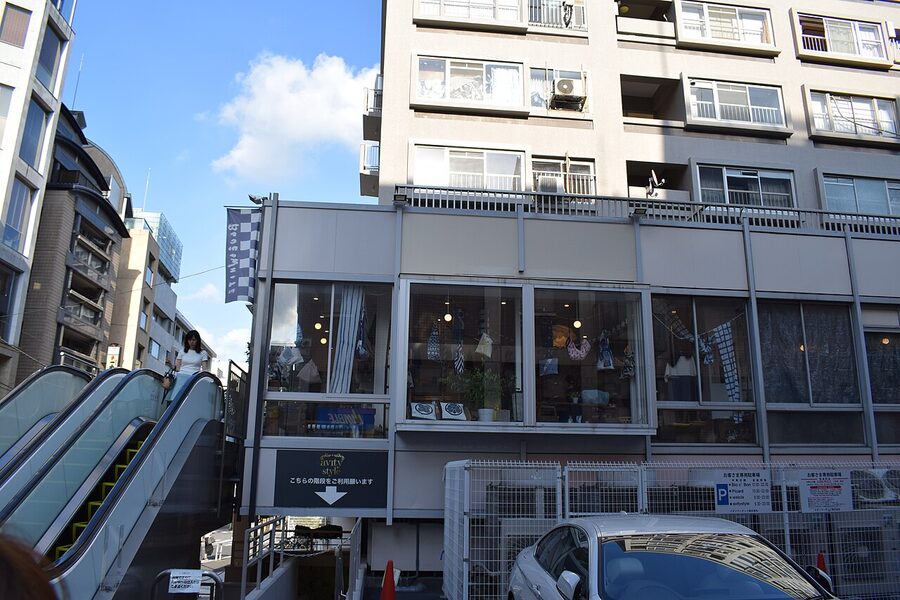
Naoko Takeuchi set Sailor Moon in Azabu-Juban, partly because she lived near here when she wrote the original manga. The shopping street (Azabu-Juban Shotengai), the Buddhist temple in the anime’s background, the school setting — all real places in this ward. Usagi and friends attend Juban Chugakko in the manga, modelled on a real middle school nearby. It’s quieter now than it was 30 years ago, more gentrified, more expensive — but you can still walk the same streets.
Access: Azabu-Juban Station (Namboku or Oedo lines). 1-minute walk to the main shotengai. Free. Food tip: Azabu-Juban has several famous old-school wagashi shops; Naniwaya Sohonten invented modern taiyaki in 1909 and is still on the main street. ¥200 for a taiyaki, ¥600 for a proper sit-down serving.
16. The park where Durarara!! happens (plus about fifty other anime)
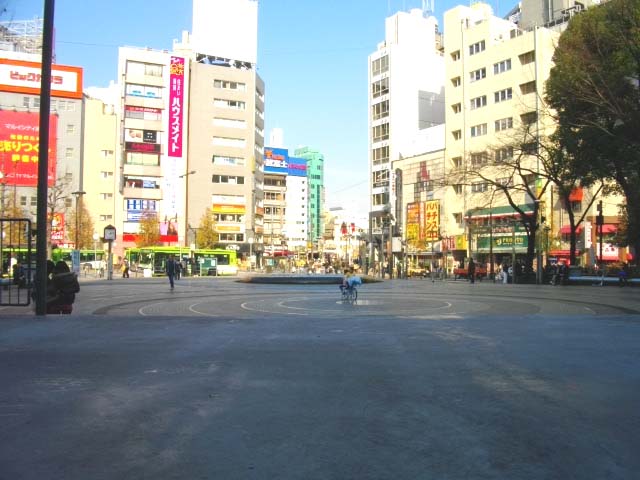
Ikebukuro Nishiguchi Koen — Ikebukuro West Gate Park — is central to Durarara!! (2010), Tokyo Ghoul backgrounds, and a very Japanese 2000 Ryu Murakami novel-into-film called Ikebukuro West Gate Park. The park itself is small, has a distinctive circular stage area (Global Ring Theater), and hosts rotating public art and events. It’s next to the Tokyo Metropolitan Art Space.
Access: Ikebukuro Station West Exit, 2-minute walk. Free, always open. Pair with a trip to Otome Road (the female-otaku equivalent of Akihabara) a few blocks east.
17. The Wako clock tower Godzilla crushed (1954)
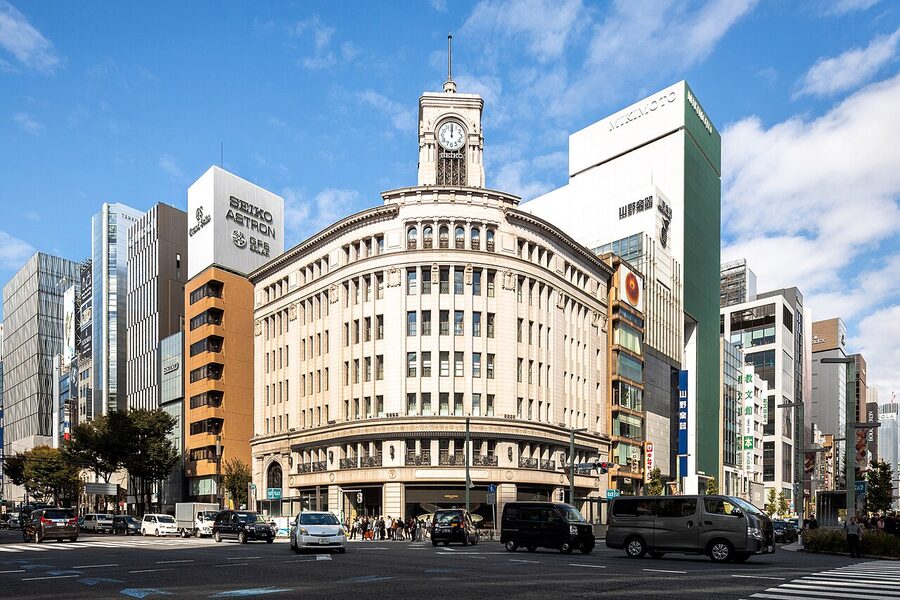
In Ishirō Honda’s original Godzilla (1954), the kaiju’s Tokyo rampage climaxes with a specific scene: the monster crushes the Ginza Wako clock tower. The model shot of Wako being destroyed is one of Japanese cinema’s most reproduced images. The real Ginza Wako — which survived WWII despite firebombing around it — is still standing at the Ginza 4-chome crossing, unchanged since 1932. The clock still chimes on the hour.
Free to visit. Walk up Chuo-dori from Ginza Station. More Ginza context: our Ginza guide. The 1954 Godzilla was filmed on matte paintings and model sets, but this was the building Honda and his team were destroying.
18. The sumo hall. So many films.
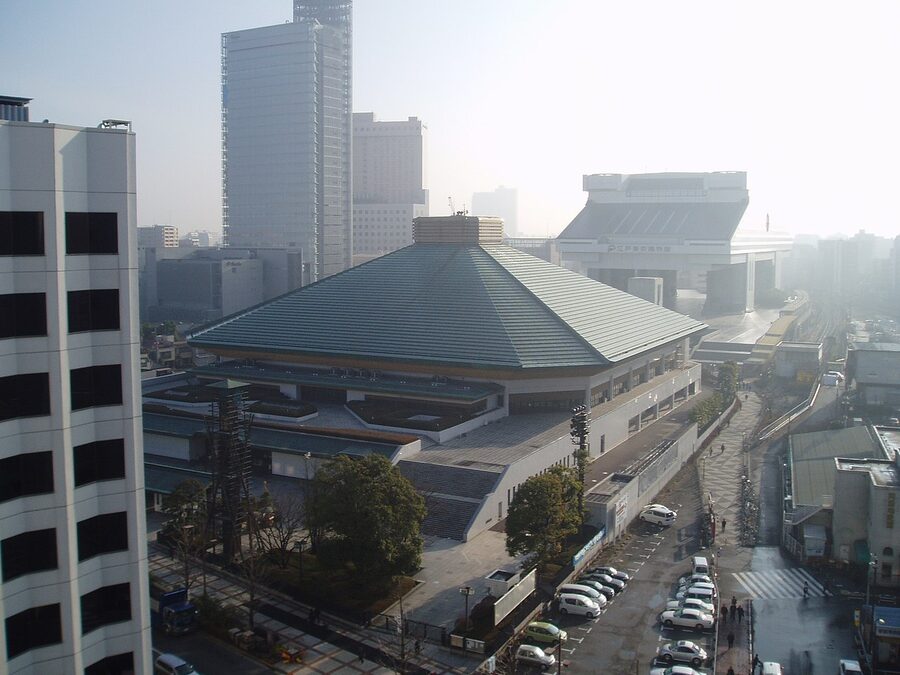
Ryogoku Kokugikan — Japan’s national sumo hall — appears in The Yakuza (1974) with Robert Mitchum, in Clint Eastwood’s Black Rain reference shots, in every Japanese salaryman-goes-to-sumo comedy of the last 30 years, and as the real venue for six of the year’s fifteen sumo tournaments. If you time your trip for January, May, or September, you’re in Tokyo during an actual tournament (basho) and can watch real sumo in the space films only suggest.
Tickets: ¥3,800 (upper-level seats) to ¥55,000+ (ringside box). Basho tournament days 11am-6pm. Access: 1-minute walk from Ryogoku Station (JR Sobu, Toei Oedo). Also: free sumo-stable morning practice viewings exist in the surrounding neighbourhood (book ahead via tour operators — otherwise the stables are closed to visitors).
19. Ghibli Museum + Inokashira Park (Whisper of the Heart)
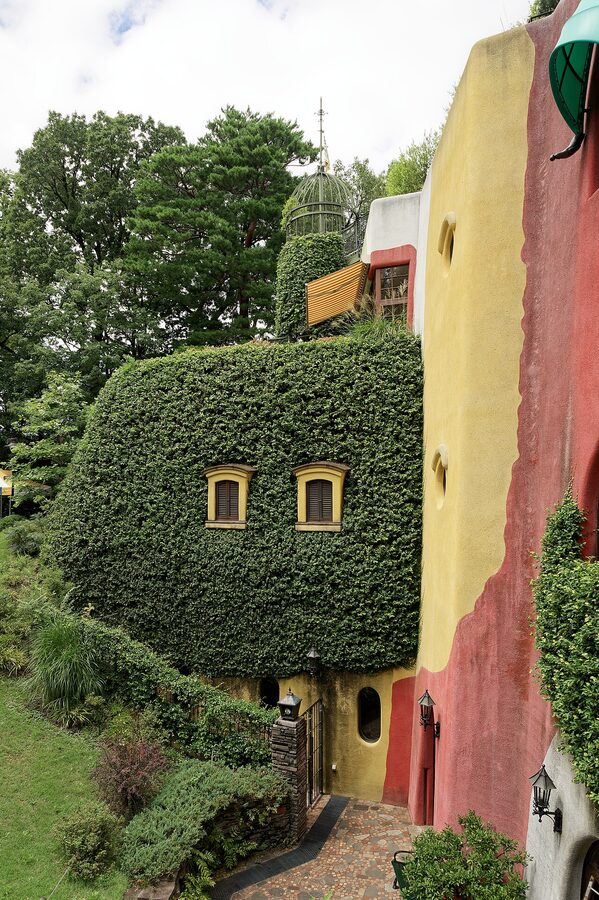
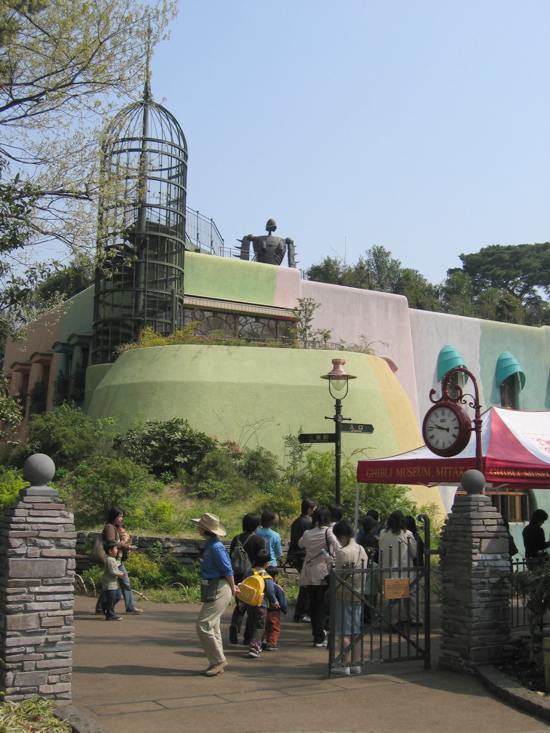
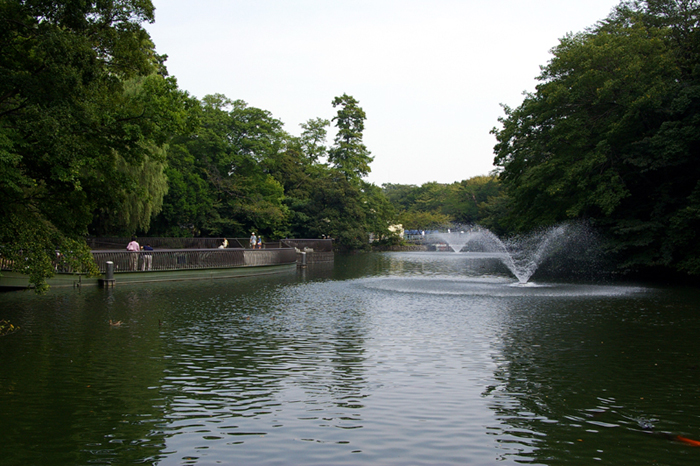
The Ghibli Museum in Mitaka isn’t a set from a Ghibli film — it’s Miyazaki’s bespoke architectural tribute to Ghibli’s own films, designed by him. But the neighbouring Inokashira Park and its pond are the setting for Whisper of the Heart (1995), the Yoshifumi Kondo / Hayao Miyazaki film. The Ghibli Museum is 5-10 minutes’ walk west of the park. Doing both in one morning is the single best Ghibli pilgrimage you can put together in Tokyo.
Ghibli Museum tickets: ¥1,000, timed-entry, sold monthly via Lawson convenience stores and a foreign-visitor website — book at least a month ahead. Closed Tuesdays. No photography inside. Inokashira Park: free, always open. Access: 15-minute walk from Kichijoji Station (JR Chuo line), or Mitaka Station + Ghibli shuttle bus (¥210).
20. Hachiko — the statue Richard Gere cried next to
Hachi: A Dog’s Tale (2009) — the Lasse Hallström-directed American adaptation of the Japanese legend — was filmed in Rhode Island. But the real Hachiko, and the real statue where he waited every evening, is at Shibuya Station. Every day, for nine years after his owner’s death. The statue has been a meeting point since 1935, briefly melted down during WWII for its bronze, recast in 1948, polished shiny by 90 years of head-pats.
Even cynics cry at the story. The bronze is always surrounded by people taking photos. It’s small, slightly unassuming, and legitimately moving in person. Free.
One more — the Senso-ji cameo in every Tokyo film
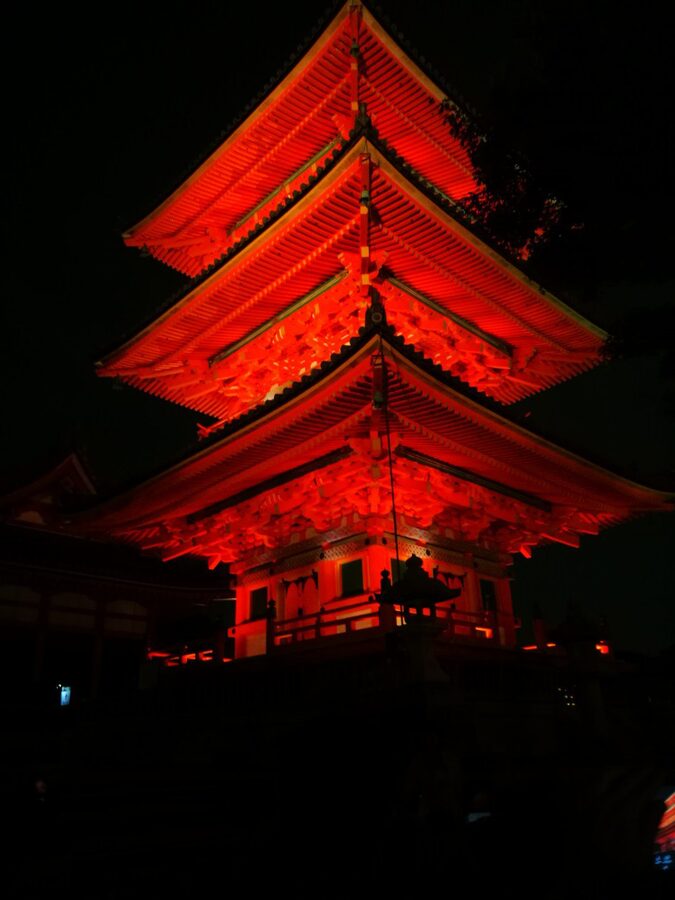
A bonus mention: Asakusa’s Senso-ji temple has appeared in so many films it’s almost lazy to list them. The 1954 Godzilla, every Tokyo-in-the-old-days period drama, and a recurring establishing-shot in everything from Wes Anderson’s Isle of Dogs (2018) to countless anime. Most films use Senso-ji as visual shorthand for "Japan, traditional." It’s a cliché precisely because it works. Our Asakusa guide has the full treatment.
How to do these in one sensible day
Most of these 20 locations cluster in three zones. Here’s how we’d route a full pilgrimage day, if you had one:
Morning (Shinjuku + Yotsuya): Park Hyatt coffee → walk to Suga Shrine → Shinanomachi Station → Yotsuya Station → Cafe La Bohème lunch. ~4 hours.
Afternoon (Shibuya + central): Hachiko → Shibuya Crossing → Karaoke Kan (book Room 601) → Gonpachi Nishi-Azabu for dinner. ~4 hours.
Night (Shinjuku): Golden Gai → back to Park Hyatt New York Bar for a nightcap. The film’s circular structure, more or less. ~2 hours.
Or a dedicated anime-day: Kanda Myojin → Akihabara Radio Kaikan → Nakano Broadway → Azabu-Juban → Ikebukuro West Gate Park. All on the JR Yamanote or one stop off. ~6-7 hours.
Or a Ghibli day: Inokashira Park morning → Ghibli Museum afternoon (book your timed-entry ticket a month ahead, seriously) → walk back along the Kichijoji shopping streets for dinner. Full day.
Further reading (official + useful)
Tokyo Location Box (locationbox.metro.tokyo.lg.jp) — the Tokyo Metropolitan Government’s official film-location database, the institutional descendant of the app this domain used to host. Searchable by film, TV drama, or location. Japanese-language primary but machine-translatable.
Japan Travel — Film Locations in Tokyo — curated lists for specific films, updated regularly. Tofugu — Your Name pilgrimage for a deep per-scene location breakdown of Shinkai’s film.
Behaviour note: most of these locations are also residential neighbourhoods, working shrines, and functioning businesses. Treat them as places first, sets second. Keep voices down near Suga Shrine. Don’t block the karaoke room corridor taking photos. Buy a drink at Cafe La Bohème. The locals don’t owe you the frame — but almost all of them, with a bit of grace on your side, will happily give you it.
FAQ
Are there tours specifically for this?
Yes — both generic Tokyo film tours and anime-pilgrimage-specific ones. GetYourGuide and Klook both list a handful. Our view: most locations are easier to do under your own steam with a Suica card — the paid tours add context but not access. Buying one makes sense if you want a guide’s film-history commentary along the way.
What if a location’s closed or changed?
Some will be. Robot Restaurant (Kabukicho, featured in Scarlett Johansson’s Ghost in the Shell) closed in 2020. The original Akihabara Radio Kaikan was demolished in 2011. Some karaoke chain branches quietly close. Check the current status of specific rooms/businesses before you build a whole day around them.
How close are the real locations to the film versions?
Varies wildly. Suga Shrine in Your Name: frame-for-frame. Gonpachi in Kill Bill: the set was built in Beijing from photos of the real restaurant, so it’s one degree removed. Shibuya Crossing in Lost in Translation: exact. The Radio Kaikan of Steins;Gate: the current 2014 rebuild keeps the silhouette but the anime depicted the 1970 original. Know which you’re chasing.
Is anime pilgrimage respectful?
When done well, yes — it’s explicitly encouraged by the anime industry and the Japanese government’s tourism wing. When done badly (blocking residential streets, trespassing, being loud at shrines) it becomes a problem. The general rule: behave exactly as you would at a place that isn’t in a film. The film doesn’t give you extra rights; it just gives you a reason to be there.
What’s the single most worth-it spot?
For the emotional payoff: Suga Shrine for Your Name fans, or Park Hyatt New York Bar for Lost in Translation fans. For the "wow I’m actually here" factor regardless of the film: Gonpachi Nishi-Azabu for Kill Bill people — eating dinner in the restaurant Tarantino built his House of Blue Leaves from is a real moment.
Short version
Tokyo is the most-filmed Asian city, and a significant fraction of those filming locations are free to visit, still operating, and still look mostly like their on-screen versions. Pick the film you care about most; pick one adjacent anime; build a single day around both. Pair with neighbourhood context from our Shinjuku, Shibuya, Akihabara, and Asakusa guides.
For the full Tokyo tour our citywide things-to-do list is the starting point.